How rain jackets actually die
A rain jacket almost never tears. It stops being waterproof, which is harder to notice and impossible to argue with a warranty department about.
The face fabric wets out first. The DWR treatment on the outside is a surface finish that wears off with abrasion, body oils and washing. Once it goes, the outer fabric soaks instead of beading, and even if the membrane underneath is perfectly intact the jacket feels wet and clammy - so people conclude the jacket has failed when the renewable part is what failed.
Then the seam tape lifts. Every stitch through a waterproof fabric is a hole. A laminated jacket deals with that by heat-taping over the stitch line on the inside, and that tape is held on by an adhesive which flexes, ages and eventually peels - usually at the shoulders and the hood seam, where the jacket flexes most.
Then the laminate separates. Delamination is the end. The membrane unbonds from the face fabric in patches, the inside goes crinkly and sticky, and nothing restores it. Polyurethane coatings and laminate adhesives hydrolyze with heat and moisture over years whether or not the jacket is being worn, which is why a shell left stuffed damp in a pack loses years of life.
Abrasion finishes the job on light shells. Pack straps at the shoulders, tool belts at the hips, brush at the forearms. A 2.5-layer ultralight shell is a few hundred hours of hard contact from being worn through.
The criteria, in the order they matter
1. How the seams are joined. Welded beats taped, every time. Radio-frequency welding fuses two coated panels into one piece with no stitch holes, so there is nothing for water to find and no tape to peel. It is only possible on coated fabrics, which is why commercial rain gear is built that way and hiking shells are not.
2. Coated or laminated. A coating is applied as a liquid film; a laminate is a membrane bonded on. Laminates breathe better and fail earlier. Coatings last and do not breathe. This is the single decision that determines what kind of jacket you are buying, and most listings bury it.
3. What the warranty calls wear. Every warranty here covers defects in materials and workmanship. The question that decides whether it is worth anything is how the brand classifies the loss of waterproofing, and at least one of them answers that question in writing - against the buyer.
4. Ventilation. Pit zips are the only honest answer to a shell’s breathability limits. A jacket with no ventilation and no breathability is a bin bag with a hood, and a jacket with pit zips can be made to work in conditions its fabric cannot handle alone.
5. Cut and length. A hip-length trim-fit shell will not go over a hoodie, and a mid-thigh coat will not stay out of your way on a ladder. Most complaints about rain jackets are really complaints about buying the wrong shape.
The paperwork, side by side
Grundens publishes the cleanest promise on this page: products guaranteed free from manufacturing defects for the lifetime of the product, on its US site. Normal wear and tear, improper care, misuse, accident, neglect and the natural breakdown of materials over time are excluded. Its EU site publishes a two-year window instead, and waders run on a separate 365-day program - so the lifetime term is a US-site term.
Marmot warrants against defects in materials and workmanship for the practical lifetime of the product, to the original owner, with proof of purchase possibly required and repair, replacement or refund at its discretion. Then its own published FAQ defines what wear and tear means, and the list includes loss of DWR and laminates losing their ability to keep out moisture. Read those two documents together and the lifetime warranty covers everything except the two things that will happen.
Columbia publishes two warranties and leaves you to work out which one you bought. Outerwear gets a limited lifetime warranty running for the practical life of the product, ending if the product is sold or transferred. Sportswear and accessories get one year. Both exclude normal wear and tear, improper care and the natural breakdown of materials, and Columbia notes that some products are excluded as indicated at the point of sale or on the hang tag. A rain shell reads like outerwear to us; the listing does not say.
Carhartt’s limited warranty covers defects in materials and workmanship and explicitly excludes normal wear and tear including zippers and other hardware - which, on a jacket whose main zip runs the full length of the front, excludes the most likely failure.
Helly Hansen publishes a two-year apparel warranty (one year on footwear) to the original owner against defects in materials and workmanship, with repair, replacement or refund at its discretion and the usual exclusions for accidents, negligence, improper care and normal wear. The document we could read is published on its Australia and New Zealand support site; we could not find equivalent US terms on the brand’s own site, and we are not going to quote a US figure we did not read.
Why the Grundens Neptune wins
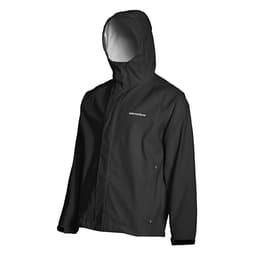
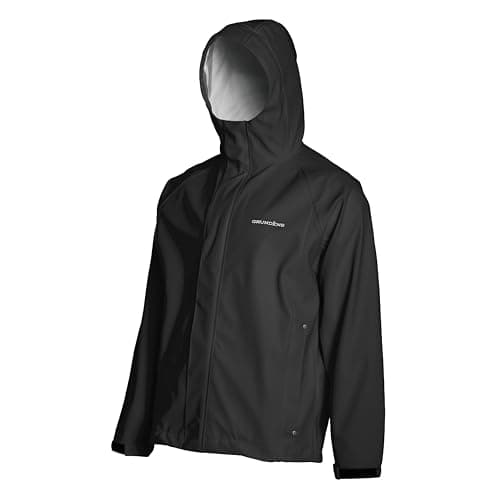
Because it is not really a rain jacket in the consumer sense - it is commercial deck gear, and it is built for people whose working day is eight hours in salt spray.
The seams are RF-welded rather than stitched and taped. There are no stitch holes in the waterproof panels, so there is nothing for tape to peel off of and nothing to re-tape in five years. The shell is a coated polyester, so there is no laminate to delaminate. Those two construction facts remove both of the failure modes that end most rain jackets, and the lifetime defects guarantee sits behind them.
The honest cons are substantial and you should take them seriously. It is not breathable in any meaningful sense - work hard in it and you will be wet from the inside within twenty minutes. It is heavy and it does not pack down. It is cut for layering over work clothes, so it looks like what it is. And the guarantee excludes normal wear, improper care and the natural breakdown of materials, which is every warranty in this category.
Buy it if you need to be dry for hours at a time while moving at a walk: fishing, dock work, yard work in a downpour, standing on a sideline. Do not buy it as a hiking shell.
When the Carhartt is the right buy
When the rain is incidental to a working day. The Storm Defender is the jacket on this page cut for actual work: loose enough to clear a sweatshirt and a tool belt, with fully taped waterproof seams, a published 10K/10K waterproof-breathable rating and a roll-away hood that stows instead of flapping into your eyeline on a ladder.
Two things to know before you buy. The nylon shell abrades much faster than the duck canvas Carhartt is known for - this is a shell, not a work jacket, and if you want the canvas durability story that is a different product. And the warranty excludes hardware and normal wear, so the full-length zip - the part most likely to go - is on you. A tailor can replace a jacket zip for a fraction of a new jacket, which is the realistic repair path here.
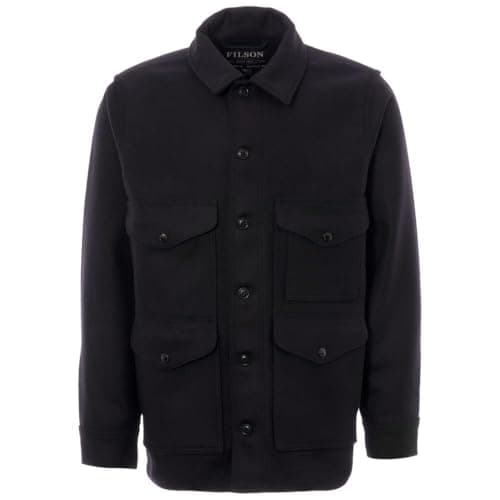
If you are weighing Carhartt against the heavier end of the workwear market generally, our Filson versus Carhartt comparison covers how the two brands’ guarantees differ, which is a wider gap than the fabric.
The packable case, and the DWR trap
The Marmot PreCip Eco is here because a shell that lives in a bag until it rains is worth owning, and because at around eleven ounces this one actually travels. It packs into its own pocket, the seams are fully taped, and the pit zips are the difference between a usable breathable shell and a sauna.
It is also the clearest example on this page of why you should read a warranty rather than a warranty headline. Marmot’s limited lifetime warranty is real. Marmot’s published wear-and-tear list includes loss of DWR and delamination. Those are the two ways this jacket will fail, and they are the two things the warranty names as not covered. That is not dishonest - it is how the whole industry works - but it does mean the lifetime term should not be part of your reason for buying it.
Buy it for the weight and the pit zips, treat the DWR as a consumable you will re-apply every year or two, and do not use it for abrasive work. A 2.5-layer shell wears through at the shoulders faster than anything else here.
The long coat case
A hip-length shell keeps rain off your torso and funnels it onto your thighs. For walking, commuting, standing at a bus stop or watching a game, a longer coat is simply more effective, and that is the Helly Hansen Moss’s whole argument: a coated, welded-seam raincoat at mid-hip length from a brand that has been making oilskins for fishermen since the 1870s. Current versions use a PFC-free polyurethane coating rather than the PVC the line used historically.
At around 630 grams it is a coat you wear rather than one you carry, and it is barely breathable, so it is wrong for anything strenuous. And the warranty position is the weakest here - not because the term is short, but because the only document we could find is published for another market.
The budget pick and its warranty puzzle
The Columbia Watertight II is the honest cheap answer: a seam-sealed coated nylon shell at roughly half the price of the jackets above, which packs into its own hand pocket. For a jacket that lives in a car or a desk drawer against the day you get caught out, that is the right amount of money to spend.
The puzzle is which warranty it carries. Columbia’s outerwear document runs for the practical life of the product; its sportswear document runs one year; the listing does not say which applies and Columbia points buyers to the hang tag. Keep the tag and the receipt. There are no pit zips, so the only ventilation is unzipping the front, and the coating will wear through at the shoulders and cuffs first - which every document here classifies as wear and tear.
What we did not pick, and why
Ultracheap packable rain suits. They work, they cost very little, and they are the opposite of what this site is for: a bonded non-woven shell that tears on brush and cannot be repaired. If the plan is to replace it every season, that is a rebuying plan.
Patagonia and other repair-program brands. The strongest repair stories in this category belong to brands we could not resolve to a verifiable listing on the retailer we link to, and we do not feature a product whose link cannot actually be bought. If you buy direct, a brand that runs a real repair program is worth paying for - a repairable jacket beats a warrantied one, which is the argument in repairing gear instead of replacing it.
Insulated rain jackets. A shell and an insulating layer wear out on different schedules, and bonding them together means the whole jacket dies when the faster one does. Buy the shell and the layer separately.
Care, which is most of the lifespan
Wash it. Counterintuitive and true: body oils and dirt are what kill a DWR finish, and a dirty shell wets out faster than a clean one. Use a technical cleaner rather than detergent, skip the fabric softener entirely, and run a second rinse.
Re-proof it when water stops beading. A wash-in or spray-on DWR, then low heat to cure it. This is a yearly job on a jacket in regular use, and it is the difference between a five-year shell and a ten-year one.
Hang it dry, loose and cool. Stuffed damp in a pack is how coatings hydrolyze. Hot attics and car trunks are the same problem more slowly.
Patch it early. Urethane repair tape on a coated shell is a permanent fix that takes two minutes, and it is what commercial crews do rather than buying a new jacket. The same habit that keeps leather alive in our boot care kit applies here: the maintenance is cheap, and it is the only thing standing between a good shell and a landfill.