"Lifetime warranty" is not one promise. It is at least four, and the distance between the best and worst of them is the distance between a free replacement forever and a polite letter explaining that your failure is excluded.
The four kinds, from strongest to weakest
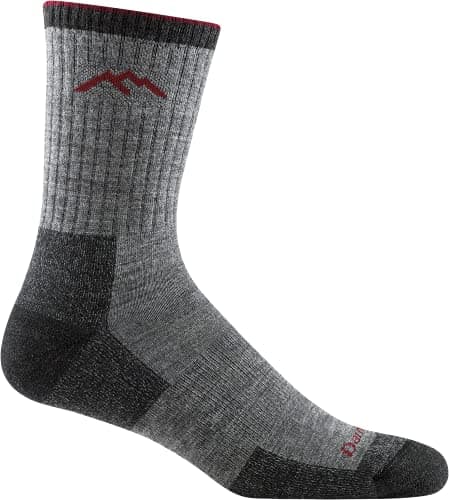
1. Unconditional lifetime. The product is replaced when it wears out, from ordinary use, with no receipt and no argument. This is rare. Darn Tough's guarantee covers wearing a hole in the sock including threadbare spots from normal wear, with no receipt required and, in the company's own words, no fine print. GRIP6 publishes an unlimited lifetime warranty - refund, repair or replace. TEKTON asks for no receipt and sets no time limit. Briggs & Riley repairs every functional aspect of a bag for life, free, including the damage airlines do.
2. Limited lifetime, defects only. The common form. The product is covered for the lifetime of the product or the original owner, against defects in materials and workmanship - meaning a manufacturing fault, not the damage you caused and not the wear you produced. Lodge, All-Clad, Knipex, Channellock, Klein, Victorinox, Spyderco, Buck, Maglite and JanSport all sit here. These are good, real warranties. They are not replacement programs.
3. Lifetime with a discount remedy. Where the company judges the damage to be user error, the remedy is a discount rather than a replacement. Le Creuset publishes exactly this: 75% off the current retail price of a similar item where it determines the damage was thermal shock or a drop. Worth knowing before you buy, not after you chip it.
4. A long number dressed as forever. Leatherman publishes 25 years. Osprey publishes 30 on most lines. YETI and RTIC publish five on hard coolers. Seiko publishes three. Hamilton publishes two. These are honest terms, often excellent ones - 30 years of free repair is a serious commitment - but they are terms, and "lifetime" is not among them.
The questions that separate them
Whose lifetime? The product's or the owner's. A "lifetime of the product" warranty is circular by construction: the product's lifetime ends when it fails, so a worn out item can be deemed to have reached the end of its lifetime. Filson handles this honestly by defining the term in its guarantee - product lifetime means the point at which, through normal use, the item can no longer serve its intended purpose.
Is it transferable? Le Creuset's is not. JanSport's and most others are written for the original purchaser. If you buy second-hand, assume you have no warranty unless the brand says otherwise.
Does it need a receipt? Red Wing requires the original receipt. Osprey requires proof of purchase from an authorized retailer. Darn Tough and TEKTON require nothing. Over a twenty-year horizon, a receipt requirement is close to a nullification.
What is excluded by name? Always read this part first, because it is where the drafting effort went. Carhartt names zippers and hardware. Ruffwear names chewing. Channellock names the natural wear that comes from hard work. Spyderco names improper sharpening. Estwing names wearing out. In every case the named exclusion is the most likely real-world failure.
How to actually claim
Most claims fail on process, not on merit. Keep the order confirmation email - a digital receipt survives twenty years and a paper one does not. Buy from authorized retailers where the warranty specifies it, because a gray-market purchase voids several of the policies above. Photograph the failure before you ship anything. And read the remedy: repair, replacement, credit and discount are four different outcomes, and brands are usually explicit about which one you are getting.
The pages in this section go through the brands with genuinely unconditional terms, the difference between a guarantee and a warranty, and how the same warranty language plays out across cookware, socks, packs, tools and pet gear.