The hide, in cross-section
A hide has layers. The outermost is the grain - the densest, tightest fiber structure, the part that faced the world and did the work. Below it is the corium, looser and more fibrous. Below that, the flesh side.
Every leather grade is a statement about how much of the grain survived into the finished product. That is the whole system, and once you see it the marketing language becomes readable.
The four grades
Full grain. The entire grain layer, intact, with nothing sanded off. It keeps the pores, the scars and the fiber density, which means it is the most abrasion-resistant and the only grade that develops a genuine patina: the surface burnishes and darkens where it is handled. It also shows every mark the animal had, which is why it looks less uniform.
Top grain. The grain layer with the top surface sanded off and a finish applied. More uniform, more stain-resistant, and with the strongest fibers removed. It does not patina - the applied finish eventually wears through and the leather underneath looks different. A legitimate material, and a step down.
Genuine leather. Despite the name, the lowest useful grade: a split from the corium with an artificial grain embossed on it. Real leather in the way chipboard is real wood. It will do a job for a couple of years.
Bonded or PU leather. Not a grade at all. Leather dust and scraps glued to a backing, or a polyurethane coating on fabric. It delaminates - the coating lifts and flakes off - and nothing repairs it. Avoid entirely in anything that flexes.
How to tell them apart in a shop
Look at the surface under a light. Full grain has irregular pores and visible variation because it is the hide's own surface. Top grain is uniform, because the pattern was applied. Genuine leather often has a slightly plasticky regularity to the embossing.
Look at the cut edge. Full grain is the same material all the way through, with a fibrous flesh side. Bonded and PU show a distinct layer: coating on top, backing underneath.
Press it. Full grain wrinkles finely and springs back. PU creases in a way that stays.
Thickness is as important as grade
A thin full-grain upper will crease deeply and crack sooner than a thick one, and a thin full-grain belt will curl. Thickness is measured in ounces - roughly 1/64 inch each - and a good belt is 9 to 13oz while a boot upper is typically 2 to 3mm.
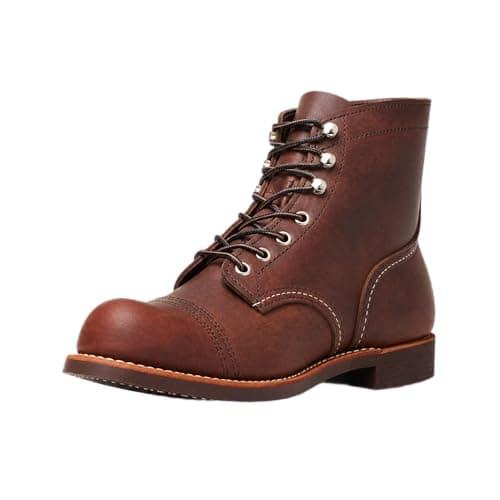
This is where the price difference between Thursday and Red Wing lives: both are full grain, and one is markedly thicker. The grade is a floor, not the whole story.
Tannage, briefly
Vegetable tanned uses tree tannins. Firm, develops the deepest patina, takes and holds a shape, and is sensitive to water staining. The classic belt and holster leather.
Chrome tanned uses chromium salts. Softer, more water-resistant, faster and cheaper to produce. Most boot uppers.
Oil tanned is chrome tanning with heavy oil and wax loading. Supple, water-resistant, scuffs that buff out with a thumb. Red Wing's Amber Harness is the obvious example.
None is better. They are different materials for different jobs, and the right conditioner differs between them - which is covered in the conditioner guide linked below.