Rebuildable is not the same as worth rebuilding
A mechanical movement can be stripped, cleaned, re-lubricated and reassembled indefinitely. That is why 1960s watches run today, and it is the strongest durability story on this site in principle.
In practice there is an economic threshold. A full service from an independent watchmaker typically costs 150 to 400 dollars. Below roughly 400 dollars of watch, that service costs more than a replacement - so cheap automatics are run until they stop and then replaced, whatever their theoretical rebuildability.
That threshold, not the specification sheet, is what separates a watch you will own for life from a watch you will own for a decade.
The warranties are short, and that is normal
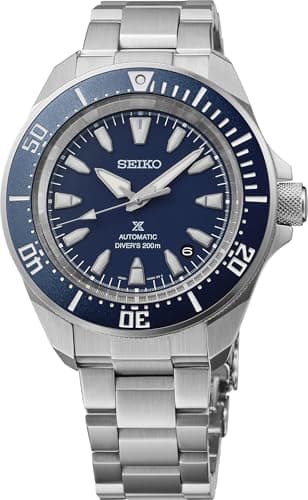
Seiko increased its worldwide warranty to three years from 1 October 2024, which is now the longest in this group.
Hamilton publishes twenty-four months.
Tissot publishes two years, three on COSC-certified models.
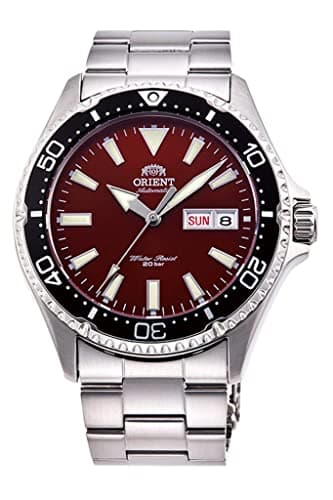
Orient publishes one year on standard models, two on Orient Star.
None of these is a reason to buy or avoid a watch. The relevant question for a lifetime object is parts availability and service network, not the first two years.
Why the Hamilton is our pick to pass on
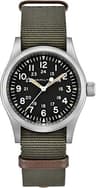
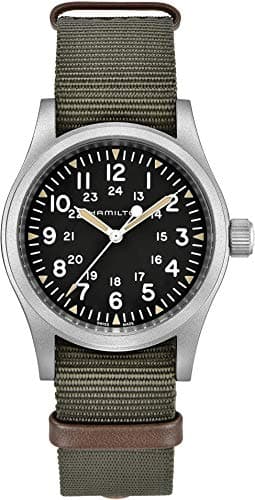
The Khaki Field Mechanical is hand-wound. No rotor, no date complication, nothing to fail that a watchmaker cannot fix with parts that will still exist in 2070 - and Swatch Group’s parts supply is the best in the industry.
Simplicity is a durability feature in watches to a degree people underestimate. Every complication is another set of parts that can wear and another reason a service costs more.
Where the threshold bites
A Seiko 5 is a genuinely rebuildable watch with the most-serviced automatic caliber in the world, and almost nobody services one, because the service costs more than the watch. That is not a criticism of the watch - it is excellent value - it is a statement about what happens to it in year fifteen.
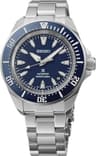
A Seiko Prospex or a Hamilton crosses the line. A service is rational, so the watch gets serviced, so it survives. The watch did not change; the arithmetic did.
The quartz exception
The G-Shock is not rebuildable in any romantic sense - a failed module is replaced, not repaired. And it is probably the most genuinely long-lived watch on this page.
Straps, bezels and batteries are all cheap and user-replaceable, and the resin case is close to indestructible. Thirty-year-old DW5600s are in daily use everywhere. Cheap replaceable parts beat expensive serviceable ones more often than enthusiasts like to admit.
What actually ends a watch
Water ingress through perished gaskets, which is why a water-rated watch needs periodic gasket replacement to keep its rating. Impact to the movement. Corrosion from sweat under the lugs. And being lost, which genuinely accounts for a large share of watch attrition and is why the strap spring bars are worth replacing before they look worn.