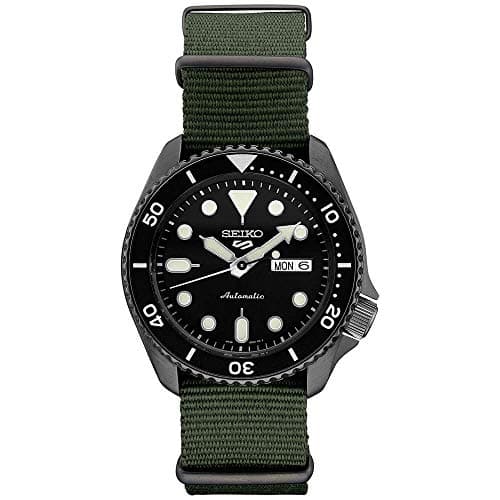
The best automatic watch for everyday use is the Seiko 5 Sports SRPD. Its 4R36 movement hacks and hand-winds, the case takes real-world water exposure, Seiko publishes a three-year worldwide warranty, and - most importantly for a watch you intend to keep - the caliber is mass-produced and serviced everywhere, so parts will still exist long after the warranty is irrelevant. The Tissot PRX is the Swiss step up, and the Hamilton Khaki Field is the one to buy if you are buying it for someone to inherit.
What everyday actually demands
A daily watch has a different spec list from a collector’s watch, and almost none of it is about the movement’s prestige.
- Crystal hardness. The crystal is what makes a watch look old. Sapphire resists scratches; mineral glass and Hardlex mark. This is the single biggest cosmetic durability variable there is.
- Water resistance. Not for diving - for washing up, rain and sweat. A watch you have to think about before turning on a tap is not an everyday watch.
- Parts and service. A mechanical watch is a machine that needs servicing. What decides whether it is serviceable in 2050 is whether the caliber was made in millions or in hundreds.
- Hacking and hand-winding. Hacking stops the seconds hand so you can set the time exactly; hand-winding means you can start it without shaking it. Both are quality of life, and older cheap movements lack them.
- Strap or bracelet changeability. Straps are consumables. A watch with standard lug widths outlives one that needs proprietary fittings.
Seiko 5 Sports SRPD - the answer for most people
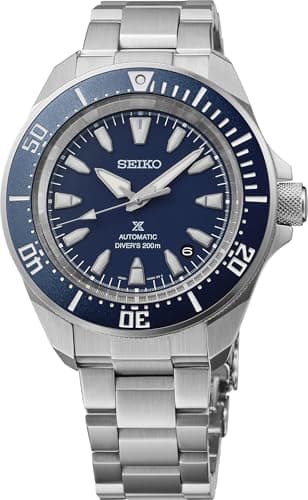
Stainless case and bracelet, Hardlex crystal, and the 4R36 automatic. The 4R36 is the upgrade worth paying for over the old 7S26: it hacks and it hand-winds, which the older caliber does not. The diver styling is incidental; the movement is the reason.
Seiko publishes a three-year worldwide warranty, having extended the period from October 2024. And the servicing story is the best here in the sense that matters - the 4R36 is in millions of watches, every competent watchmaker knows it, and parts are not a question.
The Hardlex crystal is the compromise. It is tougher than mineral glass and not as scratch resistant as sapphire, and on a watch worn daily you will mark it. It is replaceable.
Tissot PRX - the Swiss one that makes sense
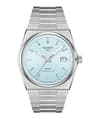
An integrated-bracelet Swiss automatic with a sapphire crystal and the Powermatic 80, which runs an 80-hour power reserve and uses a silicon hairspring that resists magnetism - a genuine practical advantage in a world full of magnets.
Two-year international warranty, three on COSC-certified models, and the Swatch Group service network behind it with good parts availability. Of everything here it is the watch that feels most expensive relative to what it costs.
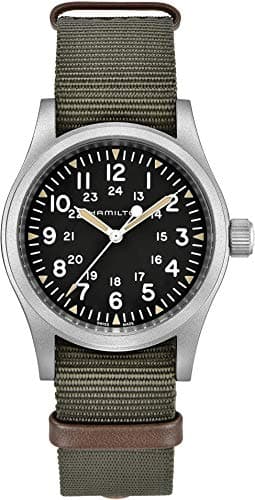
Hamilton Khaki Field Mechanical - the one to hand down
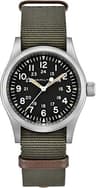
Hand-wound, Swiss, no rotor, no date. That sounds like a list of omissions and it is actually the argument: there is nothing in it that a watchmaker cannot fix with parts that will still exist in 2070. It is the most serviceable watch on this page by a wide margin.
Hamilton warrants its watches for twenty-four months. The trade is that hand-wound means winding it - about thirty seconds a day, which some people find a pleasure and others find a chore. Know which you are before you buy it.
Orient Bambino - if it has to go with a shirt
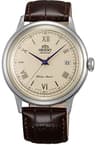
An in-house automatic caliber, hacking and hand-winding, in genuinely dressy proportions, from a maker Seiko owns. The domed crystal gives it a character far above its price.
That domed crystal is mineral glass, and it will scratch - it is the reason to love this watch and the reason it looks tired sooner than the others. Orient warrants standard models for one year, with Orient Star models at two. The leather strap is a user-replaceable consumable, which is how it should be.
Citizen Promaster Diver - the honest alternative
It is not an automatic, and it is on this page deliberately. The Eco-Drive is light-powered, so there is no winding and no battery changes, in Citizen’s hardened Super Titanium case that resists scratching better than steel.
The long-term question is the capacitor, which is a wear part and the one component with a finite life - replaceable at a Citizen service centre. If what you want is a watch that demands nothing from you, this beats every mechanical watch here, and our automatic versus quartz page makes that case properly.
What none of these need
A watch winder. A watch worn daily stays running; a watch in a drawer does not need to. Winders exist for collections, not for the single automatic you wear. And none of these needs servicing on a fixed schedule from new - our how long should a good watch last page sets out when a service is actually warranted and when it is an upsell.
The two specs that decide how it ages
The crystal. It is the only part of a watch you look at through, and a scratched one makes a healthy watch look finished. Sapphire is the right answer for daily wear: the Tissot and the Hamilton have it, the Seiko has Hardlex, and the Orient has a domed mineral crystal that is the best-looking and the softest here. Crystals are replaceable on all four, which is worth knowing before you write a watch off.
The gaskets. Water resistance is a rating at the moment of manufacture, not a permanent property. The rubber gaskets at the crown, caseback and crystal perish over years, and a watch rated to 200m with ten-year-old gaskets is not rated to anything. Having them replaced is cheap and is the single most useful piece of maintenance on a watch you wear daily.
Everything else on a spec sheet - power reserve, jewel count, bracelet type - affects how much you enjoy the watch. Those two affect whether it survives.