Forge & Forever

Watches & Tools

How Long a Watch Actually Lasts

A mechanical watch can run for a century with periodic servicing. Whether yours will depends on an arithmetic threshold almost nobody mentions.

By Mike M.Published Updated How we judge durability

How this page is funded. Forge & Forever earns a commission when you buy through the links here, at no extra cost to you. It does not change which products we pick or what we say about them - and we say plainly when something is not worth owning. Full disclosure.


The short answer

Quick picks

Ranked on published warranty terms, whether the thing can be repaired, and what it is made of. Select a row to jump to the full write-up. We have not tested these products ourselves - here is exactly what we do instead.

#ProductBest forWarrantyPrice
1
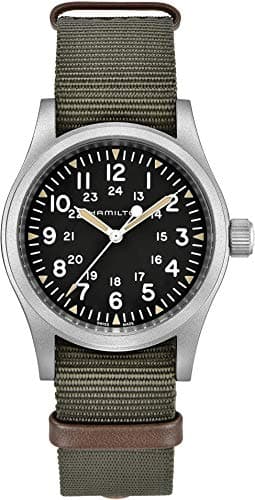
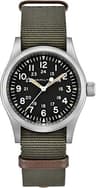
Hamilton Khaki Field Mechanical 38mm

Hamilton Khaki Field Mechanical 38mm

Hand-wound, Swiss, and deliberately simple: no rotor, no date, nothing to go wrong that a watchmaker cannot fix with parts that will still exist in 2070. The most serviceable watch in this list.

The hundred-year caseFixed term
$675.00 - Check price at Amazon

Price as of October 5, 2026. #ad How we are funded

2
Casio G-Shock DW5600

Casio G-Shock DW5600

The most genuinely indestructible object on this website. A resin case, a cheap module, 200m water resistance, and a battery life measured in years - and if you do break it, you are out the price of a takeaway.

The cheap forever caseNone published
$117.99 - Check price at Amazon

Price as of October 5, 2026. #ad How we are funded

3
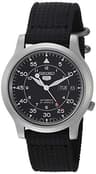
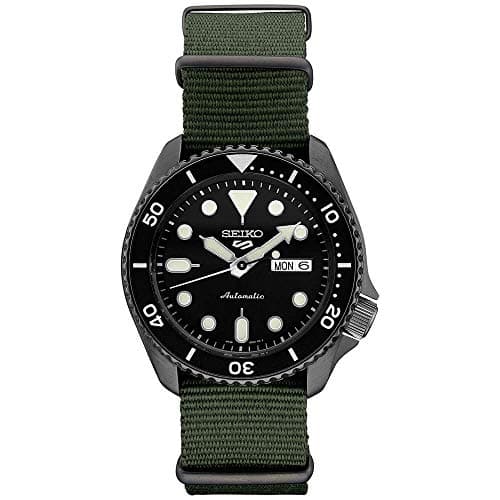
Seiko 5 SNK809 Automatic

Seiko 5 SNK809 Automatic

A mechanical movement with no battery to die, in a watch cheap enough that servicing it costs more than replacing it - which is the honest contradiction at the bottom of the watch market.

The honest ten-year caseFixed term
$369.00 - Check price at Amazon

Price as of October 5, 2026. #ad How we are funded

The theoretical answer

Indefinitely. A mechanical movement is a set of metal parts that can be cleaned, re-lubricated, and have worn components replaced. There is no process that makes it unrepairable, which is why hundred-year-old pocket watches run accurately today.

Every other durability claim on this site is a claim about a material. This one is a claim about an economic choice.

The practical threshold

A full service from an independent watchmaker typically costs 150 to 400 dollars, more for an in-house or chronograph caliber.

Below roughly 400 dollars of watch, that service costs more than a replacement. So cheap automatics get run until they stop and are then replaced, whatever the movement was theoretically capable of. Above that line, servicing is rational, so the watch gets serviced, so it survives.

That is why a Seiko 5 is a ten-year watch in practice and a Hamilton Khaki Field is a fifty-year one, despite both being perfectly rebuildable. The arithmetic differs, not the engineering.

Service intervals, honestly

The traditional five-to-seven-year advice dates from older lubricants that degraded faster. Modern synthetic oils last considerably longer, and plenty of watches run within specification for a decade or more.

Better indicators than a calendar: accuracy drifting away from where it used to sit, the power reserve shortening noticeably, or the watch sounding rough when you wind it. Those mean service it now. A watch that is keeping good time probably does not need anything.

What actually ends watches

Water ingress. Gaskets perish with age and heat. A water-rated watch is rated as it left the factory; keeping that rating means replacing seals every few years. Most water-damaged watches were rated 100m and had original gaskets from a decade earlier.

Impact. A hard knock can shift or break a balance staff. The G-Shock exists because of exactly this.

Corrosion. Sweat under the lugs and inside the bracelet links, over years. Rinsing a watch occasionally genuinely helps.

Loss. A real and large category. Spring bars fatigue and fail, and a watch that comes off a wrist in a car park is gone. Replacing spring bars every few years costs almost nothing and prevents the most common total loss.

Quartz, and the G-Shock exception

A quartz module is replaced rather than repaired, which sounds like the opposite of buy-it-for-life. In practice it is often better: modules are cheap, straps and bezels are catalog parts, and the resin case is close to indestructible.

Thirty-year-old DW5600s are in daily use everywhere. Cheap replaceable parts beat expensive serviceable ones more often than watch enthusiasts care to admit, and that is a general principle on this site rather than a quirk of one product.
In full

Every pick, written up

Warranty terms below are quoted from the brand’s own published documents. “Not published” means we looked and the brand does not say.

#1The hundred-year case

Hamilton Khaki Field Mechanical 38mm

Hand-wound, Swiss, and deliberately simple: no rotor, no date, nothing to go wrong that a watchmaker cannot fix with parts that will still exist in 2070. The most serviceable watch in this list.

What it gets right

  • Hand-wound H-50 movement with an 80-hour power reserve and no automatic rotor to fail
  • Swatch Group parts supply means service availability for decades
  • Two-year international warranty

What you give up

  • Two years is short for the money
  • Hand winding daily is a habit, not a feature, for some people
  • 50m rating only - splashes, not swimming
WarrantyFixed term

Hamilton warrants its watches for twenty-four months from the date of purchase.

RepairabilityFactory service

A simple hand-wound movement with Swatch Group parts support is the most straightforwardly serviceable mechanism here.

MaterialsStainless steel case, sapphire crystal, H-50 hand-wound movement, textile or leather strap
Made inSwitzerland
#2The cheap forever case

Casio G-Shock DW5600

The most genuinely indestructible object on this website. A resin case, a cheap module, 200m water resistance, and a battery life measured in years - and if you do break it, you are out the price of a takeaway.

What it gets right

  • Shock structure that survives drops that destroy mechanical watches
  • Battery life measured in years, and battery changes cost almost nothing
  • Cheap enough to wear everywhere without thought

What you give up

  • The resin strap perishes before anything else does - it is the real wear part
  • No published warranty terms we could verify
  • The module is replaced, not repaired
WarrantyNone published

Not published

RepairabilityIndependently repairable

Straps, bezels and batteries are all cheaply available and user-replaceable, which is why thirty-year-old DW5600s are still in daily use.

MaterialsResin case and strap, mineral glass, quartz module, 200m rating
Made inNot published
#3The honest ten-year case

Seiko 5 SNK809 Automatic

A mechanical movement with no battery to die, in a watch cheap enough that servicing it costs more than replacing it - which is the honest contradiction at the bottom of the watch market.

What it gets right

  • 7S26 movement is the most serviced automatic caliber in the world - any watchmaker knows it
  • No battery, so nothing to replace every two years
  • Seiko's worldwide warranty rose to three years in October 2024

What you give up

  • A full service costs more than the watch, so in practice these are run until they stop
  • No hacking and no hand-winding on the 7S26
  • Accuracy is specified loosely - tens of seconds a day is normal
WarrantyFixed term

Seiko increased its worldwide warranty period to three years from 1 October 2024.

RepairabilityFactory service

The 7S26 family is serviceable by any competent watchmaker and parts are widely available - though at this price point a service usually costs more than the watch.

MaterialsStainless steel case, Hardlex crystal, 7S26 automatic movement, canvas strap
Made inNot published

FAQ

Questions people actually ask

How often does a mechanical watch need servicing?

Traditional advice is every five to seven years. Modern lubricants stretch that considerably and many watches run accurately for a decade or more. The real indicators are accuracy drifting and the power reserve shortening, not the calendar.

What does a watch service involve?

Complete disassembly, cleaning of every component, replacement of worn parts and gaskets, re-lubrication, reassembly, regulation and timing. It is why it costs what it costs, and why it can be done repeatedly for a century.

Do quartz watches last as long as mechanical?

Differently. A quartz module is replaced rather than repaired, but modules are cheap and the case, strap and bezel are usually replaceable. A G-Shock from the 1990s in daily use is a perfectly ordinary thing.

What ends a watch's life?

Water ingress through perished gaskets, impact to the movement, corrosion under the lugs from sweat, and being lost - which accounts for a surprising share of attrition and is why spring bars are worth replacing early.

Sources

Where these terms come from

Every warranty, repair-path and country-of-manufacture claim above was read from the following published pages. Where a brand publishes nothing, this page says “not published” rather than guessing.

Read next

Related on Forge & Forever

See everything in Watches & Tools