What it actually is
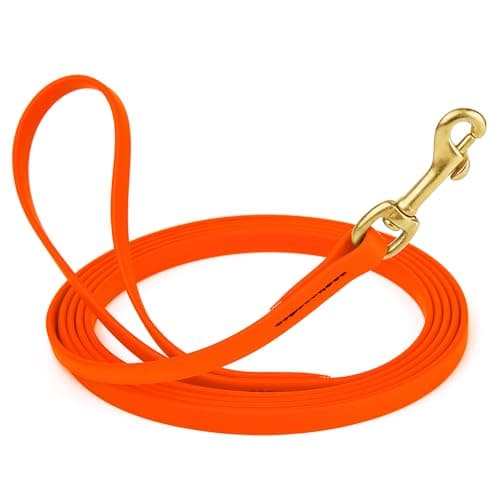
Biothane is polyester webbing with a polymer coating - usually TPU or PVC - bonded over it. The webbing carries the load; the coating seals it completely.
That seal is the entire point. The material absorbs no water, no mud, no pond, no urine and no odor. There is nothing inside it for bacteria to live in, so it cannot develop the smell that every old nylon leash has, and nothing for water to soak into, so it cannot stretch and crack the way soaked leather does.
The specific problems it solves
Dogs that swim. Leather soaked and dried repeatedly stretches, hardens and then cracks. Nylon stays wet and goes sour. Biothane comes out of a river, gets wiped, and is dry.
Mud and farm work. It hoses clean. That sounds trivial until you have tried to get dried clay out of woven webbing.
Cold weather. Nylon webbing stiffens into something unpleasant to hold below freezing. Biothane stays flexible.
Long lines. A 30-foot nylon line dragged through wet grass becomes a heavy, filthy rope. A biothane line stays light and wipes down, which is why serious recall training uses it.
The finish matters
Smooth-finish biothane is genuinely slippery when wet, which is the one real criticism of the material. Textured and matte finishes grip far better.
If the dog is strong or the leash will be wet often, buy a textured finish or one with a padded handle. It is the difference between control and rope burn.
Hardware is still the failure point
The webbing will outlast everything. The snap will not.
Insist on stainless or solid brass. Plated steel hooks rust at the spring and then stop closing reliably, which is a loose dog rather than a broken product. On a material that will genuinely last decades, pairing it with a cheap hook is an odd economy.
Check the rivets too - biothane is usually riveted rather than stitched, which is stronger and means a worn leash can be re-riveted rather than replaced.
Where leather still wins
Hand feel, mainly, and it is not a small thing on something you hold twice a day for ten years. A good leather lead softens to your hand and stays that way.
Leather also looks better, which is a legitimate preference. For a town dog that walks on pavements and rarely gets properly wet, leather is the nicer object and will last as long.
The comparison page below sets both sides out in full.