What Vibram actually is
An Italian rubber manufacturer, founded in 1937 by Vitale Bramani after a mountaineering accident he attributed to inadequate footwear. The company makes sole units that other brands fit to their boots. The yellow octagon is a supplier mark, not a quality grade.
That distinction matters because Vibram's catalog spans very soft, very grippy compounds that wear out in a season and very hard industrial ones that last years and skate on wet tiles. "It has a Vibram sole" tells you almost nothing on its own.
The units you will actually meet
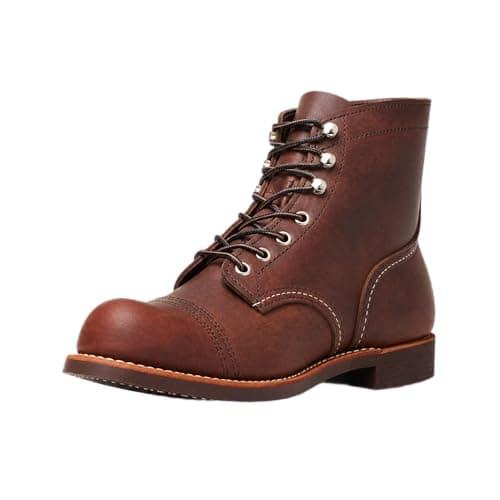
Vibram 430 (Mini-lug). The flat, fine-patterned cork-nitrile sole on Red Wing's Iron Ranger and many heritage boots. Comfortable on pavement, hard-wearing, and poor on wet smooth surfaces and loose ground. It looks right and performs mediocrely, which is an honest summary of a lot of heritage footwear.
Vibram Kletterlift. The deep-lugged mountaineering unit on Danner's Mountain Light. Excellent on trail and loose ground, heavy, and noisy on hard floors.
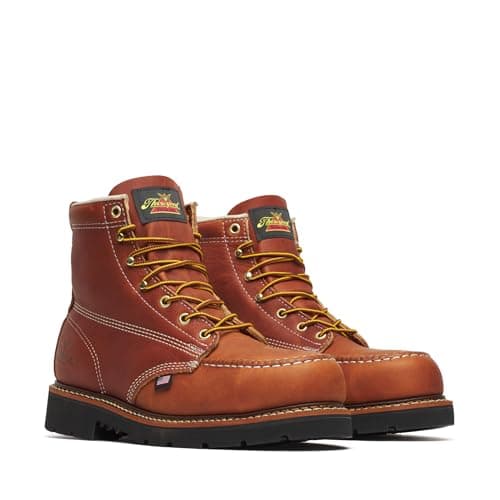
Vibram Christy. The thick white or cream wedge associated with moc-toe work boots. Soft, shock-absorbing, flat - the most comfortable thing to stand on all day and poor on anything that is not flat.
Vibram Megagrip. A softer compound with markedly better wet traction. Fitted to approach shoes and increasingly to work boots. Grips better, wears faster.
The trade you cannot escape
Soft rubber grips and wears out. Hard rubber lasts and slides. Every sole decision is somewhere on that line, and there is no compound that is simply better.
The practical consequence: if you walk mostly on wet smooth surfaces - tile, polished concrete, wet steel - buy grip and accept replacing the sole more often. If you walk on abrasive surfaces, buy hardness. Most people have the opposite of what their surface requires because they bought on looks.
Why this matters most at the resole
You cannot change the sole on a cemented boot, but on a welted one every resole is a chance to pick again. That is the single most under-used benefit of welted construction.
If your flat-soled heritage boots have been frightening you on wet pavement for three years, the fix is not a different pair of boots. It is asking the cobbler for a lugged unit next time, which costs the same as the like-for-like replacement you were going to ask for anyway.
The other sole materials, briefly
Leather soles breathe, are formal, and are slippery and fast-wearing. Replaceable indefinitely.
Crepe is natural latex: very soft, very comfortable, picks up gravel, melts on hot tarmac, and wears quickly.
Polyurethane is light and shock-absorbing and hydrolyzes with age - PU soles crumble after roughly seven to ten years even unworn, which is why old stored boots sometimes disintegrate on their first walk.
That last fact is worth knowing before you buy old deadstock footwear online.