The word and the number
“Indestructible” is the most-used and least-meaningful word in pet gear. Every bed in this category uses it. The useful question is whether the maker attaches a number, and what happens when it runs out.
In this category, they mostly do attach a number, and the number is one year.
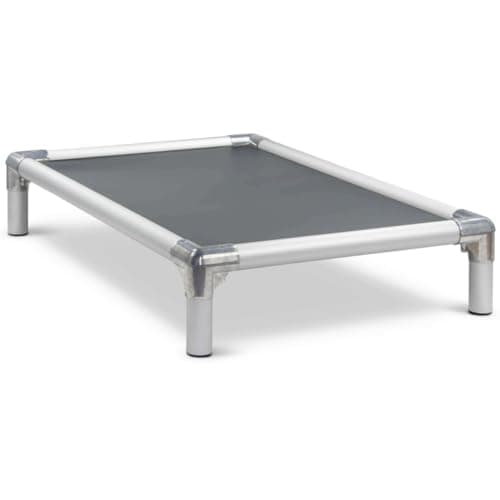
Kuranda guarantees the structural integrity of the frame and its cordura, ballistic and heavy-duty vinyl fabrics for one year from purchase. The chew-proof warranty explicitly includes damage from digging and scratching - a genuinely generous inclusion, since digging is how most dogs destroy a deck. Outdoor mesh, bed pads and accessories are excluded, and claims are limited to one free replacement per part per bed.
K9 Ballistics publishes two separate terms, which is the clearest paperwork in this hub: a 1 Year Chew Proof Warranty giving a one-time replacement of cover or bed, and a separate 10 Year Won’t Flatten warranty replacing the mattress once free of charge if it loses more than two inches of loft within ten years.
Two promises, two numbers, two different failure modes. That is how it should be written.
The architecture matters more than the warranty
The single best design decision in this category is making the fabric deck a bolt-in spare part. A Kuranda or Coolaroo frame with a replaceable deck means a destroyed bed is a fabric purchase rather than a new bed - and that holds in year six, long after any chew warranty has expired.
A stuffed bed with a sewn-in cover has no such path. When the dog opens it, the stuffing goes everywhere and the whole thing goes in the bin.
So the strategy that actually works for a destructive dog is not hunting for an indestructible bed. It is buying a frame whose deck is a consumable, and treating replacement as planned maintenance.
Elevated beds have a second, unadvertised advantage
Air circulates underneath. For a thick-coated or heavy dog in summer that is the difference between the bed being used and being ignored, and an unused bed is 100 percent wasted however durable it is.
They also stay dry, hose clean, and keep the dog off a cold floor in winter. The trade is that the surface is hard, which is why most dogs want a pad on top - and the pad is not covered by any chew warranty here.
When an orthopaedic bed is the right answer instead
If the dog is old, arthritic or large and heavy, joint support matters more than chew resistance - and a chewing problem usually resolves with age anyway.
What to look for there: a solid foam core rather than shredded filler, which compresses unevenly, and a removable washable cover, because a bed you cannot wash is a bed you will throw away. PetFusion does both. It is not chew resistant in any way and does not claim to be.
Sizing, which people get wrong
Measure the dog nose to tail while lying stretched out, and add about six inches. Most people buy a size down because the dog curls up in the shop, and then the dog cannot stretch out at home and stops using the bed.
On an elevated bed, also check the weight rating against the dog’s actual weight rather than its breed - a bed rated to 50lb with a 70lb dog on it will sag in the middle and the frame joints will go first.