What actually kills a dog bowl
Start with the failure modes, because they are not where anyone looks. A dog bowl is filled and emptied twice a day, dragged across a hard floor, stood on, dropped, and put through a dishwasher a few thousand times. Over fifteen years that is more cycles than almost any other object in the house. Here is what gives out:
The bonded rubber ring, not the bowl. Most non-skid stainless bowls are a steel bowl with a rubber ring glued to the base. The steel is effectively immortal. The glue is not, and after a few hundred dishwasher cycles the ring separates, which turns a non-skid bowl into a noisy sliding one. This is the single most common way a good bowl stops being a good bowl.
The plastic, on anything with a frame. Elevated feeders and spill-catching systems are stainless bowls in a molded plastic structure. The bowls outlast the frame by decades. Plastic in a kitchen gets scratched, stained, discolored and eventually brittle, and a cracked frame is not a repairable item.
Scratches, on anything that scratches. This is a hygiene failure rather than a structural one. Biofilm colonizes scratches and clings there, so a scratched plastic or glazed surface stays slimy no matter how often you rinse it. Stainless resists this because it does not scratch deeply enough to matter at bowl thickness.
The floor, on anything ceramic. A stoneware bowl has exactly one terminal failure mode, and it is sudden.
Note what is not on that list: the steel. Nobody has ever worn out a stainless dog bowl. Which means the entire durability question in this category is about everything attached to the bowl, and about whether the maker will stand behind it.
How we judged these
Published steel grade. 304 stainless - the same grade used for food equipment, sometimes marked 18/8 - is what you want, and most bowls on the market do not say. A bowl whose maker publishes the grade is giving you information most of the category withholds, and that is worth something on its own.
The warranty document, if there is one. Three of the five bowls here publish nothing. One publishes five years. One publishes a lifetime limited warranty. For a plain stainless bowl that gap matters less than it sounds; for a frame or a bonded ring it is the whole decision.
Whether the failing part is separately replaceable. A system where the bowl and the stand are separate purchases survives a chewed stand. A molded one-piece feeder does not.
Whether it stays where you put it, because a bowl that gets pushed across the room is a bowl that gets dented, stood on and eventually thrown out.
The only bowl here with a lifetime term
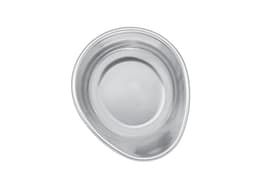
WeatherTech publishes a lifetime limited warranty on its pet feeding system bowls, covering defects in materials and workmanship for the original purchaser. It also publishes what the bowls are: 304 stainless steel, NSF certified, manufactured in the USA from American-sourced steel. That combination - a stated grade, a third-party food-safety certification, a stated country of manufacture and a lifetime term - does not exist anywhere else in this category at any price.
It is worth being precise about what that warranty is and is not. It covers defects in materials and workmanship, which on a formed stainless bowl means a manufacturing flaw. It is not a promise to replace a bowl your dog knocked down the basement stairs. On an object with no moving parts, though, defects are essentially the only thing a warranty could cover, so the term is close to as broad as it could honestly be.
The design is deliberately modular: the bowl is sized to drop into WeatherTech’s own feeding stands, which means the stand and the bowl are separate purchases. A dog that chews the stand has cost you the stand. On a one-piece feeder, the same dog has cost you everything.
The honest cons: it costs several times a plain stainless bowl of the same capacity, and bought on its own it has no rubber base ring, so a determined dog will push it around the kitchen unless you also buy the stand. If you want one bowl that sits on the floor and stays there, the next two picks do that better.
The value answer
A plain seamless stainless bowl with a bonded rubber ring, at a price where buying one per dog per floor is not a decision. It is dishwasher safe, there is no crevice for biofilm to hide in, nothing leaches, and it cannot be chewed. It is the plainest possible execution of the right material, which is why it is hard to argue with at this price.
There is no published warranty we could find, and on this particular object that is close to irrelevant. A seamless stainless bowl has no defect mode that takes years to appear - either it is formed correctly, which you can see immediately, or it is not.
The real cons are the ones in the failure list above. The bonded ring is the part that goes, and after enough dishwasher cycles it will separate. The gauge is lighter than the premium bowls here, so it dents if a large dog stands on the rim. Both are genuine, and at this price neither is a reason to buy something else - it is a reason to expect to replace it eventually, which the price already accounts for.
For dogs that push the bowl across the room
The YETI Boomer is heavy-gauge 18/8 stainless with a non-slip ring and a base weighted enough that it does not travel. YETI publishes a five-year limited warranty on the Boomer dog bowls, covering defects arising from the product’s intended use per the care instructions, and explicitly excluding punctures, scratches, normal wear and tear, and the natural breakdown of colors and materials over extended time and use.
Five years is longer than almost anything else in the category publishes, and it is shorter than the price implies - which is a pattern we have documented in coolers and bottles from the same brand, where the cheapest product in the comparison often carries the longest term. The honest summary: you are buying a thicker bowl that stays put and does not ring when dropped, with a reasonable term behind it, at a significant brand premium.
The con worth flagging specifically is that the rubber ring is the component that eventually perishes, and it is not published as a spare part. A five-year warranty on a bowl whose ring is the part that goes is a warranty on the wrong half of the product.
For the dog that empties the water bowl onto the floor
The Neater Feeder is not really a bowl. It is a two-level molded plastic frame with a reservoir underneath that catches spilled water, and two stainless bowls that drop into the top. If you have a dog who drinks like a fire hose and a kitchen floor you would like to keep, it solves a problem that no bowl on its own can solve, and it does it well.
On this site’s terms, be clear about what you are buying: the stainless insert bowls are effectively permanent and are sold separately, so a lost or dented bowl does not retire the frame. The frame is plastic, we found no published warranty term for it, and plastic in a kitchen cracks and discolors on a timescale of years rather than decades. It is also bulky, and the reservoir has to be emptied and washed rather than topped up, or it goes sour.
Buy it for the floor, not for the fifteen-year horizon. It is the right purchase for a specific problem and the wrong purchase as a default bowl.
The honest case for ceramic
Glazed stoneware does several things stainless cannot. It is heavy enough to stay put with no rubber ring to perish, which removes the most common failure mode on this page entirely. A vitrified glaze does not stain, does not hold odor and does not scratch into biofilm crevices. And the Mason Cash cane pattern has been in production long enough that a replacement still matches the one you bought years ago - which is a real durability feature in a category where designs vanish annually.
The case against is the one sentence nobody puts on the box: it will eventually hit a hard floor. There is no published warranty, a chip in the glaze means retiring the bowl rather than repairing it, and at a similar price it holds less than the stainless bowls here.
If your dog eats in a carpeted room and pushes bowls around, ceramic is a genuinely good answer. On tile, it is a countdown.
What we considered and did not feature
Basis Pet. A US-made stainless bowl that comes up constantly in buy-it-for-life discussions, and we wanted to feature it. Nothing in the catalog resolved to a listing carrying the brand name, and this site does not feature a product whose link cannot be verified as the right product. Worth buying direct if the brand matters to you.
Plastic bowls of any kind. Excluded on the merits rather than for lack of a listing. Plastic scratches, scratches hold biofilm, and a chewed plastic bowl sheds fragments a dog can swallow. There is no price at which this becomes the durable choice.
Slow-feeder and puzzle bowls. Often genuinely useful, almost always molded plastic with deep channels that are difficult to clean properly - which is the exact geometry biofilm likes. If you need one, treat it as a tool with a service life, not as the bowl.
Automatic and gravity feeders. Out of scope here. They add a reservoir, a mechanism and often electronics to an object whose entire virtue is having none of those.
The maintenance that makes the difference
Wash daily with a brush, not a rinse. Biofilm is removed mechanically. Rinsing relocates it. This is the single habit that matters most, and it matters for your dog’s health rather than the bowl’s lifespan.
Keep bonded-ring bowls out of the hottest dishwasher cycle. Heat is what breaks down the adhesive holding the ring on. A normal cycle adds years to the ring.
Separate the water bowl from the food bowl. A bowl that holds standing water all day is a different hygiene job from one that is emptied in ninety seconds, and pairing them means both get washed on the schedule of the less demanding one.
Retire a chipped ceramic bowl immediately. A chip in the glaze exposes porous body underneath, and that is no longer a cleanable surface.
The same read-the-document approach runs through the rest of this hub: dog gear warranties compared puts the published terms for beds, leashes, collars and harnesses side by side, and it is the clearest illustration we have that in pet gear the word “guaranteed” usually means one year and one replacement.
The short answer
If you want the bowl with the best paperwork and you are willing to pay for it, the WeatherTech is the only one here with a published lifetime term, a stated steel grade and a stated country of manufacture - buy it with the stand so it stays put. If you want the sensible answer, buy two of the Durapet, expect the rubber ring to be the thing that goes, and accept that at this price that is fine. Buy the YETI if your dog shoves bowls around and you want weight behind it; buy the Neater Feeder if the actual problem is your floor rather than your bowl; buy the ceramic if the room is carpeted.
And whatever you buy, wash it with a brush every day. Of everything on this page, that is the only thing that affects your dog rather than your wallet.