Why merino, specifically
Merino is a fine-fiber wool - the fibers are thin enough not to itch, unlike coarse wool. Three properties follow from the structure, and all three matter for work:
It absorbs moisture into the fiber rather than holding it on the surface, so it feels dry when it is damp and does not give bacteria the surface film they need. That is why merino does not smell after two days and polyester smells after two hours.
It keeps insulating when wet. Cotton loses essentially all its insulating value when soaked; wool keeps most of it. In a wet boot that is a genuine safety property in cold weather, not a comfort one.
It regulates both ways. The same sock is tolerable in summer and useful in winter, which is why a single weight covers most of the year.
The nylon is not a compromise
People see “64% merino” and assume the remaining fabric is cost-cutting. It is not. Pure merino has very poor abrasion resistance and a 100 percent wool sock wears through at the heel and toe in weeks.
The nylon is load-bearing: it carries the abrasion so the wool can do the thermal and moisture work. The elastane - usually 1 to 3 percent - holds the sock up, which stops it bunching and creating blisters.
A good work sock is roughly 60 to 75 percent merino. People Socks goes to 71 percent, which is at the top of the sensible range; past that durability starts dropping.
Cushioning, and when it is wrong
Ultra-light / no cushion: running, hot weather, tight shoes.
Light cushion: everyday shoes, office, walking.
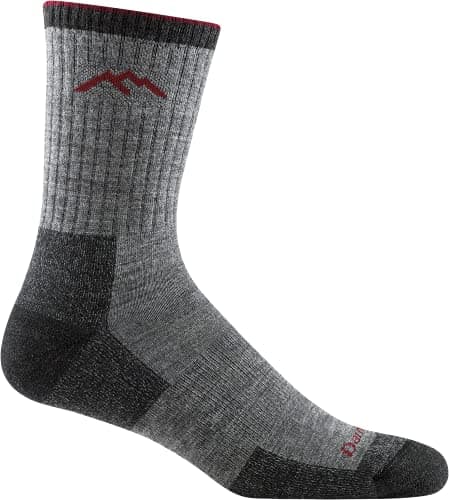
Midweight / micro crew: the default for boots. Enough padding to matter, not enough to change boot fit dramatically.
Full cushion: work boots, cold weather, long days standing. Changes boot fit by close to half a size, which is why you should buy boots wearing the socks you intend to use.
The warranty, briefly
Darn Tough publishes an unconditional lifetime guarantee covering wear-through with no receipt. Smartwool publishes two years. Wigwam covers defects with proof of purchase. People Socks publishes nothing we could find.
That spread is covered in full on the lifetime warranty page linked below, and it is the single biggest differentiator in this category.
How to make them last
Rotate four pairs rather than wearing two into the ground - fibers need to recover between wears, the same principle as rotating boots. Wash inside out on a normal cycle. Never use fabric softener, which coats the fibers and destroys the moisture handling that you paid for. Air dry or tumble low; hot drying felts wool.
And cut your toenails. A surprising proportion of “these wore out in a month” reviews are a single sharp nail.