Forge & Forever

Boots & Leather

How Long Boots Actually Last

Boot lifespan has three different answers depending on construction, and the figure people quote is usually the one for a boot they maintain.

By Mike M.Published Updated How we judge durability

How this page is funded. Forge & Forever earns a commission when you buy through the links here, at no extra cost to you. It does not change which products we pick or what we say about them - and we say plainly when something is not worth owning. Full disclosure.


The short answer

Quick picks

Ranked on published warranty terms, whether the thing can be repaired, and what it is made of. Select a row to jump to the full write-up. We have not tested these products ourselves - here is exactly what we do instead.

#ProductBest forWarrantyPrice
1
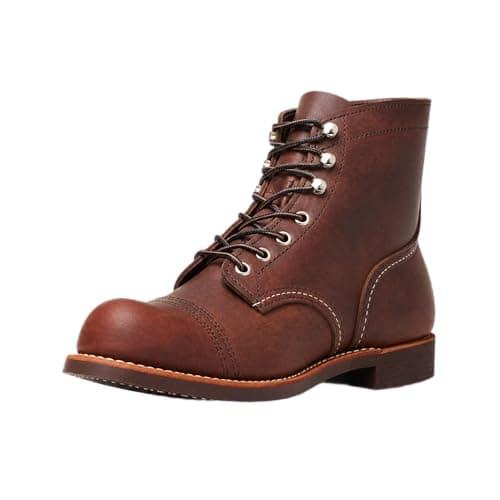
Red Wing Heritage Iron Ranger 8111

Red Wing Heritage Iron Ranger 8111

The default answer to 'one pair of boots for the next decade'. Goodyear welted, made in the USA, and Red Wing runs its own repair shop - so the thing that wears out first is also the thing that is designed to be replaced.

The 20-year caseFixed term
$349.99 - Check price at Amazon

Price as of October 5, 2026. #ad How we are funded

2
Blundstone Classic 550 Chelsea Boot

Blundstone Classic 550 Chelsea Boot

Genuinely good leather on a sole that is not designed to come off. Blundstone says so itself: most of its boots use an injected polyurethane sole that cannot be resoled successfully. Buy it for how it wears, not for how long it lasts.

The honest 4-year caseNone published
$219.95 - Check price at Amazon

Price as of October 5, 2026. #ad How we are funded

3
Timberland PRO Direct Attach 6-inch Insulated Waterproof

Timberland PRO Direct Attach 6-inch Insulated Waterproof

The name tells you the problem. Direct-attach means the sole is molded straight onto the upper: waterproof, cheap, warm, and permanently un-resoleable. A good winter work boot to replace every few years, not a boot to keep.

The honest 2-year caseNone published
$129.95 - Check price at Amazon

$175.0026% off

Price as of October 5, 2026. #ad How we are funded

4
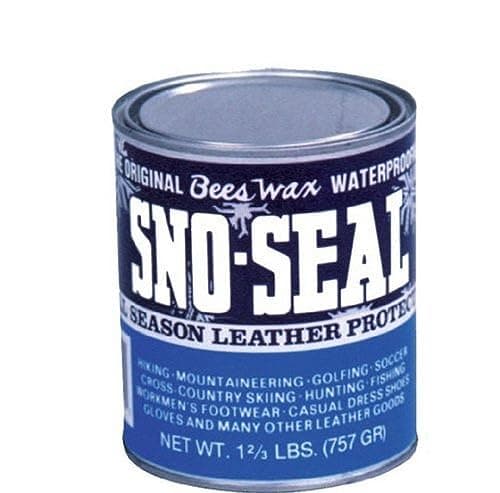
Atsko Sno-Seal Original Beeswax Waterproofing

Atsko Sno-Seal Original Beeswax Waterproofing

Pure beeswax, applied warm. The one product on this list that genuinely keeps feet dry through a winter, and the one most people apply wrong - it has to go on warm leather or it just sits on the surface.

What extends all threeNone published
$20.05 - Check price at Amazon

$22.089% off

Price as of October 5, 2026. #ad How we are funded

Three constructions, three answers

Welted or stitchdown: upper 10 to 20 years, sole 18 months to four years, three to five resoles before the welt stitching holes give out. Effective total: twenty to forty years.

Cemented: two to five years. The sole debonds or wears through, and the practical repair options are poor. The upper is usually fine when the boot is discarded, which is the frustrating part.

Direct-attach: one to three years in hard use. The polyurethane is molded on and cannot be replaced, and PU also hydrolyzes with age independently of wear.

Those ranges assume regular wear - four or five days a week - and ordinary maintenance. They collapse dramatically without it.

What actually fails, in order

1. The outsole. Always. On almost every boot. This is the designed consumable, and on a welted boot it is a 120-dollar event rather than the end.

2. The heel counter. The stiffener at the back. It collapses when people lever boots off by standing on the heel with the other foot, which is the single most destructive habit in bootcare.

3. Eyelets and speed hooks. They pull through, usually at the top two positions where the lacing tension is highest. A cobbler can replace them cheaply if the leather around them is intact.

4. Tongue gusset stitching. The seam that flexes most. Repairable, and people usually do not bother until water is getting in.

5. The waterproof membrane, on lined boots. Delaminates and clogs. Not replaceable, and the reason an unlined boot can outlast a lined one even though it is less waterproof on day one.

6. The leather. Last, usually, and typically because it was allowed to dry out and crack rather than because it abraded.

The three habits that change the numbers most

Rotate. Leather needs a day or more to dry out between wears. A boot worn daily while damp compresses its midsole and rots its stitching. Two pairs alternated last more than twice as long as one pair worn daily - the maths is better than it sounds.

Never dry near heat. A radiator cooks the oils out of leather and cracks it across the flex point, which is unrepairable. Newspaper, moving air, room temperature, 48 hours.

Use a horn, not your other foot. Levering a boot off by the heel destroys the counter, after which the boot never holds your foot properly again.

The maintenance arithmetic

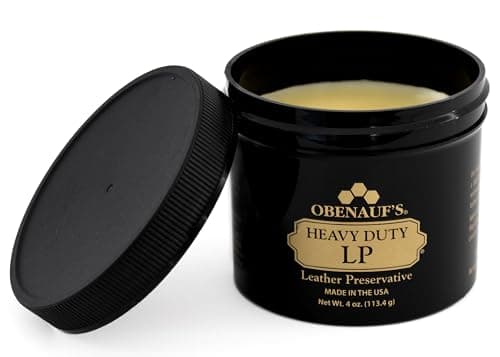
A tin of conditioner, a tin of wax and a brush cost about thirty dollars and last three years. Over a twenty-year boot life that is two hundred dollars, against a boot that cost 350 and would otherwise have lasted eight years.

Put differently: the maintenance is roughly a tenth of the purchase price and roughly doubles the life. There is no other intervention on this website with that ratio.

In full

Every pick, written up

Warranty terms below are quoted from the brand’s own published documents. “Not published” means we looked and the brand does not say.

#1The 20-year case

Red Wing Heritage Iron Ranger 8111

The default answer to 'one pair of boots for the next decade'. Goodyear welted, made in the USA, and Red Wing runs its own repair shop - so the thing that wears out first is also the thing that is designed to be replaced.

What it gets right

  • Goodyear welt: any competent cobbler can resole it, and Red Wing will do it in-house
  • Amber Harness leather is thick enough to take a decade of creasing and still look better for it
  • Made in Red Wing, Minnesota - not a heritage story attached to an overseas factory

What you give up

  • Double leather toe plus a flat Vibram 430 sole means a genuinely stiff first month
  • The 12-month warranty is ordinary; the resole path, not the warranty, is what makes this a buy-once boot
  • Sized on Red Wing's own last - most people drop half a size from their sneaker size
WarrantyFixed term

12 months against defects in workmanship and materials, original purchaser only, original receipt required. Failures from excessive or abusive wear are excluded.

RepairabilityIndependently repairable

Goodyear welted, so the sole stitches off and a new one stitches on without touching the upper. Red Wing operates its own repair shop at the Red Wing, Minnesota factory and its stores take resoles with original parts.

MaterialsAmber Harness full-grain leather upper, leather midsole, Vibram 430 rubber sole, Goodyear welt
Made inUSA
#2The honest 4-year case

Blundstone Classic 550 Chelsea Boot

Genuinely good leather on a sole that is not designed to come off. Blundstone says so itself: most of its boots use an injected polyurethane sole that cannot be resoled successfully. Buy it for how it wears, not for how long it lasts.

What it gets right

  • Nothing is faster to put on, and the elastic sides outlast most laces
  • Premium leather upper that takes conditioner well
  • Comfortable immediately - effectively no break-in

What you give up

  • Blundstone states that most of its boots cannot be resoled - the PU sole is injected onto the upper
  • When the sole goes, the boot goes, regardless of how good the leather still is
  • The Heritage series is the resoleable exception and costs considerably more
WarrantyNone published

Not published

RepairabilityReplace on failure

Blundstone's own support documentation states most of its boots cannot be resoled successfully because the soles are applied by liquid injection of polyurethane. Only the Heritage series, which uses a Goodyear welt, is designed to be resoled.

MaterialsPremium leather upper, injected polyurethane/TPU sole, elastic gusset
Made inNot published
#3The honest 2-year case

Timberland PRO Direct Attach 6-inch Insulated Waterproof

The name tells you the problem. Direct-attach means the sole is molded straight onto the upper: waterproof, cheap, warm, and permanently un-resoleable. A good winter work boot to replace every few years, not a boot to keep.

What it gets right

  • Genuinely waterproof and insulated for cold outdoor work
  • Cheap enough to treat as a consumable
  • Comfortable from day one

What you give up

  • Direct-attach sole cannot be replaced - that is what the name means
  • Insulation packs down over a couple of winters
  • No published warranty terms we could find
WarrantyNone published

Not published

RepairabilityReplace on failure

Direct-attach construction molds the outsole onto the upper. There is no resole path.

MaterialsLeather upper, waterproof membrane, 400g insulation, direct-attach rubber outsole
Made inNot published
#4What extends all three

Atsko Sno-Seal Original Beeswax Waterproofing

Pure beeswax, applied warm. The one product on this list that genuinely keeps feet dry through a winter, and the one most people apply wrong - it has to go on warm leather or it just sits on the surface.

What it gets right

  • Beeswax barrier that survives weeks of wet, not days
  • Does not soften leather the way oils do
  • A quart can is effectively a lifetime supply

What you give up

  • Must be applied to warmed leather to work at all
  • Darkens leather
  • Will dull a polished finish
WarrantyNone published

Consumable - no product warranty applies.

RepairabilityReplace on failure

Not published

MaterialsPure beeswax
Made inNot published

FAQ

Questions people actually ask

How long do Red Wing boots last?

The upper routinely lasts 10 to 20 years with regular conditioning. The sole lasts 18 months to four years depending on mileage and surface, and is replaced rather than ending the boot - which is why the honest answer is a range for each component rather than one number.

What usually fails first on a boot?

The outsole, on almost every boot. After that: the heel counter if you lever your boots off, the eyelets and speed hooks, the tongue gusset stitching, and on lined boots the waterproof membrane. The leather upper is usually the last thing to go.

Does rotating boots really help?

Yes, materially. Leather needs 24 hours or more to dry out fully after a day of wear, and a boot worn wet every day compresses its midsole and degrades its stitching faster. Alternating two pairs typically gives each more than twice the life of a single pair worn daily.

Read next

Related on Forge & Forever

See everything in Boots & Leather