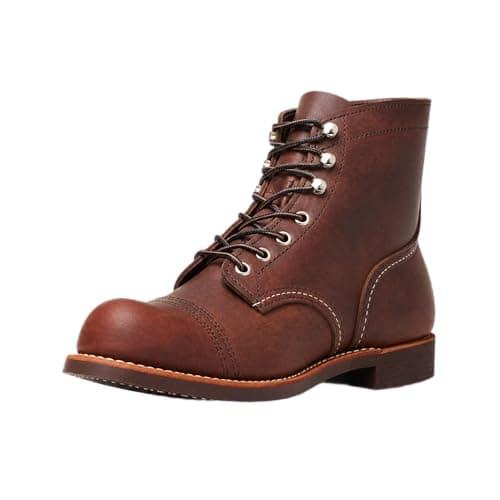
Worn daily, a pair of Red Wing Heritage boots will need resoling every one to two years, and the uppers routinely last ten years or more across several of those resoles. Worn a few times a week and conditioned properly, twenty years is not unusual. The number people quote as the boot’s lifespan is almost always the sole’s lifespan, and those are different things - which is the whole reason a welted boot is worth buying.
Three clocks, running at different speeds
Every welted boot is really three products wearing out on separate schedules.
- The outsole: one to two years of daily wear. Faster on the crepe wedge of the Classic Moc 875, slower on the flat Vibram 430 of the Iron Ranger, faster again if you walk on abrasive surfaces or drive a lot.
- The footbed and leather midsole: two to five years. They compress. This is the part that makes a comfortable boot quietly uncomfortable, and both can be replaced at a resole.
- The upper: a decade or more. Amber Harness and Oro Legacy are thick, oil-rich hides. Conditioned, they crease and patinate; neglected, they dry and crack - and a cracked vamp is the one failure a cobbler cannot undo.
The break-in, by model
Break-in is not a measure of quality, it is a measure of how much leather is between your foot and the ground.
The Iron Ranger 8111 has a double leather toe and a flat Vibram 430 sole, and it is genuinely stiff for the first two to four weeks of regular wear. The Blacksmith 3343 has a single leather toe and breaks in in days rather than weeks - it is the boot to buy if the Iron Ranger’s reputation is the thing stopping you. The Classic Moc 875 on the Traction Tred crepe wedge is comfortable almost from the first wear, because the sole is doing the yielding instead of your foot.
None of them should ever actually hurt. Break-in is leather conforming to your foot; pain is the wrong size. If a boot is pinching across the ball or lifting hard at the heel after two weeks, it is not going to improve.
The warranty is twelve months, and that is fine
Red Wing’s Heritage warranty covers defects in workmanship and materials for twelve months, original purchaser only, original receipt required, with failures from excessive or abusive wear excluded.
It gets misreported as a lifetime warranty constantly. It is not, and it does not need to be: a warranty is a promise about manufacturing defects, and defects show up early. What carries a boot through year twelve is the welt and the repair shop, both of which are structural rather than contractual. On this site we would rather a brand publish a short, honest term than a long, vague one.
What ends a pair of Red Wings early
- Resoling too late. If the outsole wears down into the welt stitching, the stitches abrade and the job becomes a rebuild. Check the heel edge and the ball of the foot once the tread looks half gone.
- Drying them by a heat source. Radiators and heaters pull the oils straight out of oil-tanned leather. Wet boots go somewhere cool with the laces open and stuffed with paper, and they take a day.
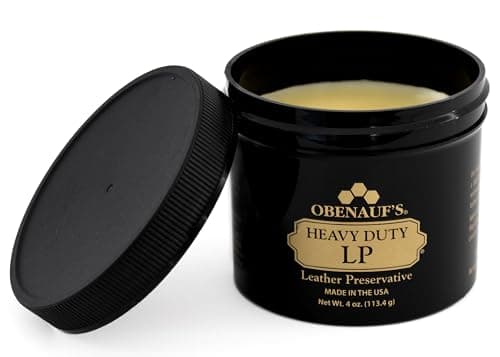
- Never conditioning them. Twice a year is plenty for most wearers, more if they are soaked often. Red Wing’s own All Natural Boot Oil is formulated for the tannery’s finishes; our conditioner roundup covers the alternatives and which hides they suit.
- Wearing one pair every single day. Leather needs a day to dry out properly. Two pairs alternated do not last twice as long - they last considerably more than twice as long.
- Buying the wrong size. Heritage boots run on Red Wing’s own lasts and most people drop about half a size from their sneaker size. A boot you stop wearing has a service life of zero.
A realistic ownership timeline
For a pair worn most working days, conditioned twice a year and resoled on time, this is the shape of it:
- Weeks 1-4: break-in. Short wears, thick socks, condition once at the end of the first month.
- Year 1-2: first resole. New outsole, heel, and a look at the footbed.
- Year 3-5: second resole, usually with a new leather midsole. This is the point at which the boots feel new again, and it is the single most underrated thing about owning them.
- Year 6-10: third resole, possible restitch of the vamp seam on a moc toe, and the leather is now better-looking than it was when you bought it.
- Year 10+: the upper decides. Conditioned leather keeps going; dry leather cracks along the flex point and that is the end.
So what is the real number?
The honest answer is that there isn’t one, because the sole is a part and the boot is a platform. Ten to twenty years of uppers, one to two years per sole, and a maintenance schedule that is mostly about not drying them on a radiator. If you want the comparison across brands rather than within Red Wing, our how long do boots last page puts the welted boots next to the cemented ones with the honest two-year cases included.
Which Red Wing lasts longest
Within the Heritage line the differences are smaller than the model numbers suggest, because the welt and the factory are shared. What varies is the sole and the toe.
The Iron Ranger 8111 has the longest-lived combination: a double leather toe that resists scuffing through to the lining, and a flat Vibram 430 that wears slowly. The Blacksmith 3343 is identical in construction with a single leather toe - easier to live with, marginally less protective where you kick things. The Classic Moc 875 has the shortest sole life of the three by a clear margin, because crepe is soft, and the longest comfortable life because crepe is soft. Same trade, read two ways.
None of that changes the upper’s lifespan, which is the number people actually mean when they ask how long the boots last. All three use thick oil-tanned full-grain from the company’s own tannery, and all three will outlast several soles if they are kept fed.