The question that settles it
Does your dog go in water?
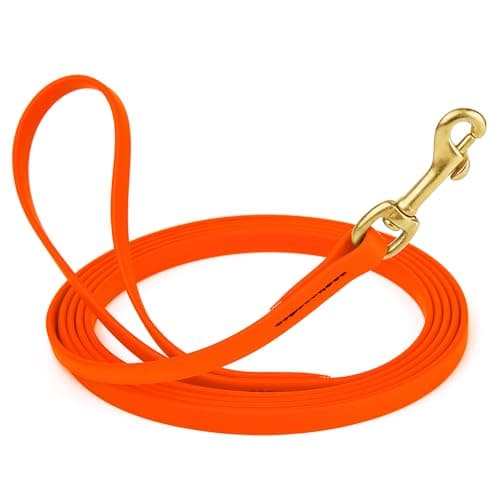
If yes, buy biothane and stop reading. Leather repeatedly soaked and dried stretches, hardens and then cracks, and no amount of conditioning fully prevents it. Biothane absorbs nothing at all - it comes out of a river, gets wiped and is dry.
If no, the rest of this page is a genuine preference rather than a right answer.
Where leather wins
Hand feel. A good leather lead softens to your hand over a year and then stays that way for a decade. You hold this thing twice a day for ten years, and that is not a small consideration.
Repairability. Leather is genuinely better here. A saddler can re-stitch, shorten, re-punch and re-buckle a leather lead indefinitely. Biothane is normally riveted, which can be re-riveted but is less adaptable.
Aging. Leather develops patina. Biothane looks identical on day one and day three thousand, which some people like and some find soulless.
Where biothane wins
Water, mud, snow. Comprehensively.
Odor. There is nothing in it for bacteria to colonize, so it never develops the smell every old nylon or wet leather lead has.
Cold. Stays flexible where nylon stiffens.
Maintenance. None. Leather wants conditioning twice a year and almost nobody does it, which is the real reason leather leads fail early.
Long lines. A 30-foot leather line does not exist for good reason. Biothane is the only sensible material for a long line dragged through wet grass.
The hand-feel caveat on biothane
Smooth-finish biothane is slippery when wet. For a strong dog that is a genuine control issue.
Buy a textured or matte finish, or a version with a padded handle. It removes the one real complaint about the material.
The sensible answer for most people
Own both. A biothane lead and long line for walks, fields, water and winter; a leather lead for town, for visitors, and for the days the dog is clean.
Together they cost less than forty dollars and between them they cover everything. That is a better outcome than one compromise lead doing both jobs badly, and it is how most people with working dogs actually end up.