The honest framing
No leash stops a dog pulling. Pulling is a trained behavior problem and equipment is management - it makes the walk survivable while you do the actual work.
What the right equipment does do is protect your hands, give you reliable control, and avoid actively teaching the dog the wrong thing. Those are three real goals and they are achievable.
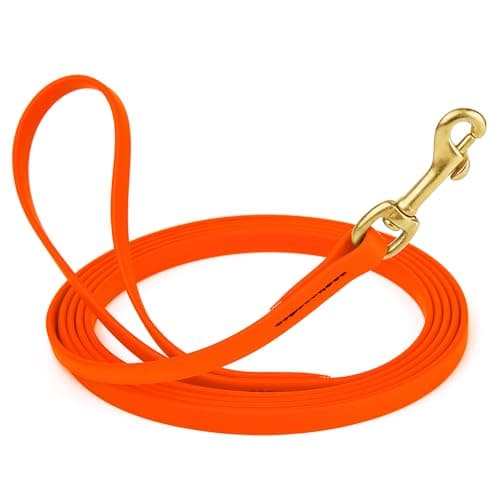
Length: four to six feet, and no more
Under four feet leaves the dog no room to self-correct and transmits every lunge straight into your shoulder.
Four to six feet is the working range. The dog has enough room to move naturally and you have enough leash to shorten up when you need to.
Over six feet lets the dog build speed before hitting the end, which is worse for your shoulder and for the dog’s neck.
A retractable actively teaches that pulling extends the lead. That is the exact opposite of what you are training, and it has its own page.
Padding is a hand-injury question
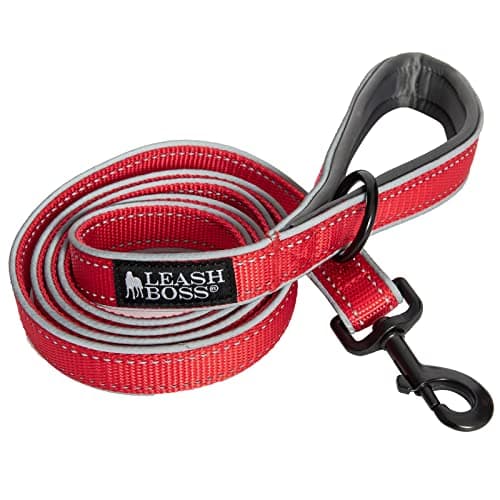
A thin webbing lead on a 70lb dog that lunges will take skin off your palm, and a rope lead will burn. A neoprene-padded handle spreads that load.
This is not comfort - it is the difference between walking the dog and avoiding walking the dog, and an unwalked dog pulls harder.
Where the leash attaches matters more than the leash
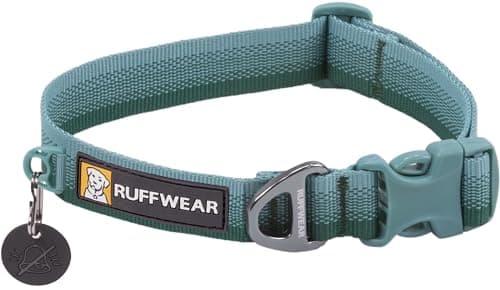
Flat collar on a hard puller puts all the force on the trachea. For a strong dog this is genuinely a welfare issue, and for brachycephalic breeds and small dogs it is a medical one.
Back-clip harness gives the dog its best pulling mechanics - this is literally how sled dogs are rigged. Comfortable, and the worst choice for a puller.
Front-clip harness turns the dog toward you when it pulls, removing its leverage. This is the single most effective piece of management equipment for a puller.
Martingale collar for a dog that backs out of flat collars - sighthounds especially. It is about escape, not pulling, and must not be left on unsupervised.
The equipment that does not deserve its reputation
Bungee leads reduce shock to your shoulder, which is real and helpful on a bad joint. They also give the dog constant tension to lean into, which can reinforce the behavior. A reasonable trade for a specific reason, not a default.
Double-ended leads clipping to a harness and a collar give genuine extra control for a reactive dog, at the cost of a lead you have to manage with both hands.
What we would actually buy
A six-foot padded lead with a stainless snap, clipped to a front-attachment harness, and thirty minutes a week working on loose-lead walking.
That is under fifty dollars of equipment and the training is free. Everything else in this category is selling you a way to avoid the thirty minutes, and none of it works for long.