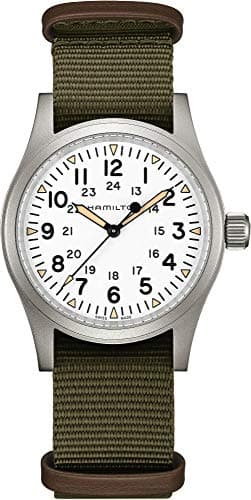
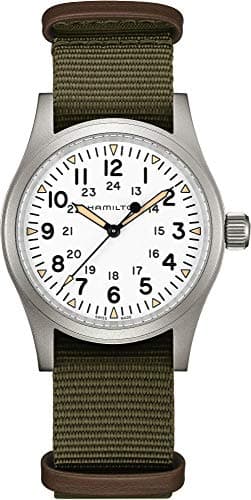
There is no average lifespan for a Hamilton watch, because a mechanical Hamilton does not have one - it has a service interval, and kept to it the watch runs indefinitely. Every part in the movement is replaceable steel and brass, Hamilton is a Swatch Group brand with a maintained parts supply, and the Khaki Field Mechanical in particular is about as simple as a modern Swiss watch gets. What actually ends these watches is not wear; it is an owner looking at a service quote and deciding to buy something else instead.
Why “how long does it last” is the wrong question
A quartz watch has a lifespan, because it has a circuit and a stepper motor that eventually fail and are not economically replaceable. A mechanical watch does not work like that. It is a gear train running in lubricated jewel bearings, and the lubricant is the consumable.
Oil in a watch movement thickens and migrates over years. Once it has, the pivots and jewels are running dry or near-dry, and metal starts to wear metal. Up to that point a service - strip, clean, re-lubricate, replace whatever is out of tolerance - returns the watch to as-new. Past it, you are replacing parts rather than cleaning them, which is more expensive and eventually not worth it on a watch at this price.
So the number that governs a Hamilton’s life is not a years figure. It is whether somebody services it before the oil has gone, roughly every five to eight years depending on who you ask and how the watch is worn. We go through the intervals and the arithmetic on how much it costs to service an automatic watch.
What makes the Khaki Field Mechanical a long-term watch
Three structural facts, all of them published rather than inferred.
- It is hand-wound. The H-50 movement has no automatic rotor. A rotor is the most abused component in an automatic watch - it spins all day on a bearing and it is a common service item - and this watch simply does not have one.
- It is simple. No date, no chronograph, nothing to go wrong that a watchmaker cannot fix. Complications are the things that make a service expensive and a repair specialist.
- Parts exist, and will. Swatch Group’s parts supply is the reason this movement is serviceable in 2070. A beautifully made watch from a defunct maker is a watch whose next broken mainspring is terminal.
The honest limits: the warranty is twenty-four months from purchase, which is short for the money; it is rated to 50 metres, so splashes rather than swimming; and hand winding every day is a habit, which some people enjoy and some people quietly stop doing.
What actually fails first
In order, and almost never the movement: the strap, the crystal, the gaskets, the crown, then the movement. A textile or leather strap is a consumable measured in a year or two of daily wear. A sapphire crystal - which this watch has - resists scratching but chips on a hard corner impact, and replacing one is routine. Gaskets harden and lose the water rating, which is why a watch that was 50m-rated at purchase is not necessarily 50m-rated after fifteen years unless somebody has replaced them.
Every one of those is a replaceable part. Which is the point: nothing on the failure list is the end of the watch.
How it compares to the obvious alternatives
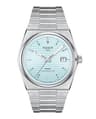
The Tissot PRX Powermatic 80 is the other Swatch Group answer - same two-year warranty, same parts network, an 80-hour reserve, and a silicon hairspring that resists magnetism. The catch for a keep-forever watch is the integrated bracelet: no strap swaps without proprietary parts, which is a long-term dependency the Hamilton does not have.
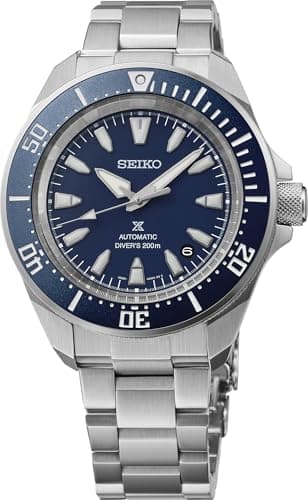
The Seiko Prospex diver is the non-Swiss route: a genuine ISO 6425 dive rating, a three-year warranty - the longest here - and a movement worth keeping alive for decades. Seiko operates its own service centres and gaskets and crystals are replaceable.
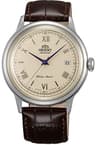
The Orient Bambino is the budget entry, with an in-house caliber that hacks and hand-winds and a domed mineral crystal that is both its charm and its weakness - mineral scratches where sapphire does not. Orient publishes one year on standard models against Hamilton’s two and Seiko’s three.
The number that decides it
A mechanical watch is a lifetime object only if a service costs a sensible fraction of replacing it. That is why we do not recommend servicing a cheap automatic and do recommend servicing this one: the Hamilton is expensive enough that a service is rational, and simple enough that the service is not expensive. That is the whole test, and it is the one applied across watches that last a lifetime and how long a good watch should last.
What you can do that costs nothing
Three habits add years between services, and none of them involves buying anything.
- Wind it fully, once, in one sitting. On a hand-wound movement, winding to the stop and then leaving it runs the mainspring in its happy range. Topping it up with twenty turns twice a day keeps it at the ragged end of the reserve, where timekeeping is worst.
- Keep it away from magnets. Laptop lids, speaker surrounds, phone cases and cabinet catches are all strong enough to magnetise a steel hairspring, and a magnetised watch runs wildly fast. It is not damage and it is not a service - a watchmaker demagnetises it in minutes.
- Replace the gaskets when the crystal or back comes off. Gaskets harden with age, and a hardened gasket is how water gets in. Water inside a movement is the one failure that genuinely can be terminal.