Nobody has to lie for this to go wrong
We have read roughly seventy published warranty documents for this site. Almost none of them contains a false statement. What they contain is a headline claim in marketing type and a set of limits in small type, and the gap between those two things is where the disappointment lives.
A warranty is a legal document written by the company that will have to honor it. That is not sinister - it is just the incentive - and it means the useful skill is not detecting dishonesty. It is reading the document in the right order. Here is the order.
Test 1: Does it cover wear, or only defects?
Find the phrase “defects in materials and workmanship.” It appears in the overwhelming majority of lifetime warranties, and it means a manufacturing fault - something that was wrong when the product left the factory.
It does not mean the product wearing out. Wear is what will actually happen to your boots, your socks, your pliers and your pack. A defects-only warranty covers the failure that is rare and excludes the failure that is certain.
This is not a scam, and a defects warranty is still worth having - a casting flaw or a bad seam does show up occasionally, and good brands replace them without argument. But if you are paying a premium because of the warranty, this is the sentence that decides whether the premium was worth it.
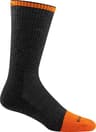
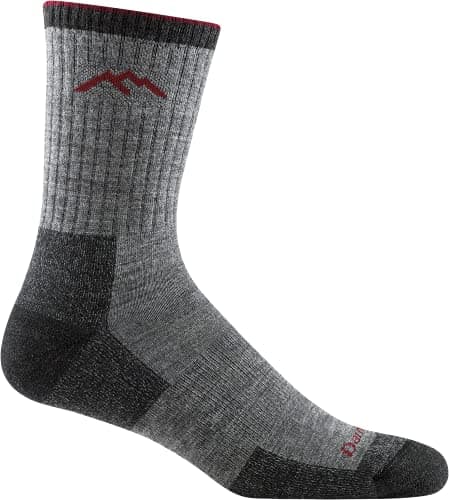
Darn Tough is the clearest counter-example on the site: its guarantee covers wearing a hole in the sock through normal wear and tear, which is the only thing that ever happens to a sock. That is what covering wear reads like when a company actually does it.
Test 2: Whose lifetime?
“Lifetime” is not a defined term until the document defines it, and documents define it in at least four ways:
- The life of the original owner. The strongest form. Maglite writes its flashlight warranty this way.
- The lifetime of the product or its “useful life.” Much weaker, because the manufacturer assesses when that life ended.
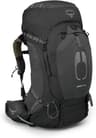
- A fixed term wearing a lifetime-sounding name. Osprey’s All Mighty Guarantee is the honest version of this: most products carry 30 years, some lines carry 7 or 5, and the document says so plainly.
- Undefined. Treat an undefined lifetime as the manufacturer’s opinion rather than your entitlement.
A 30-year published term is not a fake warranty. A warranty that uses the word lifetime and never says whose is a warranty you should price at zero.
Test 3: Is there a receipt requirement?
Proof of purchase is the quiet killer. It is entirely reasonable for a company to ask for it, and over a thirty-year horizon it nullifies most claims anyway, because the paper does not survive. Thermal till receipts fade to blank within a few years in a drawer.
So read for two things: whether proof of purchase is required at all, and whether it has to be from an authorized retailer. TEKTON requires no receipt and no time limit and pays the shipping. Knipex, GEARWRENCH and Craftsman all want proof of purchase in some form. Those are all real lifetime warranties and they are not equally claimable.
The fix costs five seconds: save the order confirmation email to a searchable folder at the moment you buy. That single habit converts a theoretical lifetime warranty into a usable one, and it is the whole reason our guide to claiming one starts there.
Test 4: Is it transferable?
Almost always no. Most lifetime warranties are written for the original purchaser, and several - Le Creuset’s among them - say explicitly that they are non-transferable.
Two consequences. If you buy second-hand, assume no cover unless the brand says otherwise. And if a reseller advertises a product as carrying a lifetime warranty, that claim is usually not theirs to make.
Test 5: What is in the exclusion list?
Every warranty has one, and the exclusions are more informative than the coverage. Read them and ask a single question: is the way this product will actually fail on that list?
Maglite’s warranty runs for the life of the original owner and excludes battery leakage - one of the most common ways a stored flashlight dies. Red Wing publishes 12 months against defects in workmanship and materials on boots whose soles have a multi-year life. In both cases the document is honest, the company is reputable, and the cover has very little to do with how the product will actually end its life.
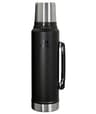
Stanley is the reverse case and deserves the credit: its lifetime warranty on stainless vacuum products specifically includes degradation of thermal performance. That is the only failure a vacuum flask has, and naming it is the difference between a warranty and a brochure.
Test 6: Can you find the claim process at all?
A warranty you cannot practically claim is not a warranty. Before you pay a premium, find the actual process and count the steps. Ours is a three-tier split:
- Fill in a form. TEKTON, Darn Tough. No receipt, no phone call, no negotiation.
- Return it to the store you bought it from. Craftsman. Simple, as long as the store still exists.
- Obtain a return authorization number, ship the item at your cost, supply proof of purchase and prove you are the original end user. Several excellent brands sit here. Four requirements at a twenty-year distance is a meaningful friction.
All three tiers are lifetime warranties. Only the first is one most people will ever use.
Test 7: Does the brand ever admit a limit?
This is the softest test and the most predictive one. A company that states plainly what it does not cover is a company that intends to honor what it does.
Estwing states outright that its warranty is not a lifetime warranty: it warrants its all-steel hammers against failure in normal use and not against wearing out. Channellock writes that its Built Strong lifetime warranty covers defects and not the natural wear that comes from hard work. Lodge publishes a limited lifetime warranty with its exclusions listed. Blundstone states on its own support pages that most of its boots cannot be resoled.
None of that is good marketing and all of it is good evidence. The documents that worry us are the ones with a bold lifetime promise, no definition, no exclusion list and no published process - because every one of those omissions resolves in the company’s favor later.
The seven tests, as a checklist
- Does it cover wear, or only defects in materials and workmanship?
- Whose lifetime - yours, the product’s, a fixed term, or undefined?
- Is proof of purchase required, and must the retailer be authorized?
- Is it transferable to a second owner?
- Is the product’s real failure mode on the exclusion list?
- Is the claim process published, and how many steps is it?
- Does the brand name any limit on itself anywhere in the document?
Run those seven in order and you will know more about a product’s long-term cost than any review can tell you, in about four minutes.
What this is not
It is not an argument that warranties do not matter, and it is not permission to buy the cheapest thing on the shelf. A defects-only limited lifetime warranty from a company with a century of honoring it is a genuinely good thing to have behind a pan or a plier.
The argument is narrower: do not pay a premium for the word. Pay it for construction, for materials, for a published repair path, and then treat whatever warranty comes with it as a bonus you have read rather than a promise you assumed.
If you want the other side of this - the short list of companies whose terms survive all seven tests - that is our page on brands with true lifetime warranties, and guarantee versus warranty covers whether the choice of word carries any weight at all.