Where the term came from
Buy It For Life - BIFL - began as an online community built around a simple proposition: some products are made well enough that you buy them once, and working out which ones is a skill worth sharing.
It has since become a marketing category, which is where it went wrong. The original idea was a test. The commercial version is an aesthetic: heavy, brown, American, expensive. Those two things overlap sometimes and diverge often.
The test, written down
Three questions, which we apply to everything on this site.
1. Can the part that wears out be replaced?
This does most of the work, and it is almost always answerable from published information before you buy.
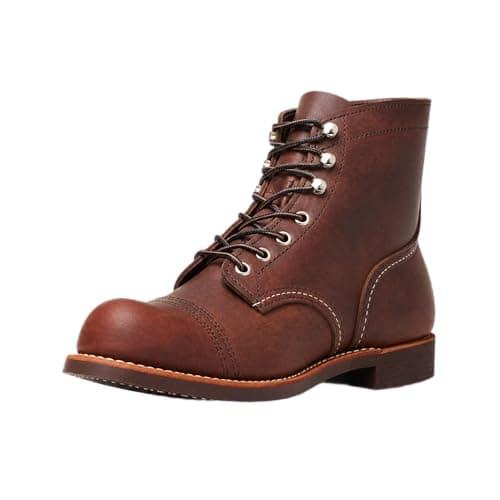
A Goodyear-welted boot has a replaceable sole; a direct-attach boot does not, and the name of the construction tells you so. A Kuranda dog bed has a bolt-in deck sold as a spare; a stuffed bed does not. A Ridge wallet’s elastic is a replacement kit. A Fenix torch takes a standard 21700 cell; a sealed-battery torch ends when the cell does.
Notice this question is independent of price. A twenty-dollar cast iron skillet passes absolutely - the cooking surface is seasoning and the owner renews it forever. A two-hundred-and-twenty dollar Blundstone fails, by the maker’s own published admission that most of its boots cannot be resoled.
2. Does the maker publish a term, and what does it exclude?
Warranties are legal documents and the exclusions are where the information lives. Carhartt excludes zippers by name. Channellock excludes “the natural wear that comes from hard work”. Le Creuset offers 75 percent off rather than a replacement where it judges damage to be user error. Ruffwear excludes chewing - on dog gear.
None of those is a scandal. All of them change what you should expect.
3. What is the cost per year, honestly calculated?
A 350-dollar welted boot resoled twice at 120 dollars costs about 590 over fifteen years - about 39 dollars a year. A 120-dollar cemented boot replaced every three years costs 600 over the same period, about 40 a year.
The welted boot wins, narrowly, and only if you actually get it resoled. That caveat is where most buy-it-for-life reasoning quietly collapses.
The maintenance clause nobody mentions
The expensive option is only cheaper if you perform the maintenance it was designed around.
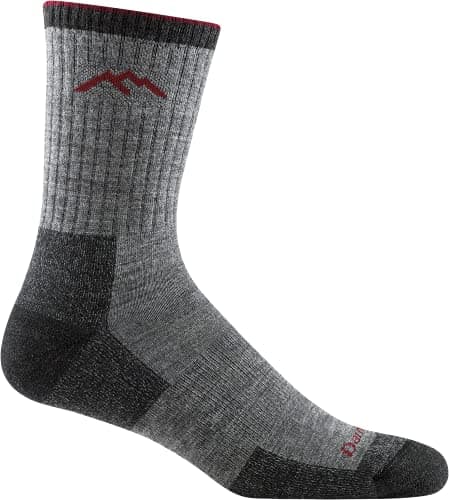
A boot you never resole is just an expensive boot. A cast iron pan you are frightened of is an ornament. A jacket whose zip you never replace is a jacket with a broken zip. A guaranteed sock thrown in the bin instead of claimed is simply a sock that cost four times too much.
Buy-it-for-life is not a purchasing decision. It is a maintenance decision, taken at the point of purchase.
What cannot be bought for life
Some things have a decay curve built into the material and should not be sold as permanent:
- Sealed rechargeable batteries. A finite cycle count, and the product ends when the cell does.
- Elastane. Stretch trousers, stretch belts. Degrades from heat, UV and stretching regardless of abrasion.
- Waterproof membranes. They delaminate and clog, and they are the one component a boot rebuild cannot restore.
- Consumables. Chew toys, conditioners, gloves. They are supposed to be used up.
- Polyurethane soles. They hydrolyze with age even unworn, which is why stored deadstock footwear sometimes disintegrates on its first walk.
We would rather say that plainly than stretch the category to cover the whole site.
The shortest useful version
Buy the cast iron skillet. Buy the unconditionally guaranteed socks. Buy the Opinel and the Nalgene. Read the warranty on anything over a hundred dollars before you pay for it.
That is most of the value of this entire website and it costs under a hundred dollars to act on.