The absence of a failure mode
Almost every product on this site wears out somehow. Soles abrade. Membranes delaminate. Elastane decays. Batteries lose capacity. Enamel chips.
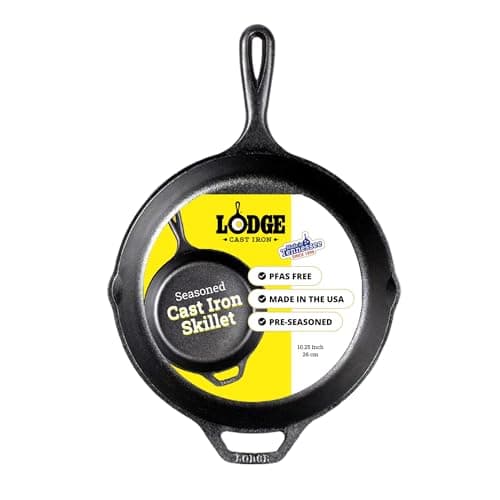
Cast iron has none of these. It is a single piece of metal with no coating, no bonded layer, no moving part and no consumable. The cooking surface is seasoning, which is renewable by the owner indefinitely. There is no process by which it degrades toward an end of life.
That is why hundred-year-old Griswold and Wagner skillets turn up at estate sales still cooking, and why this is the clearest buy-it-for-life case on the entire site.
The one thing that kills it
Dropping it. Cast iron is brittle: it has excellent compressive strength and poor tensile strength, so an impact propagates a crack rather than denting the metal. A cracked pan cannot be welded back into a food-safe cooking surface and is finished.
Note that Lodge’s Made Right limited lifetime warranty specifically excludes accidents, drops and mishandling. That is the one realistic failure mode, and it is outside the warranty - which is a fair description of a product with no other failure modes, but worth knowing.
Rust is not damage
A rusted pan looks ruined and is not. Rust is surface corrosion: steel wool, hot water and twenty minutes of effort gets you back to gray metal, then four thin oven seasonings and the pan is as good as it has ever been.
Only genuinely extreme neglect - decades outdoors - removes enough metal to matter. The rusted skillet in a junk shop is a project, not a write-off, and that is the test of whether something is really permanent.
Why old pans feel different
Pre-war American foundries machined the cooking surface smooth after casting, and cast thinner walls. The result is lighter and slicker from the start. Post-war mass production dropped the machining step because seasoning fills the texture anyway.
Lodge’s Blacklock line and the boutique makers have gone back to the thinner, smoother approach, which is what you are paying for there. It is a nicer pan to use. It is not a longer-lived one, because neither has a life to run out.
What a century of use actually looks like
The seasoning deepens into a black, glassy layer that releases food better than any factory coating. The casting texture smooths out as seasoning fills it. The handle polishes. The only visible wear is on the bottom, where contact with grates leaves gray patches.
That is the entire aging process. There is no point at which the owner is expected to buy another one, which is a sentence you cannot write about anything else in a modern kitchen.