Forge & Forever

Kitchen

How to Season Cast Iron

Seasoning is polymerized oil, not a coating of grease. Nearly every failure comes from the same mistake: putting too much oil on.

By Mike M.Published Updated How we judge durability

How this page is funded. Forge & Forever earns a commission when you buy through the links here, at no extra cost to you. It does not change which products we pick or what we say about them - and we say plainly when something is not worth owning. Full disclosure.


The short answer

Quick picks

Ranked on published warranty terms, whether the thing can be repaired, and what it is made of. Select a row to jump to the full write-up. We have not tested these products ourselves - here is exactly what we do instead.

#ProductBest forWarrantyPrice
1
La Tourangelle Expeller-Pressed Grapeseed Oil

La Tourangelle Expeller-Pressed Grapeseed Oil

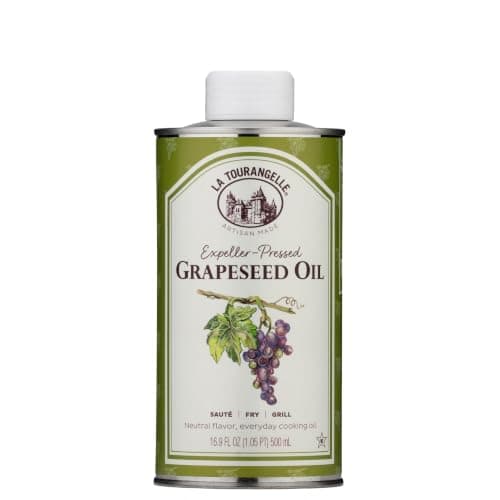
A high-smoke-point neutral oil, which is the only property that matters for seasoning. Cheaper per ounce than anything sold as a seasoning product, and it also cooks.

Best oil for oven seasoningNone published
$6.80 - Check price at Amazon

$7.5810% off

Price as of October 5, 2026. #ad How we are funded

2
Crisbee Cast Iron Seasoning Stik

Crisbee Cast Iron Seasoning Stik

A solid puck of oil and beeswax you rub onto a warm pan. The beeswax is the reason it works better than plain oil for maintenance: it stays put long enough to polymerize.

Best maintenance compoundNone published
$14.95 - Check price at Amazon

Price as of October 5, 2026. #ad How we are funded

3
Lodge Cast Iron Seasoning Spray

Lodge Cast Iron Seasoning Spray

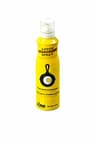
Canola oil in a spray can. It works, and the only genuine advantage over a bottle of oil and a rag is that you will actually do it because it takes ten seconds.

Fastest routine optionNone published
$9.93 - Check price at Amazon

Price as of October 5, 2026. #ad How we are funded

4
Lodge Pre-Seasoned Cast Iron Skillet, 10.25-inch

Lodge Pre-Seasoned Cast Iron Skillet, 10.25-inch

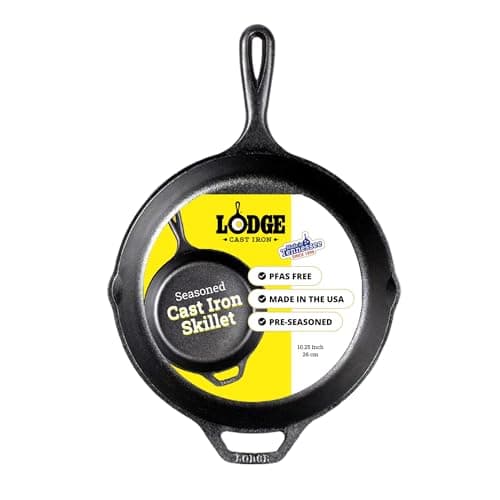
The most defensible purchase on this entire website. Twenty dollars, made in Tennessee, backed by a published limited lifetime warranty, and there is no realistic failure mode other than dropping it on concrete.

The pan to practice onLimited lifetime (defects)
$20.92 - Check price at Amazon

$24.9016% off

Price as of October 5, 2026. #ad How we are funded

What seasoning actually is

Not a coat of grease. When oil is heated past its smoke point it breaks down and the fragments bond to each other and to the iron, forming a hard, slick, plastic-like layer called a polymer. That layer is chemically bonded to the pan. It is not sitting on it.

Which explains the two rules that follow from it: the oil has to get hot enough to polymerize, and there has to be very little of it, because thick oil cannot polymerize all the way through and the un-polymerized part stays sticky.

The mistake everyone makes

Too much oil. People put a tablespoon in, swirl it around, and bake it - and get a tacky, blotchy varnish that flakes off later.

The correct amount looks like nothing. Oil the pan, then wipe it off with a clean cloth until the surface looks and feels dry. It is not dry; a molecular film remains, and that film is all you want. Depth comes from doing it four times, not from doing it thickly once.

Temperature matters more than oil choice

The oven has to exceed the oil’s smoke point or nothing polymerizes. Grapeseed smokes around 420F, canola around 400F, so 450 to 500F covers both with margin.

A 350F oven, which is what a lot of older instructions say, does not get there for most oils - and is the second-most-common reason seasoning fails.

Flaxseed, and why we stopped recommending it

Flaxseed oil polymerizes into the hardest layer of any common oil, which made it popular after a widely-shared blog post a decade ago. It also produces a brittle layer that has a tendency to flake off in sheets once it gets thick - which is much worse than a softer layer that wears gradually.

Grapeseed or plain canola gives a slightly softer layer that behaves better over years. And both are cheaper and also cook.

Maintenance is the real seasoning

After the first few oven rounds, cooking does the work. Fry something in fat, wipe the pan out, dry it on the hob until it stops steaming, then wipe a smear of oil over the surface while it is warm.

That is thirty seconds and it maintains seasoning indefinitely. People who end up stripping and re-seasoning every year are usually the people skipping the drying step and putting a damp pan away.

What does and does not damage seasoning

Does: long acidic cooks, dishwashers, soaking, boiling water for extended periods, metal scrapers used aggressively on a new layer.

Does not: ordinary washing-up liquid, which is not the lye-based soap the old advice was written about; a stiff brush; brief acidic cooking; metal utensils in normal use.

And if you do strip it, nothing is lost. That is the whole point of a surface the owner can remake.

In full

Every pick, written up

Warranty terms below are quoted from the brand’s own published documents. “Not published” means we looked and the brand does not say.

#1Best oil for oven seasoning

La Tourangelle Expeller-Pressed Grapeseed Oil

A high-smoke-point neutral oil, which is the only property that matters for seasoning. Cheaper per ounce than anything sold as a seasoning product, and it also cooks.

What it gets right

  • High smoke point suits oven seasoning at 450F+
  • Neutral, so it does not leave a smell
  • Doubles as a cooking oil, unlike dedicated seasoning products

What you give up

  • Polymerizes slightly softer than flaxseed
  • Goes rancid if stored warm
  • Needs several thin coats to build a layer
WarrantyNone published

Consumable - no product warranty applies.

RepairabilityReplace on failure

Not published

MaterialsExpeller-pressed grapeseed oil
Made inNot published
#2Best maintenance compound

Crisbee Cast Iron Seasoning Stik

A solid puck of oil and beeswax you rub onto a warm pan. The beeswax is the reason it works better than plain oil for maintenance: it stays put long enough to polymerize.

What it gets right

  • Beeswax content builds seasoning faster than oil alone
  • Solid form means no spills and no rancid bottle
  • Family-made in the USA

What you give up

  • Needs a warm pan to apply
  • More expensive per use than oil
  • Smokes if you apply it too thickly
WarrantyNone published

Consumable - no product warranty applies.

RepairabilityReplace on failure

Not published

MaterialsOil and beeswax seasoning compound
Made inUSA
#3Fastest routine option

Lodge Cast Iron Seasoning Spray

Canola oil in a spray can. It works, and the only genuine advantage over a bottle of oil and a rag is that you will actually do it because it takes ten seconds.

What it gets right

  • Fast enough that you will actually maintain the pan
  • Thin, even coat - the hardest part of seasoning to get right by hand
  • Cheap

What you give up

  • It is canola oil, which you probably already own
  • Aerosol propellant is wasteful
  • Does not fix a stripped pan - that needs oven seasoning
WarrantyNone published

Consumable - no product warranty applies.

RepairabilityReplace on failure

Not published

Materials100% canola oil, aerosol
Made inNot published
#4The pan to practice on

Lodge Pre-Seasoned Cast Iron Skillet, 10.25-inch

The most defensible purchase on this entire website. Twenty dollars, made in Tennessee, backed by a published limited lifetime warranty, and there is no realistic failure mode other than dropping it on concrete.

What it gets right

  • Lodge's Made Right limited lifetime warranty is published and specific
  • Made in South Pittsburg, Tennessee since 1896
  • Seasoning is a user-renewable surface - the pan cannot wear out the way nonstick does

What you give up

  • Rough factory seasoning needs several cooks before it behaves
  • Heavy, and the handle gets hot
  • The warranty excludes drops, which is the only thing that actually kills cast iron
WarrantyLimited lifetime (defects)

The Lodge Made Right limited lifetime warranty covers normal household use. It excludes commercial use, accidents, drops, mishandling, misuse, neglect and overheating.

RepairabilityIndependently repairable

Nothing to repair in the usual sense: a damaged seasoning layer is stripped and re-seasoned by the owner, and a rusted pan can be brought back with steel wool and oil.

MaterialsCast iron, factory vegetable-oil seasoning
Made inUSA

FAQ

Questions people actually ask

Why is my cast iron sticky after seasoning?

Too much oil, or not enough heat. Excess oil that does not fully polymerize stays as a tacky varnish. Fix it by scrubbing the sticky layer off and redoing it with a much thinner coat at a higher temperature.

What is the best oil for seasoning cast iron?

Any neutral oil with a high smoke point. Grapeseed, canola and sunflower all work well. Flaxseed polymerizes hardest and is also the most prone to flaking off in sheets, which is why we no longer recommend it as a first choice.

Can I season cast iron on the hob instead of the oven?

For maintenance, yes - heat the pan, wipe a smear of oil on, let it smoke off. For building a new base layer, the oven is better because it heats the whole pan evenly, including the sides and handle.

Do I need to season a pre-seasoned pan?

Not before first use, but the factory layer is thin and a couple of extra oven rounds before you start cooking will save you several frustrating weeks of food sticking.

Read next

Related on Forge & Forever

Lodge Pre-Seasoned Cast Iron Skillet, 10.25-inch

Best cast iron skillet

The Best Cast Iron Skillet

Cast iron skillets compared on warranty, weight and surface - and why the cheap one wins.

See everything in Kitchen