The only property that matters
The oil has to be heated past its smoke point to polymerize. Below that it stays as oil and goes sticky. So the useful question is simply: does this oil’s smoke point sit comfortably below the temperature your oven can reach?
Everything else - the amount of polyunsaturated fat, the iodine value, the brand - is a second-order effect that gets discussed far out of proportion to how much it changes.
The practical shortlist
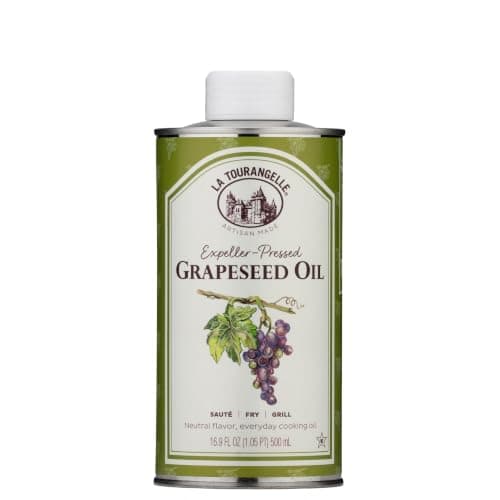
Grapeseed smokes around 420F. Neutral, cheap, polymerizes to a good hard layer, and it also cooks - so the bottle gets used rather than going rancid at the back of a cupboard. Our default.
Canola or rapeseed smokes around 400F. Cheaper still, works fine, slightly softer layer. Perfectly good.
Sunflower similar. Avocado has a very high smoke point and costs several times more for no meaningful gain.
Beeswax-and-oil compounds such as Crisbee stay put on a warm pan better than liquid oil does, which makes maintenance seasoning a bit more reliable. For oven base layers they offer nothing plain oil does not.
Flaxseed, and the blog post that would not die
A widely-shared article about a decade ago established flaxseed as the enthusiast’s choice, on the basis that it has the highest iodine value and polymerizes hardest. That part is true.
The part that emerged later is that the resulting layer is brittle. Once flaxseed seasoning builds past a certain thickness it has a strong tendency to flake off in visible sheets, taking a patch of pan back to bare metal. A softer grapeseed layer wears down gradually instead, which is a far more graceful failure.
Flaxseed is also expensive, goes rancid quickly and is useless for cooking. We do not recommend it.
What to avoid
Olive oil - smoke point too low, tends to go sticky and rancid. Butter - milk solids burn. Anything you would not want to eat - the seasoning is a food-contact surface.
Animal fats, which worked for a century
Bacon fat, lard and beef tallow all polymerize and were the only seasoning most pans ever got. They work. The single caveat is that animal fats can go rancid in a pan stored unused for months, which is why a neutral plant oil is a safer base layer for a pan that will sit in a cupboard.
For a pan in weekly use, cooking bacon in it is genuinely a valid maintenance strategy.
How much to use
Less than you think. Enough to coat, then wiped back until the pan looks dry. The amount of oil is a far bigger factor in whether seasoning works than which oil it is - and that is the point most oil comparisons miss entirely.