Forge & Forever

Kitchen

The Longest-Lasting Cutting Boards Are the Ones You Refinish

The longest-lasting cutting board is not the one with the best warranty - it is the one you can sand flat again in twenty minutes, which is why edge-grain hardwood wins this category outright.

By Mike M.Published How we judge durability

How this page is funded. Forge & Forever earns a commission when you buy through the links here, at no extra cost to you. It does not change which products we pick or what we say about them - and we say plainly when something is not worth owning. Full disclosure.

Our top pick

Best overall

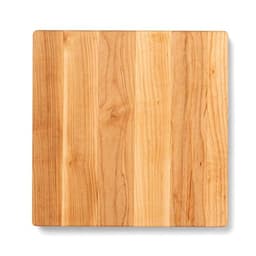
John Boos Chop-N-Slice Maple Board

John Boos Chop-N-Slice Maple Board

9.3/10 durability score

Edge-grain North American hard maple from a company that has been making butcher block since 1887.

Read the full write-up


The short answer

Quick picks

Every pick here is one we recommend without reservation. Ranked on published warranty terms, whether the thing can be repaired, and what it is made of. Select a row to jump to the full write-up. How the durability score is calculated.

#ProductScoreBest forWarrantyPrice
1
John Boos Chop-N-Slice Maple Board

John Boos Chop-N-Slice Maple Board

Edge-grain North American hard maple from a company that has been making butcher block since 1887. It is a board you refinish rather than replace - which is just as well, because the published warranty is one year and it excludes third-party resellers.

9.3OutstandingBest overallFixed term
2
John Boos R-Board Walnut 18 x 12

John Boos R-Board Walnut 18 x 12

American black walnut, an inch and a half thick, from the company that has been making butcher block since 1887 - and the only walnut board here whose maker publishes a warranty at all. Softer on a knife edge than maple, dark enough to hide stains, and sandable back to new forever.

9.5Category-definingBest walnut boardFixed term
3
Teakhaus Edge-Grain Teak Board with Grip Handles

Teakhaus Edge-Grain Teak Board with Grip Handles

Teak's natural oil content is the reason this board tolerates a wet kitchen better than maple does. Same refinishing path as any hardwood board, with less of the cracking that punishes people who forget to oil.

9.0OutstandingBest for a wet kitchenNone published
4
Epicurean Kitchen Series Board

Epicurean Kitchen Series Board

A paper-composite board that goes in the dishwasher without warping - the one thing no wood board on this page can do. The trade is that it cannot be refinished, so when the surface is scored it is scored for good.

8.6ExcellentBest dishwasher-safeNone published
5
OXO Good Grips Carving and Cutting Board

OXO Good Grips Carving and Cutting Board

The raw-meat board, and the only pick here with a published satisfaction guarantee behind it. Plastic is not a buy-it-for-life material, but a dishwasher-sanitised board for chicken is a sensible second board next to a wooden first one.

8.8ExcellentBest for raw meatLimited lifetime (defects)

The longest-lasting cutting board you can buy is a thick edge-grain hardwood board - maple or walnut - because it is the only kind you can sand back to new for as long as you own it. Everything that ruins a board - knife scoring, stains, odour, a slightly cupped face - comes out with sandpaper and oil in under half an hour, which no plastic or composite board allows. That single property, not the warranty, is what separates a board that lasts decades from one that goes in the bin in three years.

The category has almost no paperwork, and it barely matters

On most of this site, the warranty is the headline. Here it is not, and the reason is worth understanding before you buy anything.

We went looking for published warranty documents for all five boards on this page. We found two. John Boos warrants its products free from manufacturing defects for one year from purchase or delivery, repair or replacement at its option - and then excludes normal wear and tear, neglect, accidental or intentional damage, misuse, exposure to extreme temperature or humidity, and failure to care for the product in line with its own Care & Maintenance Guide. It also states that products bought from unauthorized sellers, including third-party online resellers, are generally not eligible, and that a receipt is required.

OXO publishes the Better Guarantee: if you are not satisfied with an OXO product, OXO will replace it or refund it, limited to defects in material or workmanship under normal household use. Brew appliances, select Tot items, bakeware, cookware and knives are excluded by name. Cutting boards are not.

Teakhaus and Epicurean publish nothing on warranty that we could read on their own sites. Retailer listings quote a year here and a limited lifetime there, and those numbers contradict each other, which is precisely why we do not repeat them.

Here is why that thin paperwork is survivable: a good wooden cutting board is the most repairable object in a kitchen. Everything that goes wrong with it - knife scoring, stains, odor, a slightly cupped face - comes out with sandpaper and oil in under half an hour. You do not need a warranty for a product you can return to new yourself.

The criteria, in the order they matter

1. Can you sand it back? This is the whole durability question in one line. A solid wood board can be resurfaced for as long as there is thickness left in it, which is decades. A composite or plastic board cannot: once the surface is scored, it is scored permanently and the board is on a countdown to the bin.

2. How thick is it? Thickness is refinishing budget. It is also what keeps a board flat - a thin board oiled on one face only will cup within a season, and a cupped board rocks under a knife, which is both annoying and genuinely unsafe.

3. What does it do to your knives? Hardwoods in the maple-to-walnut range are the sweet spot: hard enough to last, soft enough that the edge sinks slightly rather than being rolled. Glass, stone, bamboo and hard composites are all rougher on an edge, and a board that eats your knives is a false economy if you have bought a knife worth keeping.

4. Edge grain over end grain, for nearly everyone. End grain is kinder to a blade because the wood fibers part around the edge instead of being severed. It is also dramatically more expensive, much heavier, and more likely to split if you let it dry out. Every wooden board here is edge grain deliberately.

5. One dishwasher board for raw meat. Not as the main board - as a second one. This is a food safety argument rather than a durability argument, and it is the reason a plastic board is on this page at all.

Why the Boos wins

Edge-grain North American hard maple, thick enough to resurface many times, from a company that has been making butcher block since 1887. Maple is the default for a reason: it is hard enough to resist scoring, closed-grained enough not to hold bacteria in open pores, and soft enough to spare a thin edge.

The Chop-N-Slice is the reversible, no-frills version of what Boos sells to commercial kitchens - no handles, no juice groove, two usable faces. Two faces matter more than they sound: alternating them is the simplest way to keep a board flat for life.

The honest cons are real. The warranty is one year, it excludes care failures by name, and Boos says third-party reseller purchases are generally not eligible - so treat the warranty as decoration and the board as the product. And it needs oiling every few weeks when new or it will check along the glue lines.

The walnut case

Walnut is softer than maple. For a cutting board that is a feature and a drawback at the same time, and which one it is depends on what you own.

If your knives are thin, hard and expensive, walnut is the kindest hardwood surface here - the edge sinks in rather than being deflected, and edges last noticeably longer between sharpenings. The dark grain also hides the beetroot and turmeric stains that make a maple board look finished long before it is.

The cost is that walnut shows knife marks sooner and will want sanding more often. It is also a premium timber, priced like one. The Boos R-Board is the walnut board we recommend for it: an inch and a half of edge-grain American black walnut, stated on the listing as made in the USA, and backed by the only published warranty in this part of the category.

Teak, for the kitchen where oiling does not happen

Teak carries its own oils in the timber. That is the only reason it is on this page: it is the most forgiving hardwood if your maintenance routine is aspirational rather than real.

A maple board that goes unoiled for a year will dry, shrink and start opening along a glue line. A teak board in the same neglect tolerates it, which is why teak is the standard in boat galleys. It refinishes exactly like any other solid wood board, so nothing is lost on the durability side.

Two trades. Teak contains silica, which dulls an edge marginally faster than maple - not dramatically, but measurably over a year. And the large sizes are heavy enough that the board becomes a permanent counter fixture rather than something you put away, which for some kitchens settles the question on its own.

The composite board, and what it buys you

Epicurean boards are a paper composite - layers of paper saturated in food-grade resin and compressed - and the company states that all its products are designed and manufactured at its own 60,000-square-foot facility in Superior, Wisconsin.

The thing they do that no wooden board on this page can: go through the dishwasher without warping. That removes the single most common cause of a dead cutting board, which is somebody putting a wooden one in the dishwasher once.

They are also non-porous, NSF certified and heat resistant enough to double as a trivet. The price is permanence of damage: a composite board cannot be sanded back, so scoring is forever. It is harder than maple, so it is slightly tougher on an edge. And we found no published warranty terms from the brand.

That makes it the right board for a specific person - somebody who will not maintain wood and is honest about it - and the wrong board for anyone buying on the refinish-forever argument.

Keep a plastic board for chicken

The OXO is here as a second board, not a first one. A board that has had raw chicken on it wants a hot dishwasher cycle, and that is not something you can do to any wooden board on this page.

It is also the only pick here with a published satisfaction guarantee behind it. Plastic is not a buy-it-for-life material - it scores, it holds grooves, it cannot be refinished, and it will eventually be thrown away, which is the opposite of everything this site argues for. Buying one cheap plastic board on purpose, for one job, is still the right call.

Size, thickness and the juice groove question

Buy a board bigger than you think you need. The usable area of a board is whatever is left after the pile of chopped onion, and a 10-inch square board is a board you will work around rather than on. Around 18 by 12 inches is the smallest size that comfortably takes a whole chicken; anything under about 12 by 10 is a paring board, not a main one.

Thickness is the other number, and it is the one people under-buy. Three quarters of an inch is a working minimum for a wooden board; an inch and a half is a board you will resurface five times and hand on. Thin boards cup, and a cupped board rocks under the knife.

On juice grooves: get one if you carve roasts, skip it if you mostly chop. A groove catches the juice from a resting joint, which is genuinely useful, and it costs you an inch of cutting surface on every side plus a channel that needs drying properly. Reversible boards solve this neatly - groove on one face, flat on the other - and it is one more reason to alternate faces anyway.

Weight is a feature, not a cost. A board heavy enough to stay still without a damp cloth under it is safer to work on than a light one that slides, which is why the best boards here are the ones you leave on the counter.

What we left out

Bamboo. Hard, abrasive, usually assembled with a lot of adhesive, and it splinters along the laminations once it dries out. It is cheap and it is hard on knives.

Glass and stone. They destroy edges. There is no version of this that is good for your knives.

End-grain butcher blocks. Genuinely the best surface for a blade, and we may build them their own page. They are a different purchase: two to four times the price, heavy enough to be furniture, and less tolerant of neglect.

Care, which is the actual warranty

Wash by hand with warm soapy water, immediately after use, and stand the board on edge to dry. Never submerge it and never leave it lying flat in a wet sink - water trapped under one face while the other dries is what cups a board.

Oil it weekly for the first month, monthly after that, and then on the water test: when drops soak in instead of beading, it is thirsty. Food-grade mineral oil or a beeswax board cream only. Never a cooking oil, which goes rancid in the wood and leaves a smell you cannot remove.

When it finally looks tired, resurface it. 120-grit until the scoring and stains are gone, then 220, then a thorough re-oil - both faces and all four edges, or you will build in the cup you just sanded out. Half an hour of work and the board is new.

That is the whole argument for a wooden board, and it is a better guarantee than anything in this category publishes. If you want to see what a real written guarantee looks like by comparison, our cookware warranty roundup is the other end of the same kitchen.
In full

Every pick, written up

Warranty terms below are quoted from the brand’s own published documents. “Not published” means we looked and the brand does not say.

#1Best overall

John Boos Chop-N-Slice Maple Board

9.3Durability score OutstandingDurability score

Edge-grain North American hard maple from a company that has been making butcher block since 1887. It is a board you refinish rather than replace - which is just as well, because the published warranty is one year and it excludes third-party resellers.

What it gets right

  • Edge-grain hard maple: hard enough to last decades, soft enough to spare your knife edge
  • Sandable and re-oilable indefinitely - deep cuts and stains come out with 120-grit and a board cream
  • Thick enough to stay flat if you oil both faces, which is where thin boards fail

Good to know

  • One year against manufacturing defects, and John Boos says products bought from unauthorized sellers including third-party online resellers are generally not eligible
  • Care failures are excluded by name - the warranty points at its own Care & Maintenance Guide
  • Needs oiling every few weeks when new, or it will check along the glue lines
WarrantyFixed term

Warranted free from manufacturing defects for one year from the date of purchase or delivery, repair or replacement at John Boos's option. Excluded: normal wear and tear, neglect, accidental or intentional damage, misuse or unauthorized repair, exposure to extreme temperature or humidity, and failure to care for the product in line with the Care & Maintenance Guide. Unfinished wood products carry no warranty, a receipt is required, and products bought from unauthorized sellers including third-party online resellers are generally not eligible.

RepairabilityIndependently repairable

Wood boards are resurfaced at home: sand out the cuts and stains, then re-oil. No parts and no service program needed, which is why the short warranty matters less here than it would elsewhere.

MaterialsEdge-grain North American hard maple, reversible, food-safe finish
Made inNot published
#2Best walnut board

John Boos R-Board Walnut 18 x 12

9.5Durability score Category-definingDurability score

American black walnut, an inch and a half thick, from the company that has been making butcher block since 1887 - and the only walnut board here whose maker publishes a warranty at all. Softer on a knife edge than maple, dark enough to hide stains, and sandable back to new forever.

What it gets right

  • Walnut is softer than maple, so it is the gentlest hardwood here on a thin knife edge
  • Dark grain hides the beetroot and turmeric stains that make a maple board look finished
  • 1.5 inches of edge-grain stock with finger grips, and the listing states made in the USA

Good to know

  • Good to know: walnut shows knife marks sooner than maple, so expect to sand it a little more often - and it is a premium timber priced like one
  • One year against manufacturing defects, and John Boos says products bought from unauthorized sellers including third-party online resellers are generally not eligible
  • Nine pounds of board - it lives on the counter rather than in a cupboard
WarrantyFixed term

Warranted free from manufacturing defects for one year from the date of purchase or delivery, repair or replacement at John Boos's option. Excluded: normal wear and tear, neglect, accidental or intentional damage, misuse or unauthorized repair, exposure to extreme temperature or humidity, and failure to care for the product in line with the Care & Maintenance Guide. Unfinished wood products carry no warranty, a receipt is required, and products bought from unauthorized sellers including third-party online resellers are generally not eligible.

RepairabilityIndependently repairable

Sand and re-oil at home. Walnut takes a refinish beautifully and the color deepens rather than bleaching.

MaterialsEdge-grain American black walnut, 1.5-inch thick, reversible, finger grips, food-safe finish
Made inUSA
#3Best for a wet kitchen

Teakhaus Edge-Grain Teak Board with Grip Handles

9.0Durability score OutstandingDurability score

Teak's natural oil content is the reason this board tolerates a wet kitchen better than maple does. Same refinishing path as any hardwood board, with less of the cracking that punishes people who forget to oil.

What it gets right

  • Teak's own oils make it the most forgiving hardwood here if your oiling routine slips
  • Edge-grain construction, so it sands and re-oils like any other solid wood board
  • Grip handles and a juice groove, which is the combination most large boards get wrong

Good to know

  • No warranty terms we could find published by the brand
  • Teak's silica content dulls a knife marginally faster than maple
  • Large sizes are heavy enough that you will leave the board on the counter, not in a cupboard
WarrantyNone published

Not published

RepairabilityIndependently repairable

Sand and re-oil at home like any solid hardwood board. Nothing on it is a separate part that can fail.

MaterialsEdge-grain plantation teak, juice groove, routed grip handles
Made inNot published
#4Best dishwasher-safe

Epicurean Kitchen Series Board

8.6Durability score ExcellentDurability score

A paper-composite board that goes in the dishwasher without warping - the one thing no wood board on this page can do. The trade is that it cannot be refinished, so when the surface is scored it is scored for good.

What it gets right

  • Dishwasher safe, which removes the single biggest cause of dead wooden boards
  • Non-porous and heat resistant, so it doubles as a trivet
  • Made at the company's own facility in Superior, Wisconsin, which Epicurean states itself

Good to know

  • No warranty terms we could find published by the brand
  • Cannot be sanded back - unlike wood, the scoring is permanent
  • Harder than maple, so it is slightly tougher on a knife edge
WarrantyNone published

Not published

RepairabilityReplace on failure

Not published

MaterialsRichlite-type paper composite, food-grade resin, NSF certified
Made inUSA (Superior, Wisconsin)
#5Best for raw meat

OXO Good Grips Carving and Cutting Board

8.8Durability score ExcellentDurability score

The raw-meat board, and the only pick here with a published satisfaction guarantee behind it. Plastic is not a buy-it-for-life material, but a dishwasher-sanitised board for chicken is a sensible second board next to a wooden first one.

What it gets right

  • Covered by the OXO Better Guarantee, which cutting boards are not excluded from
  • Dishwasher safe at full temperature, which is what you want after raw chicken
  • Deep trench and a non-slip edge, so carving juices stay on the board

Good to know

  • Plastic scores and holds knife grooves, and unlike wood it cannot be sanded back
  • The guarantee covers defects under normal household use, not a board you have cut to ribbons
  • It will eventually be thrown away, which is the opposite of the point of this site
WarrantyLimited lifetime (defects)

Covered by the OXO Better Guarantee: if you are not satisfied with an OXO product, OXO will replace it or refund it. Limited to defects in material or workmanship under normal household use and products cared for per OXO's Use & Care guidelines. OXO Brew appliances, select OXO Tot items, bakeware, cookware and knives are excluded; cutting boards are not.

RepairabilityReplace on failure

Not published

MaterialsPolypropylene board with non-slip edges and a juice trench
Made inNot published

FAQ

Questions people actually ask

Do cutting boards come with a warranty?

Mostly no. Of the makers here, we could only find published warranty terms for two: John Boos warrants against manufacturing defects for one year and says products bought from unauthorized sellers including third-party online resellers are generally not eligible, and OXO's Better Guarantee covers defects in material or workmanship under normal household use. Teakhaus and Epicurean publish nothing we could read, so they render Not published.

Is wood or plastic better for a cutting board?

Wood for everything except raw meat, and wood for durability without qualification. A wooden board can be sanded flat and re-oiled indefinitely; a plastic board accumulates knife grooves that cannot be removed and is eventually thrown away. Keep a cheap dishwasher-safe board for chicken and a good wooden board for everything else.

Edge grain or end grain?

Edge grain for almost everyone. End grain is gentler on a knife because the fibers part rather than being cut across, but end-grain boards are far more expensive, much heavier, and more prone to splitting if the oiling slips. Every wooden board in this roundup is edge grain on purpose.

How often should I oil a wooden cutting board?

Weekly for the first month, then monthly, then whenever water stops beading and starts soaking in. That last test is the only one that matters: a board that drinks water is a board about to crack along a glue line. Use food-grade mineral oil or a board cream, never a cooking oil that can go rancid.

Sources

Where these terms come from

Every warranty, repair-path and country-of-manufacture claim above was read from the following published pages. Where a brand publishes nothing, this page says “not published” rather than guessing.

In one line

Our recommendation

If you read nothing else on this page: this is the one we would buy, and the one we would buy instead if it did not fit. Both are scored on the same published warranty terms, repair paths and materials as everything else here.

Buy this one

John Boos Chop-N-Slice Maple Board

Best overall

9.3/10 durability score

Or, the runner-up

John Boos R-Board Walnut 18 x 12

Best walnut board

9.5/10 durability score

Read next

Related on Forge & Forever

See everything in Kitchen

Brands: want your product tested? For Brands.