What we judged these on
Flashlights are the most lumen-obsessed category we cover, and lumens have almost nothing to do with how long a light lasts. Nobody throws away a working flashlight because it is 300 lumens short. They throw it away because the tail switch stopped making contact, because a battery leaked in it during a year in a drawer, or because the sealed cell inside will no longer hold a charge and there is no way in.
So the criteria for this roundup are the three things that decide those outcomes, applied in this order.
- Battery architecture. Can you still buy the cell in fifteen years, and can you get it out? Standard sizes - D, CR123A, 18650, 21700 - are consumables. A built-in battery is a countdown.
- Parts and the repair path. O-rings dry out, lenses scratch, switches corrode. A brand that sells those three things as catalog parts has made a rebuildable light. A brand that does not has made a disposable one, whatever the body is machined from.
- The warranty document, read rather than skimmed. Nearly every brand here publishes something lifetime-flavored. The differences are entirely in the exclusions, and the exclusions are where the batteries and electronics usually live.
Body material matters too, but less than the marketing implies. Anodized 6061 aluminum is the default for good reason, and all five picks use it or a polymer with a better impact story. None of these will fail because the tube gave up.
Prices on this page are pulled live rather than typed into the copy, so the number you see is the number today. We have not lab-tested these lights. What we have done is read every published warranty and parts list behind them, and the citations at the bottom carry the date we read them.
The switch is the part that kills flashlights
If you have thrown away a flashlight in your life, the odds are good it was a switch failure dressed up as a dead light. Tail switches live at the end of a metal tube that gets dropped on concrete, and they carry the full current of the light through a small mechanical contact that is one o-ring away from the weather.
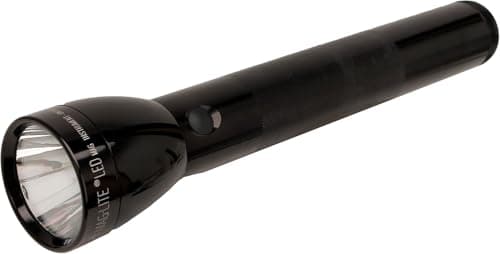
This is why parts availability is the first question and not an afterthought. Maglite sells switch assemblies, lenses and o-rings as ordinary catalog items, so a twenty-year-old ML300L is a cheap part away from being a working one. Streamlight sells tail caps, lenses and o-rings for the ProTac line. Fenix treats the 21700 cell as the serviceable item, which is the right call for a light whose electronics are sealed.
The lights that are genuinely hard to keep going are the ones with sealed bodies and proprietary charging. That is not a reason to avoid them. It is a reason to know what you bought.
Battery leakage is the other one
The second-most common death is a battery that leaked inside a light nobody used for a year. Alkaline cells vent, the residue crawls up the spring, and the contacts corrode into uselessness.
There are two defenses. The first is lithium primaries: CR123A cells have roughly a ten-year shelf life and do not fail the way alkalines do, which is the entire case for keeping a SureFire G2X in a drawer rather than a cheaper alkaline light. The second is simply not storing a light with cells in it - tape the batteries to the body and the light is still a light in a decade.
Rechargeable lithium cells sidestep the leakage problem and introduce a different one: they self-discharge slowly and have a finite cycle count. For an emergency light that sits unused, primaries win. For a light you use weekly, rechargeable wins on cost and convenience. Those are different jobs, which is why this list has both.
The warranties, quoted
Maglite. Warrants its flashlights free from defects in parts and workmanship for the life of the original owner. The exclusions are specific and fair: battery exhaustion, battery leakage, lamp burnout, alteration, misuse and lack of maintenance. Note that battery leakage is excluded, which is a reason to store it empty rather than a reason to distrust the warranty.
Streamlight. A Limited Lifetime Warranty against defects for a lifetime of use, excluding batteries, bulbs, abuse and normal wear. Rechargeable batteries, chargers, switches and electronics carry two years with proof of purchase. That carve-out is the most honest wording in the category: a lithium cell has a cycle life, and no company can warrant it forever.
Fenix. A Limited Lifetime Warranty on products bought from certified retailers, with up to five years of free repair for manufacturing defects depending on the product. The certified-retailer condition is real. This is a heavily counterfeited category, and a gray-market purchase is an uncovered purchase.
Olight. A lifetime warranty on flashlights, weapon lights, lanterns and built-in rechargeable batteries purchased after 2023, repairing or replacing defective products under normal use. Including the built-in battery in a lifetime warranty is unusual, and it is the single thing that makes a sealed-cell light defensible on a buy-it-for-life site.
SureFire. We could not verify published warranty terms, so this page says so rather than implying a term we did not read. The G2X earns its place on construction and battery chemistry, not on paperwork.
Reading the spec sheet without being fooled
Three numbers on a flashlight box do real work, and the headline one is the least useful of the three.
Peak lumens is a measurement taken at startup, before the body heats up. Every compact light in this list steps down from its maximum within minutes, because a small aluminum tube cannot shed that much heat and the alternative is cooking the emitter. A light advertised at 2,000 lumens that sustains 400 is not lying; it is quoting the first thirty seconds. What matters for actual use is the sustained output and the runtime at that level, which is usually in the table further down the page rather than on the front of the box.
Beam distance tells you whether the reflector is built for throw or for flood. A long, narrow beam is for spotting something across a field; a wide, even beam is for working on a car or walking a dog. Buying a thrower for close work is the most common mismatch in the category, and no amount of brightness fixes it.
The IP rating describes water ingress, and it is entirely dependent on a rubber o-ring that dries out and compresses with age. This is the quiet case for parts availability all over again: a weather-sealed light whose seals cannot be replaced is weather-sealed for a few years, not for a lifetime. Maglite, Streamlight and SureFire all publish o-rings as spare parts; the sealed Olight has nothing an owner can reseal.
What no spec sheet shows is the thing that will actually end the light: the switch, the seal and the cell. That is why this page ranks on those three and treats the lumen figure as a tiebreaker.
How the five differ, in one paragraph each
Maglite ML300L - the rebuildable one
A machined aluminum tube running on D cells, with every wear part sold separately. It is heavy, long and nowhere near the brightest light here, and in a four-day power outage none of that will matter next to the fact that any gas station sells its batteries. The honest con: this is a house-and-truck light rather than a pocket light, and modern rechargeables will out-throw it badly.
Streamlight ProTac 2L-X - the one to carry
Dual fuel is the quiet answer to the rechargeable problem. Run an 18650 day to day, and when it is flat somewhere inconvenient, drop in two CR123A primaries and keep going. The programmable interface lets you set a single output mode, which matters more than it sounds - most multi-mode lights make you cycle past a strobe to reach low. The cons: the tail switch is still the weak point, and the electronics carry two years rather than a lifetime.
Fenix PD36R Pro - the rechargeable done right
The removable 21700 cell is the correct architecture for a rechargeable light. The battery is the only part with a guaranteed expiry date, so it should be the part the owner can replace. USB-C charges the light directly with no cradle to lose. The cons: it steps down from its headline output quickly as it heats, the button interface takes learning, and it is expensive for what is, in daily use, a mid-output light most of the time.
SureFire G2X Pro - the one for the drawer
A Nitrolon polymer body that will not dent, crack or conduct, running on CR123A primaries that sit on a shelf for a decade without self-discharging. Two-stage tail switch, no menus, nothing to configure. The cons: no published warranty we could verify, CR123A cells are expensive to run daily, and there is no rechargeable option - which is exactly why it works as a stored light and poorly as an everyday one.
Olight Warrior 3S - the bright one, with a catch
The most output and the most convenience here: magnetic charging with no port to fill with lint, a proximity sensor that drops power when the beam is obstructed so it cannot cook itself in a pocket, and a lifetime warranty that covers the built-in cell. The catch is the architecture. You cannot swap a spare battery in the field, you cannot charge it without the proprietary puck, and when the cell finally ages out the repair goes through Olight rather than through a drawer of 21700s.
Where the money goes
At the bottom of the market you are buying a light with no published parts list, and the honest framing is a three-year flashlight. The Maglite sits just above that line and is the cheapest genuinely rebuildable light we could verify, which is why it wins this list outright rather than on a technicality.
The middle of the category - where four of these five live - buys you a dual-fuel or removable-cell light from a brand with a published warranty and a parts catalog. The differences between them at that level are about use case rather than quality.
Above that you are paying for output, weapon-light features and machining, none of which extends the working life of the light. There is no flagship-priced flashlight on this page because we could not make the durability case for one.
The buying decision, simplified
One light for the house: the Maglite. Batteries available anywhere, every part replaceable, the longest warranty horizon of the five.
One light in your pocket every day: the Streamlight. Dual fuel removes the only real argument against rechargeable lights, and the programmable interface removes the second one.
One light in the emergency box: the SureFire, with the cells stored alongside it rather than in it.
If you want the brightest thing here and you accept that the light and its battery retire together, the Olight is excellent and its warranty is better than it has any commercial reason to be. We would still take the Fenix, because a cell you can replace is worth more over twenty years than a few hundred extra lumens on a setting you will use for four minutes.
Whichever you pick, do the boring things: save the order confirmation email, buy from an authorized retailer, and never store a light with alkaline cells inside it. Those three habits outlast every warranty on this page. If you want the deeper version of the battery argument, our Maglite vs Streamlight vs Fenix comparison takes the three architectures apart one at a time.