Forge & Forever

Workwear

The Best Rain Jackets Under $150, by How They Fail

Every rain jacket in this bracket eventually wets out. The ones worth buying are the ones where that is a maintenance job rather than the end of the jacket, and the shell construction tells you which you are holding.

By Mike M.Published How we judge durability

How this page is funded. Forge & Forever earns a commission when you buy through the links here, at no extra cost to you. It does not change which products we pick or what we say about them - and we say plainly when something is not worth owning. Full disclosure.

Our top pick

Best overall under $150

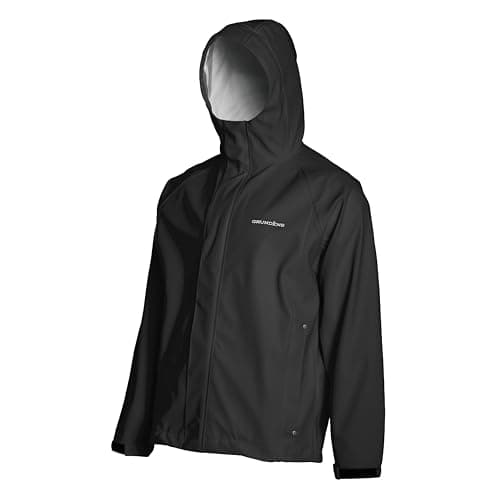
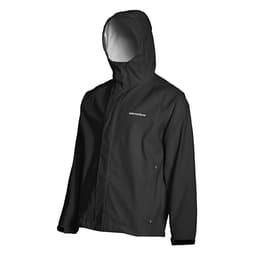
Grundens Neptune Fishing Jacket

Grundens Neptune Fishing Jacket

9.5/10 durability score

Commercial deck gear, which is a different product category from a hiking shell wearing the same word.

Read the full write-up


The short answer

Quick picks

Every pick here is one we recommend without reservation. Ranked on published warranty terms, whether the thing can be repaired, and what it is made of. Select a row to jump to the full write-up. How the durability score is calculated.

#ProductScoreBest forWarrantyPrice
1
Grundens Neptune Fishing Jacket

Grundens Neptune Fishing Jacket

Commercial deck gear, which is a different product category from a hiking shell wearing the same word. Nothing to delaminate, seams welded rather than stitched, and the only lifetime defects guarantee on this page.

9.5Category-definingBest overall under $150Limited lifetime (defects)
2
Columbia Watertight II Jacket

Columbia Watertight II Jacket

The honest budget answer, and a warranty puzzle: Columbia publishes a lifetime warranty on outerwear and a one-year warranty on sportswear, and does not tell you which bucket this jacket is in.

8.8ExcellentBest budget pickLimited lifetime (defects)
3
Marmot PreCip Eco Jacket

Marmot PreCip Eco Jacket

The shell to own if the jacket has to live in a bag until it rains. A limited lifetime warranty sits behind it - but read what Marmot classes as wear and tear before you count on it.

9.2OutstandingBest for hikingLimited lifetime (defects)
4
Helly Hansen Moss Rain Coat

Helly Hansen Moss Rain Coat

A coated, welded-seam raincoat from a brand that has been making them for fishermen since 1877. Long enough to keep rain off your thighs, and the one jacket here whose US warranty terms we could not find published.

9.3OutstandingBest for standing waterFixed term
5
Carhartt Storm Defender Loose Fit Heavyweight Jacket

Carhartt Storm Defender Loose Fit Heavyweight Jacket

The rain jacket for a work day rather than a hike: fully taped seams, a 10K/10K rating, and a cut that goes over a hoodie. The warranty, as always with Carhartt, stops where the zipper starts.

9.0OutstandingBest for workNone published

The best rain jacket under $150 is the Grundens Neptune, because welded seams remove the failure point that ends most jackets in this bracket. It is also the wrong jacket for half the people reading this, because it does not breathe. That tension - waterproofness against breathability - is the entire category, and under $150 you cannot buy your way out of it. You can only pick the side you need.

The two kinds of rain jacket, and how each one dies

Under $150 there are really only two constructions, and they fail in completely different ways.

A coated shell has a waterproof layer - almost always polyurethane - applied straight onto the back of the face fabric. It is cheap to make, tough against abrasion, and essentially unbreathable. It fails slowly and visibly: after enough years of flexing, the coating crazes, cracks and eventually peels away from the fabric, usually at the elbows and the shoulders first.

A laminated shell bonds a separate membrane between a face fabric and a backer. It breathes, because the membrane passes water vapor while blocking liquid water. It fails by delamination - the membrane letting go of the face fabric, which shows up as bubbling or peeling on the inside of the jacket, typically where a pack strap has been rubbing.

Neither failure is repairable in any practical sense. What is repairable, and what people mistake for failure constantly, is the DWR finish on the outside.

Wetting out is not leaking

This deserves its own section because it is the single most expensive misunderstanding in outerwear. The durable water repellent treatment on the face fabric is a surface finish. It wears off - from abrasion, from body oils, from detergent residue. When it goes, the face fabric absorbs water instead of beading it. The membrane underneath is still perfectly waterproof, but it can no longer move vapor out through a saturated outer layer, so sweat condenses inside and you get wet from within and conclude the jacket has failed.

It has not. Wash it with a technical cleaner, tumble it warm to reactivate the finish, and reapply DWR if that does not bring the beading back. Most rain jackets that go in the bin are thrown out for this, with years of waterproofing left in them.

Seams: taped, and the better alternative

Every jacket here is seam-sealed, because an unsealed seam is thousands of needle holes through a waterproof layer. The usual method is heat-applied seam tape, and the usual long-term failure is that tape lifting at a corner after enough wash cycles.

The Grundens does something different: its seams are radio-frequency welded rather than sewn and taped, so the panels are fused and there is no stitching to seal in the first place. That is a commercial-fishing construction, and it is the reason it leads this page.

The five, and what each gives up

Grundens Neptune - polyurethane-coated polyester, RF-welded seams, adjustable hood and cuffs, and a guarantee page stating products are free from manufacturing defects for the lifetime of the product. Built for people who stand in salt water for a living. Cons: it does not breathe at all, so you will sweat in it on any sustained effort; it is cut loose and long in a way that reads as workwear rather than outdoor kit; and it is the heaviest jacket here by a clear margin.

Columbia Watertight II - a two-layer nylon shell with Omni-Tech coating, fully seam-sealed and mesh-lined, and the budget pick of the group. The warranty position is genuinely interesting: Columbia publishes an outerwear limited lifetime warranty running for the practical life of the product and a separate one-year term for sportswear and accessories, so the classification matters. Cons: the mesh lining adds bulk without adding warmth; the hood is simple and does not hold its shape in wind; and it is the least abrasion-resistant shell here under a pack.

Marmot PreCip Eco - a 2.5-layer recycled nylon ripstop with a NanoPro coating, fully taped seams and pit zips, warranted against defects in materials and workmanship for the practical lifetime of the product to the original owner with proof of purchase. The pit zips are what make it the hiking pick: they are the only real breathability control in this bracket. Cons: 2.5-layer constructions have the printed backer rubbing directly on your base layer, which feels clammy and is the layer that wears first; it is the least durable face fabric here against brush and straps; and the practical-lifetime term is assessed by Marmot, not by you.

Helly Hansen Moss - a polyurethane-coated face fabric with a polyester backing, welded seams and an adjustable hood, and the jacket to own if your problem is standing in heavy rain rather than moving through it. Helly Hansen's own support site publishes a two-year warranty on apparel to the original owner against defects. Cons: two years is the shortest published term on this page by a wide margin; like the Grundens it does not breathe; and the fit is generous enough that it needs a layer under it to hang properly.

Carhartt Storm Defender - a 7.3-ounce nylon shell with a waterproof breathable coating, fully taped seams and a mesh-lined body, cut for work. Carhartt's limited warranty covers defects in materials and workmanship and explicitly excludes normal wear and tear including zippers and other hardware. Cons: that zipper exclusion is the one that bites, because the zipper is what usually goes first on a work shell; the coating is the least breathable of the three breathable options here; and it is cut loose enough over a hoodie that it flaps in wind without a layer under it.

Waterproof ratings, and what the numbers do not tell you

Shells are often sold on a pair of numbers - something like 10K/10K. The first is a hydrostatic head rating in millimeters: how tall a column of water the fabric holds back before it leaks, measured to a standard test. The second is a breathability rating, grams of water vapor passing a square meter in twenty-four hours. Higher is better on both, and roughly 10,000mm is the point above which a fabric stays dry under sustained rain and the pressure of a pack strap.

Two caveats make those numbers much less decisive than they look. They describe the laminate or coating in a laboratory, not the garment: a 20K fabric with a lifting seam tape leaks, and a 10K fabric with welded seams does not. And breathability figures are measured under conditions that do not resemble a human being working hard in the cold. Treat them as a floor to clear rather than a score to maximize, then judge the jacket on its seams, its hood and its warranty - which is the order this page used.

Zippers, which is where work shells actually fail

On a jacket that gets used rather than stored, the zipper usually goes before the fabric does. Grit works into the teeth, the slider wears, and eventually it stops locking the chain behind it. That is a repair - a replacement slider is cheap and a new zipper tape is a straightforward job for an alterations shop - but it is worth knowing that most warranties exclude it.

Carhartt’s limited warranty is explicit on this point: it covers defects in materials and workmanship and excludes normal wear and tear including zippers and other hardware. That is not a criticism of the jacket, which is cut and built for work. It is a reason to buy a jacket whose zipper you could have replaced, and to rinse salt and dust out of the chain at the end of a dirty season.

Two details worth checking on any shell in this bracket: whether the main zipper is backed by a storm flap, and whether the pocket zippers are water-resistant. A plain coil zipper in the chest of a jacket is a direct path for water in driving rain, flap or no flap.

Hoods, which separate a usable jacket from an annoying one

A hood either works in wind or it does not, and the difference is three adjustments.

A volume adjuster at the back pulls the hood closer to your head so it turns when you turn. Without it you spend wet days looking at the inside of a hood. A stiffened or wired brim keeps rain off your face and stops the front collapsing. Side cinches close the gap at the cheeks.

The fishing and marine shells here - the Grundens and the Helly Hansen - have the most seriously built hoods of the five, because the people who buy them stand outside in weather by choice. The hiking-oriented Marmot trades some of that for packability. The budget Columbia hood is the simplest of the group and the one that will flap first.

Fit, layering and why a packable jacket wears out sooner

A rain shell is an outer layer, so it has to fit over whatever you actually wear underneath in the rain. Sizing a shell to your t-shirt is the most common fitting error: it looks right in the shop and binds across the shoulders the first cold day you put a fleece under it.

There is also a direct trade between packability and working life. Lighter face fabrics fold smaller and abrade faster, and the abrasion happens exactly where it matters - at the shoulders, under a pack strap, which is where delamination starts on laminated shells. If the jacket lives in the bottom of a rucksack and comes out for showers, light is right. If it is worn all day under a load or against brick and ladders, the heavier coated shells here will outlast the lighter laminates by years.

Washing one without ruining it

Ordinary laundry detergent is the main thing that shortens the life of a rain jacket, and almost everyone uses it. Detergent leaves a surfactant residue that actively attracts water into the face fabric, which is the opposite of what the DWR is doing, and it keeps working against you every time the jacket gets damp afterwards.

The routine that works: close every zipper and flap, wash on a warm gentle cycle with a technical cleaner made for waterproof garments, rinse twice, then tumble dry on low for twenty minutes or so. That heat is not optional - it is what re-distributes and reactivates the existing DWR. If the fabric still soaks up water after that, the finish is spent and wants a wash-in or spray-on replacement. Done once a season, this is the difference between a shell that lasts three years and one that lasts eight.

Which one, for which problem

Standing still in sustained rain - fishing, dockwork, watching sport - buy the Grundens or the Helly Hansen and accept that they do not breathe. Moving under load - hiking, cycling, anything uphill - buy the Marmot for the pit zips. On a job site, buy the Carhartt for the cut and read the zipper exclusion before you need it. Spending as little as possible while still getting fully sealed seams, buy the Columbia.

Whichever you buy, the maintenance is the same and it is the thing that actually determines how long it lasts: wash it when it stops beading, never with ordinary detergent, and revive the DWR before you conclude the jacket is finished.

For the field above this price bracket, our rain jackets that last roundup covers the same five against higher-end laminates, and work jackets that last covers the waxed-cotton and duck-canvas side for people who want a shell that is repairable rather than merely waterproof. If the warranty is the deciding factor, how to claim a lifetime warranty sets out what every one of these makers will ask you for.
In full

Every pick, written up

Warranty terms below are quoted from the brand’s own published documents. “Not published” means we looked and the brand does not say.

#1Best overall under $150

Grundens Neptune Fishing Jacket

9.5Durability score Category-definingDurability score

Commercial deck gear, which is a different product category from a hiking shell wearing the same word. Nothing to delaminate, seams welded rather than stitched, and the only lifetime defects guarantee on this page.

What it gets right

  • Grundens publishes a lifetime guarantee against manufacturing defects on its US site
  • Radio-frequency welded seams instead of stitched-and-taped ones: no stitch holes, so nothing for tape to peel off
  • A coated shell cannot delaminate, which is the failure mode that ends most breathable rain jackets

Good to know

  • Not breathable in any meaningful sense - work hard in it and you are wet from the inside
  • Heavy and loud compared with a hiking shell, and it does not pack down small
  • The guarantee excludes normal wear, improper care and the natural breakdown of materials over time
WarrantyLimited lifetime (defects)

Grundens' US guarantee page states that products are guaranteed free from manufacturing defects for the lifetime of the product, excluding normal wear and tear, improper care, misuse, accident, neglect or the natural breakdown of materials over time. Its EU site publishes a shorter two-year window, and waders run on a separate 365-day program.

RepairabilityIndependently repairable

A coated shell is patchable with urethane repair tape or an adhesive patch, which is exactly how commercial crews keep this gear in service.

MaterialsPolyurethane-coated polyester, RF-welded seams, adjustable hood and cuffs
Made inNot published
#2Best budget pick

Columbia Watertight II Jacket

8.8Durability score ExcellentDurability score

The honest budget answer, and a warranty puzzle: Columbia publishes a lifetime warranty on outerwear and a one-year warranty on sportswear, and does not tell you which bucket this jacket is in.

What it gets right

  • Seam-sealed coated nylon at roughly half the price of the shells above
  • Packs into its own hand pocket, so the car or the desk drawer version of 'always have a shell' works
  • If it falls under Columbia's outerwear warranty, that document runs for the practical life of the product

Good to know

  • Which warranty applies is not stated on the listing: outerwear is limited lifetime, sportswear is one year, and Columbia points you to the hang tag
  • No pit zips, so the only ventilation is unzipping the front
  • Coating-only waterproofing wears out at the shoulders and cuffs first, and that counts as wear and tear
WarrantyLimited lifetime (defects)

Columbia publishes two separate documents: an outerwear limited lifetime warranty that runs for the practical life of the product and ends if the product is sold or transferred, and a one-year limited warranty for sportswear and accessories. Both exclude normal wear and tear, improper care, misuse, neglect and the natural breakdown of materials, and Columbia notes that some products are excluded as indicated at the point of sale or on the hang tag. The listing for this jacket does not say which applies.

RepairabilityReplace on failure

Not published

MaterialsTwo-layer nylon shell with Omni-Tech coating, fully seam-sealed, mesh-lined
Made inNot published
#3Best for hiking

Marmot PreCip Eco Jacket

9.2Durability score OutstandingDurability score

The shell to own if the jacket has to live in a bag until it rains. A limited lifetime warranty sits behind it - but read what Marmot classes as wear and tear before you count on it.

What it gets right

  • Marmot warrants it against defects in materials and workmanship for the practical lifetime of the product
  • Pit zips are the only real answer to a coated shell's breathability limits
  • Packs into its own pocket and weighs around 11 ounces, so it travels instead of staying home

Good to know

  • Marmot's own wear-and-tear FAQ lists loss of DWR and laminates losing their ability to keep out moisture as wear - the two ways this jacket will actually fail
  • 2.5-layer construction means the inside face wears against your skin and eventually scuffs
  • Light ripstop nylon is the wrong shell for brush, roofing or any abrasive work
WarrantyLimited lifetime (defects)

Marmot warrants products against defects in materials and workmanship for the practical lifetime of the product, to the original owner with proof of purchase, and decides at its discretion whether to repair, replace or refund. Normal wear and tear, improper care, misuse, accidents, neglect and the natural breakdown of materials are excluded - and Marmot's published FAQ counts loss of DWR and delamination as wear and tear.

RepairabilityFactory service

Marmot evaluates claims and may repair rather than replace; a taped-seam shell can also be patched at home with seam tape or a urethane patch.

Materials2.5-layer recycled nylon ripstop with NanoPro coating, 100% taped seams, pit zips
Made inNot published
#4Best for standing water

Helly Hansen Moss Rain Coat

9.3Durability score OutstandingDurability score

A coated, welded-seam raincoat from a brand that has been making them for fishermen since 1877. Long enough to keep rain off your thighs, and the one jacket here whose US warranty terms we could not find published.

What it gets right

  • Coated face fabric with welded seams: no stitch holes, no tape to peel, nothing to delaminate
  • Mid-hip length covers the gap a hip-length shell leaves over your legs
  • Current versions use a PFC-free polyurethane coating rather than the old PVC

Good to know

  • We could not find US warranty terms on Helly Hansen's own site - the two-year apparel term we quote is from its Australian support site
  • Around 630 grams: this is a raincoat you wear, not one you pack
  • Barely breathable, so it is wrong for anything more strenuous than walking
WarrantyFixed term

Helly Hansen's own support site publishes a two-year warranty on apparel (one year on footwear) to the original owner against defects in materials and workmanship, with repair, replacement or refund at its discretion; damage from accidents, negligence, improper care and normal wear and tear is excluded. That document is published for Australia and New Zealand - we could not find equivalent US terms on the brand's site.

RepairabilityIndependently repairable

A welded coated shell patches cleanly with urethane repair tape, the same fix commercial fishing crews use.

MaterialsPolyurethane-coated face fabric with polyester backing, welded seams, adjustable hood
Made inNot published
#5Best for work

Carhartt Storm Defender Loose Fit Heavyweight Jacket

9.0Durability score OutstandingDurability score

The rain jacket for a work day rather than a hike: fully taped seams, a 10K/10K rating, and a cut that goes over a hoodie. The warranty, as always with Carhartt, stops where the zipper starts.

What it gets right

  • Fully taped waterproof seams and a published 10K/10K waterproof-breathable rating
  • Loose fit actually clears a sweatshirt and a tool belt, which trim-cut hiking shells do not
  • Mesh-lined body and a roll-away hood - the hood stows instead of flapping in your eyeline

Good to know

  • Carhartt's limited warranty excludes normal wear and tear including zippers and hardware - the parts that fail first
  • Nylon shell abrades faster than the duck canvas Carhartt is known for
  • At 7.3 oz fabric it is lighter than the word heavyweight suggests; this is a shell, not a coat
WarrantyNone published

Carhartt's limited warranty covers defects in materials and workmanship and explicitly excludes normal wear and tear including zippers and other hardware.

RepairabilityIndependently repairable

Nylon shells take an adhesive repair patch well, and any alterations tailor can replace a failed zip for a fraction of a new jacket.

Materials7.3-ounce 100% nylon shell with waterproof breathable coating, fully taped seams, mesh-lined body
Made inNot published

FAQ

Questions people actually ask

What is the best rain jacket under $150?

The Grundens Neptune, if you want the jacket least likely to fail. It is a polyurethane-coated shell with radio-frequency welded seams rather than taped ones, which removes the single most common failure point in the category, and Grundens' US guarantee page states that products are guaranteed free from manufacturing defects for the lifetime of the product. The trade is that a coated commercial shell does not breathe, so it is the wrong jacket for working hard uphill.

What is the difference between a coated and a laminated rain jacket?

A coated shell has a waterproof layer applied directly to the inside of the face fabric - polyurethane, usually. A laminated shell bonds a separate waterproof membrane between layers. Coated shells are cheaper, tougher against abrasion and effectively unbreathable; they fail by the coating cracking or peeling after years of flexing. Laminated shells breathe and fail by delamination, where the membrane separates from the face fabric, usually at high-flex points. Under $150 you will mostly be choosing between a good coated shell and an entry-level laminate.

Why did my rain jacket stop being waterproof?

Nine times out of ten the jacket is fine and the durable water repellent finish on the outside has worn off. When DWR fails the face fabric soaks up water - wetting out - and you feel clammy and assume the jacket leaks, when in fact the membrane is still working and simply cannot move vapor through a saturated outer layer. Wash it with a technical cleaner and reactivate or reapply the DWR. Genuine failure looks different: visible delamination inside, or seam tape lifting.

Do rain jacket warranties cover delamination?

It depends entirely on whether the maker treats delamination as a defect or as wear, and the documents differ. Marmot warrants products against defects in materials and workmanship for the practical lifetime of the product to the original owner with proof of purchase. Columbia publishes two separate documents, an outerwear limited lifetime warranty running for the practical life of the product and a one-year term for sportswear and accessories, so which one applies depends on how the garment is classified. Helly Hansen's support site publishes two years on apparel. Carhartt's limited warranty covers defects and explicitly excludes normal wear and tear including zippers.

How long should a rain jacket last?

A coated commercial shell used seasonally will go five to ten years before the coating starts to craze, and the seams usually outlive the coating if they are welded rather than taped. An entry-level laminate worn hard will typically show delamination somewhere between three and six years, often at the shoulders where a pack rubs. In both cases the DWR needs reviving every season or so long before anything actually fails, and most jackets that get thrown out are thrown out for wetting out rather than for leaking.

Sources

Where these terms come from

Every warranty, repair-path and country-of-manufacture claim above was read from the following published pages. Where a brand publishes nothing, this page says “not published” rather than guessing.

In one line

Our recommendation

If you read nothing else on this page: this is the one we would buy, and the one we would buy instead if it did not fit. Both are scored on the same published warranty terms, repair paths and materials as everything else here.

Buy this one

Grundens Neptune Fishing Jacket

Best overall under $150

9.5/10 durability score

Or, the runner-up

Columbia Watertight II Jacket

Best budget pick

8.8/10 durability score

Read next

Related on Forge & Forever

Carhartt Iconic B01 Firm Duck Double-Front Dungaree

The materials explainer

Duck Canvas, Explained

What duck canvas is, what the ounce weights mean, and firm versus washed duck.

See everything in Workwear

Brands: want your product tested? For Brands.