What actually kills an axe
Almost never the head. A forged axe head is a lump of hardened steel with one working edge; sharpen it a hundred times and you have taken off a few millimeters. Heads outlive the people who buy them, which is why old axe heads turn up at farm sales with no handle in them.
The handle is the part that dies. It dies from overstrike - the swing that misses and lands the handle, not the head, on the edge of the round - and from being left in a damp shed until the wood shrinks and the head goes loose. Both are ordinary. Neither is a defect, and neither is covered by any warranty on this page.
So the entire durability question for an axe reduces to one thing: when the handle goes, is the axe finished or is it a twenty-minute repair? That is the axis this roundup is sorted on, and it cuts the category in half.
The criteria, in the order they matter
1. A handle you can replace. Wood on a forged head means the head drives off, a new hickory handle goes in, a wedge goes in after it, and the axe is new again for the price of a handle. A bonded composite handle and a one-piece steel body are both replace-on-failure designs. That is not automatically wrong - it is a trade that has to be worth something, and for a dedicated splitter it is.
2. A warranty document we can read. Not a retailer’s summary and not a line on a marketplace listing. Three of the five brands here publish something; one of those three contradicts itself in the same file; and one brand publishes nothing we could find anywhere on its own site.
3. Head geometry matched to a job. A thin, high-centered grind cuts across the grain - felling, limbing, carving. A thick convex wedge pops rounds apart along the grain. An axe used for the wrong one of those two jobs feels broken and is not.
4. Weight and length you will actually swing. The most common buying mistake in this category is too much axe. A 2.25-pound head on a 28-inch handle does ninety percent of what most people need. An eight-pound maul on a 36-inch handle does the other ten percent and will wreck your accuracy within twenty minutes if you are not conditioned for it.
5. A sheath, included. An unsheathed axe gets stored edge-down, blunt, and eventually becomes a hazard in a truck bed. Four of these five ship with one.
The paperwork, side by side
This is where the category separates, and the separation is not where price would put it.
Council Tool publishes a document that argues with itself. It warrants each product with a “limited lifetime warranty” to the original end-user purchaser for as long as they own it, against deficiencies in material and workmanship. Two paragraphs later, the same document says: our “limited lifetime warranty” is good for 45 days from receipt of product with proper usage. Both sentences are in the current policy. Improper handling or storage, abuse, alteration and normal wear and tear are excluded, and claims flow through the dealer you bought from rather than the factory.
We are not going to pretend to know which sentence a claim would be judged on. What we can say is that the 45-day line reads like a manufacturing-defect window bolted onto a lifetime promise, and that it is published, so a buyer should know it is there.
Gransfors Bruk publishes a 20-year warranty against manufacturing defects, and its own quality-control page narrows what that means: the head, not the handle and not the leather sheath, and only under proper use and care. The receipt from an authorized dealer is the warranty document - there is no card in the box any more - and forging marks or small variations in shape are explicitly not defects, which is the correct position for a hand-forged tool.
Fiskars has the longest term here: for as long as the original purchaser or giftee owns the product, against defects in materials and workmanship, from Fiskars or an authorized reseller. Sharpening and normal wear are excluded by name. The irony is real - the axe with the strongest warranty is the one you cannot repair.
Estwing states plainly that its warranty is not a lifetime warranty. It fully warrants its all-steel tools against failure in normal use, and not against misuse, abuse or wearing out. We rate that honesty higher than most lifetime claims, and we still have to record it as the shortest promise on the page.
Husqvarna publishes nothing for hand tools that we could find. Retailer listings for the same axe variously claim three years and lifetime - which is exactly the kind of second-hand number this site exists not to repeat, so the product renders “None published” and the prose says why.
Why the Council Tool Boy’s Axe wins
Not because the paperwork is best - it demonstrably is not. It wins because of what you can do when the paperwork stops mattering.
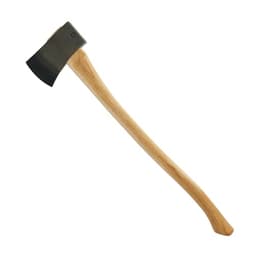
A forged head on an American hickory handle, forged, finished and assembled in North Carolina from domestic steel and hickory, at a price in the same bracket as a composite splitting axe. When the handle breaks - and it will, the first time you overstrike - the head comes off, a new handle goes on, and the axe is restored for a fraction of a replacement. Council Tool makes most of its own handles and publishes instructions for doing exactly that.
The size is the other half of the case. A 2.25-pound head on a 28-inch handle is the one axe that is genuinely versatile: limbing, felling small trees, bucking, splitting kindling, and light enough to swing accurately for an hour. Buy one axe and this is the size.
The honest cons: the factory edge is serviceable rather than sharp and wants half an hour with a file and a stone before first use; the warranty contradicts itself; and claims go through the dealer rather than the factory, so buy from a seller you can go back to. It still sits in the same company as the American-made tools in our made-in-USA tool brands roundup.
When to buy the Gransfors instead
When the axe is going to be used a lot, carried a lot, and kept for thirty years - and when you care that it was made properly.
The Small Forest Axe is hand-forged, stamped with the initials of the smith who forged it, and ground thin enough to bite deep across the grain. At a 19-inch handle it straddles hatchet and full axe: one-handed when you need it to be, two-handed when you need the power. For bushcraft, trail work and anything where the axe comes with you rather than waiting by the woodpile, nothing else here is close.
The trades are price and scope. Three times the Council Tool for a tool that does not cut three times better, and a 20-year warranty that covers the head while the handle and the sheath - the two parts that will actually need attention - sit outside it. Keep the receipt from an authorized dealer, because that receipt is the warranty.
The splitting exception
Everything above argues for a replaceable wooden handle. Splitting firewood is where that argument loses, and it is worth being clear about why.
Splitting is a repetitive, high-impact job with a high overstrike rate, performed hundreds of times in an afternoon, often by someone tired. A composite handle shrugs off the overstrikes that break hickory, does not loosen in the eye when the shed gets damp, and does not care that it was left outside overnight. The Fiskars X36 is built for exactly that: a double-hardened convex blade that pops rounds apart rather than burying itself in them, on a 36-inch handle that lets a tall person swing without stooping.
The price of that is absolute. The handle is bonded to the head; when it fails the axe is finished, and the lifetime warranty explicitly does not cover wear. So the honest framing is not “buy-it-for-life axe” - it is a highly effective tool whose warranty makes a manufacturing failure free and whose design makes an ordinary failure terminal. For splitting a winter of wood, we think that trade is worth making, and we would not make it for a general purpose axe.
The one-piece steel case
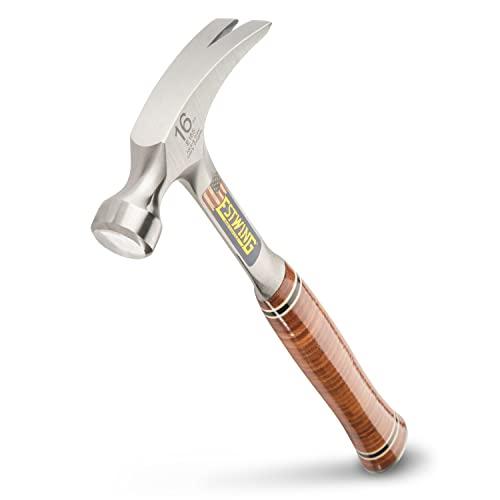
The Estwing Camper’s Axe answers the handle question by deleting it. One piece of forged American steel from edge to pommel, with a bonded shock-reduction grip, made in Rockford, Illinois. There is no joint to loosen, nothing to re-wedge, nothing that swells in July and shrinks in January, and no consequence to leaving it in a truck for a year.
For a vehicle axe, a camp axe, or a tool that will be stored badly by someone who did not buy it, that is the right design. The cost is that a steel handle cannot be replaced - if the shank or the grip ever goes, the tool goes - and that it transmits far more shock into your hands than hickory does over a long session. Estwing’s own position, that this is not a lifetime warranty, is the most accurate sentence any brand on this page publishes.
The value pick
The Husqvarna A1400 is a forged head on a wooden handle with a leather edge cover, at roughly a third of the Swedish hand-forged price. Structurally it is in the same family as the Council Tool - re-handleable, serviceable, repairable by the owner - and it sits in the useful size bracket between a hatchet and a felling axe.
What you give up is paperwork and edge preparation. There is no hand-tool warranty document on Husqvarna’s own site that we could find, so we record it as not published rather than repeating a retailer’s number. The factory grind is blunter than the Gransfors and needs work. The handle lacquer is thin enough that stripping and oiling it is a sensible first job. For a second axe, or a first axe on a budget, none of that is disqualifying.
Splitting and chopping are different jobs
The most common complaint about axes is a geometry mismatch, not a quality problem. Chopping cuts across the grain, and it wants a thin, high-centered bit that penetrates. Splitting separates along the grain, and it wants a thick convex wedge that converts penetration into sideways force.
Use a splitting axe to fell a tree and it bounces. Use a felling axe on a knotty round and it sticks, which is both frustrating and the most common way people hurt themselves - a stuck axe invites a second swing with the round still attached. If you only do one of these jobs, buy for that job. If you do both, the Boy’s Axe is the compromise that actually works, and a cheap steel splitting wedge and a sledge will handle the rounds it cannot.
Re-handling, which is the whole point
The repair that defines this category takes a beginner about an hour. Saw the old handle off flush with the head, drive the remaining stub out through the eye from below, clean the eye, fit a new hickory handle - sanding it to fit rather than forcing it - saw the kerf, drive a wooden wedge in, let it sit, then trim and oil. A steel wedge goes in after the wood one if the eye is large.
Two mistakes to avoid: a handle that is painted or heavily lacquered hides grain runout, which is what makes a handle snap, so buy a clear or oiled handle and look at the grain. And do not soak a loose head in water to swell it tight - it works for a week and then rots the wood in the eye. The general principle, and the rest of the argument for repair over replacement, is in repairing gear instead of replacing it.
What we did not pick, and why
Bundled listings. Several of the obvious axes on the big marketplaces exist mainly as third-party bundles - an axe plus a hatchet plus a sharpener at a price that makes the comparison impossible. We resolved every pick on this page to a standalone listing for the named model instead.
The Hults Bruk Almike. We wanted it here. The catalog returned the Hultan rather than the Almike for every query we ran, and this site does not feature a product under a model name the listing does not support.
Unbranded “hand-forged” axes. The category is full of them, they photograph beautifully, and not one we looked at publishes a warranty, a steel specification or a country of manufacture. There is no way to judge durability on marketing copy alone.
Mauls. A six- or eight-pound maul is the right tool for big knotty rounds, and it is a different product from an axe. We left mauls out of this page rather than ranking them against tools they are not competing with.
Three habits that keep an axe alive
Sheath it and hang it. Dry storage, off the floor, edge covered. Damp sheds loosen heads and rust edges, and both are preventable.
Sharpen with a file, not a grinder. A bench grinder draws the temper out of a thin edge and you cannot put it back. A mill file and a puck restore an edge in minutes and take almost no steel.
Oil the handle, not just the head. Boiled linseed oil on bare hickory once a season keeps the wood from drying and shrinking in the eye. The head wants a wipe of light oil to stop surface rust - and if you want the warranty comparison across a whole tool kit rather than one axe, our tool brand warranty guide covers who actually honors what.