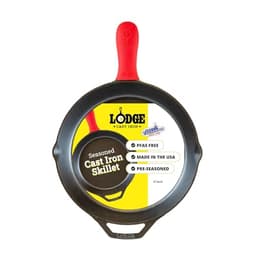
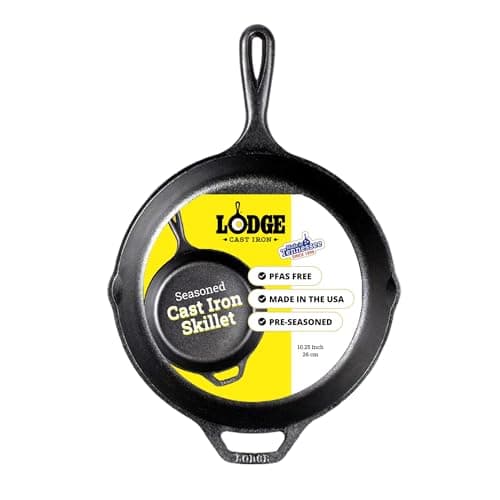
Buy the 12-inch. It costs a few dollars more than the 10.25-inch, it browns food for three or four people where the smaller pan steams it, and it is the only size that takes a whole chicken. The single legitimate reason to buy the 10.25 instead is weight - a 12-inch Lodge full of food is genuinely heavy, and if that is a problem for your wrists it is a problem every single day.
Measure the rim, not the cooking surface
Cast iron is sold by the diameter across the top of the pan, and the sidewalls slope. A 10.25-inch Lodge has roughly an 8.5-inch flat cooking floor; a 12-inch has about ten. That gap is why a pan that sounds adequate on paper feels cramped in use, and it is the most common sizing mistake people make.
If you are identifying an old pan, the numbers on vintage American iron are stove-eye sizes rather than inches: a No. 8 is approximately today’s 10.25-inch and a No. 10 is approximately the 12-inch.
Sizing by what you actually cook
- 10.25-inch - one or two people. Two eggs, one steak, a round of cornbread, a single salmon fillet. It preheats faster, it fits a small gas burner properly, and it is the one you will actually lift with one hand.
- 12-inch - three or four people, and the default recommendation. Four chicken thighs with air between them, two thick steaks, a spatchcocked chicken, a full pan of roasted vegetables. Comes with a silicone handle holder, which you will want.
- Both - the honest end state for most households, and it costs about forty dollars to get there. The small one does breakfast; the big one does dinner.
Crowding is the whole argument
Browning needs the surface of the food to get above the boiling point of water, which cannot happen while it is sitting in liquid. Pack a pan and every piece releases moisture into a space that is too small to evaporate it, the pan temperature drops, and the food greys instead of browning.
That is the entire case for the 12-inch, and it is also why a bigger pan is not simply “more pan” - it changes the cooking, not just the capacity. Going the other way, an oversized pan is a mild problem rather than a serious one: a half-filled 12-inch pan burns a little more fat around the edges and takes longer to preheat.
Weight, which is the real constraint
This is where honest sizing advice diverges from the internet’s. A 12-inch Lodge is heavy before you add food, and some people cannot safely move one from the oven to the hob when it is full. That is not a reason to pretend the smaller pan browns as well; it is a reason to buy a lighter 12-inch or an easier 10.25.
Two registry options exist for exactly this problem. The Lodge Blacklock 12-inch is cast with thinner walls and is roughly a third lighter than the standard skillet, triple-seasoned, and covered by the same Made Right warranty - at about three times the price, which is worth it only if weight is the reason you do not use cast iron. The Field Company No. 6 is lighter still and machined smooth so it behaves well from the first cook; it also costs several times a pan with the same working life, and Field publishes no warranty terms we could find. Our Lodge vs Field Company page runs that comparison in full.
Warranty and lifespan, at any size
Size has no effect on how long the pan lasts, because none of these pans has a realistic wear-out mode. Lodge’s Made Right limited lifetime warranty covers normal household use and excludes commercial use, accidents, drops, mishandling, misuse, neglect and overheating - which is to say it excludes every way cast iron actually dies. That sounds damning and is not: the seasoning is a surface you rebuild yourself, rust is reversible, and how long cast iron lasts is a question about the owner rather than the pan.
What to do if you already own the wrong one
Keep it. A 10.25 that is too small is still the best egg pan in the house, and a 12-inch that is too heavy is still the right pan for anything that goes in the oven and stays there. The second skillet costs twenty dollars, which makes this the cheapest mistake in the kitchen to fix, and both pans will outlive the decision.
If you are still choosing between brands rather than sizes, best cast iron skillet has the full field with every warranty term quoted, and how to season cast iron covers getting a new pan’s factory seasoning to behave.
Size and your actual hob
One more constraint that sizing guides ignore: the burner. A 12-inch pan on a small gas ring heats in a disc in the middle and stays cool at the rim, which is the most common cause of people concluding that cast iron “does not heat evenly”. Cast iron conducts poorly and stores heat brilliantly, so it needs time rather than more flame - five to eight minutes of preheating on a medium burner, moved a quarter-turn once, does more for evenness than any pan upgrade.
On induction, size matters in the other direction: the pan must cover the coil or the cookware-detect may not trigger at all, which rules the smaller skillets out on some large zones. On a glass-ceramic electric hob, lift rather than slide - the base of a cast iron pan is rough enough to mark the glass, and that damage is not covered by anybody’s warranty.
The two-pan end state
Most households that use cast iron properly end up with a 10.25 and a 12, because the two sizes do genuinely different jobs rather than overlapping ones. At twenty dollars each that is not a compromise purchase, and both pans will outlive the kitchen they are in.