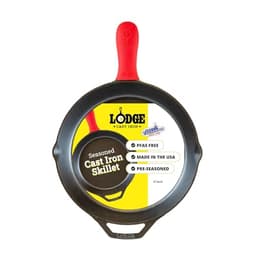
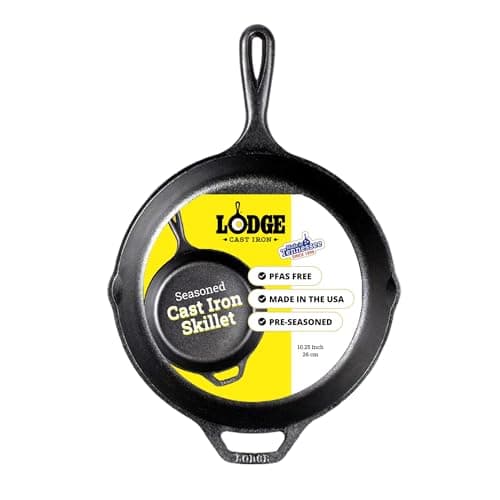
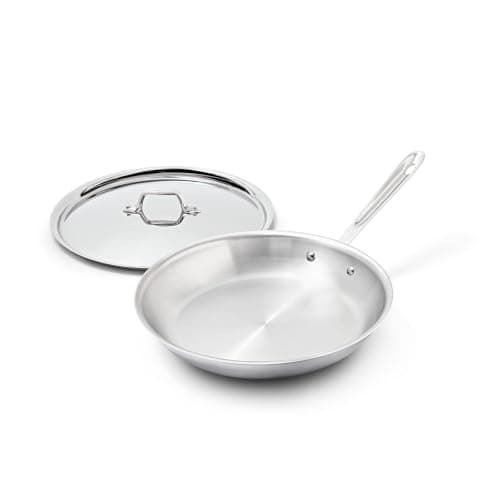
Buy one of each: a Lodge 12-inch skillet and one fully-clad stainless fry pan. Together they cost less than a single premium nonstick set, they cover everything a home kitchen cooks, and neither has a realistic wear-out mode. If you can only buy one this month, buy the cast iron - it is a fifth of the price and the only one of the two whose cooking surface you can rebuild yourself in an hour.
The two materials fail in opposite directions
This is the comparison that matters on a site about things you keep, and it is not about heat retention.
Cast iron has a renewable surface and a warranty you will never use. The cooking surface is a layer of polymerised oil that you apply, damage and reapply for as long as you own the pan. Rust is not terminal: steel wool, oil, heat, and the pan is back. Lodge’s Made Right limited lifetime warranty is published and specific, and it excludes accidents, drops, mishandling, misuse, neglect and overheating - which, between them, are every way cast iron actually dies. The warranty is nearly irrelevant because the owner is the repair path.
Fully-clad stainless has a real warranty and nothing to renew. There is no coating to wear through and no consumable layer. All-Clad warrants its cookware free from defects in material, construction or workmanship for the lifetime of the product under normal use, repairing or replacing without charge in the country of purchase. Heritage Steel publishes a lifetime warranty too. In exchange, nothing about the pan is user-serviceable: there is simply nothing to service.
What each one genuinely does better
Strip out the folklore and the division is about thermal mass and chemistry.
- Cast iron wins on heat retention. Several pounds of iron at temperature barely notices a cold steak. That is why a sear in cast iron browns and a sear in a thin pan steams. It is also why cornbread, roast chicken and anything going from hob to oven belongs in it.
- Stainless wins on control and on acid. It heats and cools quickly, which is what you want when a sauce is about to split, and it does not react with tomato, wine, vinegar or citrus. Deglazing a pan and reducing the result is a stainless job, every time.
- Stainless wins on weight and on washing up. A 12-inch Lodge full of food is genuinely heavy, and a few people cannot safely lift one. Stainless goes in the dishwasher; cast iron does not.
- Cast iron wins on price by a factor of five. A Lodge skillet is one of the few genuinely defensible twenty-dollar purchases left.
The warranty fine print, quoted
On this site the warranty document is the product, so here is where these four differ.
All-Clad D3 - lifetime against defects in material, construction or workmanship, repaired or replaced without charge in the country of purchase. Made in Canonsburg, Pennsylvania. The flared rim and the riveted handle are the two things people complain about for decades, and neither is a defect.
Heritage Steel - lifetime warranty, five-ply, with a 316Ti titanium-stabilised cooking surface that resists pitting better than the 18/10 everyone else uses. Made in Clarksville, Tennessee. It costs more than All-Clad for a less-known name, which is the only real argument against it.
Demeyere Industry - technically the best-built pan here, welded rather than riveted so there is nothing inside the pan to trap food. The catch is the term: Demeyere publishes 10 years on uncoated lines, not a lifetime, and nothing at all on anything with a nonstick coating. A shorter warranty than its cheaper rivals, on a better pan.
Lodge - limited lifetime, excluding drops and overheating. See above: the warranty is not why you buy it.
The honest case against each
Cast iron asks for a habit. Not a difficult one - dry it, wipe a film of oil on it - but a habit, and a pan that gets put away wet will rust. It is heavy, the handle gets hot, and the factory seasoning on a new Lodge needs several cooks before it behaves. If you will not do the habit, buy stainless and be happier.
Stainless asks for technique. Food sticks until you learn the heat, and that is a real learning curve rather than a defect in the pan - a cold stainless pan with cold oil and cold chicken in it will weld them together every time. It also costs several times a disc-bottom pan that cooks almost as well.
So which do you buy first
Buy cast iron first if you cook meat, bread and breakfast: a 12-inch Lodge handles all three, and how to season cast iron is a twenty-minute read that covers the entire maintenance burden. Buy stainless first if you cook sauces, acidic dishes and anything that needs heat you can turn down quickly - best stainless steel cookware has the full field with warranty terms quoted. If you are weighing iron against the lighter alternative instead, cast iron vs carbon steel is the comparison you actually want.
What neither of them replaces
There is one job in a home kitchen that neither material does well, and pretending otherwise is how people end up disappointed with both. Eggs, pancakes and delicate fish on a surface that has not been built up over months will stick, in stainless because that is physics and in cast iron because new factory seasoning is not the same as five years of seasoning.
The honest answers are to give the cast iron time - the surface genuinely does improve, and best oil for cast iron covers accelerating that - or to own one cheap nonstick pan for breakfast and treat it as the consumable it is. What we will not tell you is that a brand-new pan of either material behaves like a nonstick, because it does not, and that single expectation is responsible for more abandoned cast iron than every other factor combined.