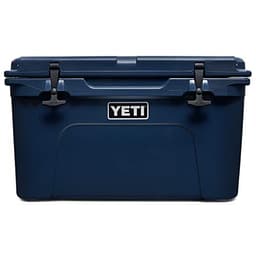
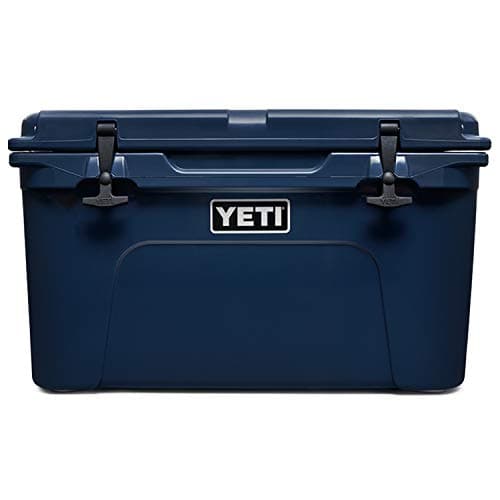
For the longest ice life, buy the YETI Tundra 45 - and if the price gap matters, buy the RTIC 45 instead and lose about half a day. Both are rotomolded with pressure-injected insulation and rubber T-latches, which is the construction that actually drives ice retention. Both publish a five-year warranty, not the lifetime one the premium price implies. Where they differ is refinement and money, not physics.
What actually keeps ice frozen
Ice life is a heat-transfer problem with three terms, and only three.
- Insulation thickness and type. A rotomolded shell is moulded as one piece and then filled with pressure-injected foam, which is how you get two to three inches of insulation in the walls and - crucially - in the lid. A blow-molded cooler is two thin plastic skins with lighter foam between them.
- The lid seal. This is the one people underestimate. A gasket that the lid is pulled down onto by rubber T-latches stops the air exchange that happens every time a loose-fitting lid rests on a rim. Plastic over-centre latches on budget coolers go brittle and stop pulling the lid down at all, which quietly halves the cooler’s performance long before anything looks broken.
- How you use it. Pre-chilling, ice-to-contents ratio, draining or not draining meltwater, and how often the lid opens. These are worth more than the difference between any two coolers on this page, which is why how to pack a cooler is the companion read to this one.
What decides whether a cooler is still performing in year eight is the construction and the warranty document, so that is what this page reads: wall thickness, the lid gasket, the hardware, and what the guarantee covers when a latch goes.
YETI Tundra 45 - the best-built, with a five-year warranty
Rotomolded single-piece shell, PermaFrost pressure-injected insulation, rubber T-latches, and replacement parts sold for the components that actually fail. It is genuinely the best-built cooler here.
Two honest caveats. YETI publishes a five-year warranty on hard coolers - not the lifetime one the price implies, and worth knowing before you pay four times what a good Igloo costs. And it is extremely heavy empty, before 45 quarts of ice goes in. What it does have, and what matters over a decade, is that the latches, hinge pins, handles and drain plug are all available as parts. The failure points are user-serviceable, which is the only reason a five-year warranty is acceptable on a product at this price. Our full case is on is YETI worth it.
RTIC 45 - the same physics, less money
Rotomolded construction, pressure-injected insulation, rubber latches, replaceable drain hardware, and the same five-year term on Ultra-Tough hard coolers. In like-for-like testing elsewhere its ice retention runs about half a day behind YETI’s; the price gap is considerably larger than half a day’s worth of ice.
One thing to read carefully: RTIC’s warranty is not uniform across its range. The published terms are five years on Ultra-Tough hard coolers, three years on Ultra-Light hard coolers, and one year on soft-sided coolers. Check which product you are actually adding to the basket. The hardware also feels less refined than YETI’s, which is a fair description of where the money went.
Igloo BMX 52 - honest value, half the ice life
Blow-molded rather than rotomolded, with a steel-reinforced base that takes being stood on. Igloo publishes three years on Super Tough models - and one year on most of its other hard and soft coolers, with five on the Rotomold and IMX lines, so the model name matters more than the brand here.
The trade is exactly what the construction predicts: blow-molded walls carry far less insulation than rotomolded ones, so ice life is roughly half, and the plastic latches are the weak point. At a quarter of rotomolded pricing that is a reasonable deal for weekend use. It is not a cooler for a four-day trip in August.
Coleman Xtreme Rolling - the one with wheels
The cheapest useful cooler here, and the only one you can tow. Wheels matter more than people admit once a cooler is full of ice, and no rotomolded cooler in this group has them.
Thin walls mean ice life measured in a long weekend at best, we found no published warranty terms for this model, and the wheels and tow handle are the first things to break. It costs about a tenth of the YETI, which is the entire argument - and for a car-park-to-beach trip twice a summer, it is a sound one.
The decision, in one paragraph
If ice has to survive multiple days, you need rotomolded walls and a gasketed lid, which means the YETI or the RTIC - and the RTIC is the rational default unless you want the best. If your cooler does weekends and day trips, the Igloo BMX gives you a steel-reinforced box and a three-year term for a quarter of the money. If the cooler has to be dragged, the Coleman is the only answer here. Before you buy any of them, read what is a rotomolded cooler so you know what you are paying for, and best coolers that last for the durability view rather than the ice-life one.
Three free things worth more than the upgrade
Before paying the rotomolded premium, it is worth knowing that three habits move ice life more than the gap between the YETI and the Igloo.
- Pre-chill the cooler. Sacrifice a bag of ice the night before and dump it in the morning. An empty cooler at ambient temperature spends your ice cooling itself down before it does anything useful.
- Fill it, and use block ice. Air is the enemy; a full cooler holds far longer than a half-empty one. Block ice has less surface area per pound than cubes and lasts substantially longer.
- Leave the meltwater in. Cold water is still cold, and draining it replaces it with warm air. Drain only when you need the space.