The guarantee, read carefully
Filson guarantees every item for the lifetime of the item against failure of materials, workmanship, craftsmanship and manufacturer defects. Crucially, it defines product lifetime: the point at which, through normal use, the product can no longer function in its intended purpose.
That definition is better than most. “Lifetime of the product” warranties are often circular - the product’s life ends when it fails, so the warranty covers nothing. Filson at least tells you what it means.
The exclusions: animal damage, chemical damage, damage caused by airlines or third-party shippers, extreme wear, and third-party or customer alterations.
The exclusion doing the work
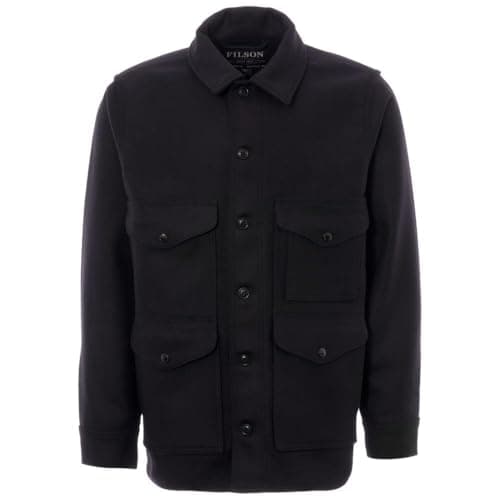
Extreme wear. That is the one to weigh. A Mackinaw cruiser worn daily through brush for fifteen years is, on any reasonable reading, extreme wear - and that determination is the company’s.
Filson’s reputation for handling claims generously is good, and we are not suggesting it is applied aggressively. But a reader deciding between four hundred dollars and a hundred should understand that this is a strong guarantee rather than an unconditional one, and that it is clearer about its edges than most of its competitors.
What the materials actually give you
26oz Mackinaw wool is a genuinely exceptional cloth. It stays warm when soaked, it is nearly silent in brush - which matters to hunters and to nobody else - it is naturally fire-resistant in a way synthetics emphatically are not, and the design has been essentially unchanged since 1914, so it has had a century of refinement.
Tin cloth is oil-finish cotton and is the closest thing to armor in fabric form. Thorns, brambles and abrasion that would shred canvas leave it marked and intact.
These are not marketing materials. They are genuinely better cloths than anything Carhartt uses, and they are a large part of the price.
The maintenance nobody mentions
Tin cloth is only weatherproof while the wax is intact. That means re-waxing every year or two with a tin of oil finish wax - heat it, work it in, let it cure. It is a half-hour job, it is messy, and skipping it means a jacket that soaks through.
Wool needs protecting from moths and wants airing rather than washing. Neither is onerous. Neither is zero.
When it is not worth it
If the jacket will live in a van, get paint on it, be lent to whoever needs it, and be forgotten in a skip - buy Carhartt. A four-hundred-dollar jacket treated that way is not durable, it is wasteful, and the guarantee excludes most of what you will do to it.
If chemicals are involved, the guarantee excludes chemical damage explicitly.
When it is
One jacket, owned for decades, looked after, re-waxed when it needs it. A garment you will still be wearing in 2055 and that your children might argue over. That is a real thing the Mackinaw can be, and almost nothing else in this hub can.
The arithmetic is not the point at that horizon. The arithmetic says buy four Carhartts. The Filson case is that you would rather own one good thing, and that is a legitimate preference backed, here, by an actual document.