Six feet for walking, four feet for traffic and heel work, and fifteen to thirty feet for recall training. Those three lengths cover every situation a pet dog is actually in, and almost nobody needs a fourth. If you own one leash, make it six feet; if you own two, make the second one four feet, because the short leash is the one that gets used most in town and the one people never buy.
Why six feet became the standard
Six feet is roughly the distance at which a dog can move to the side, put its nose down and circle a little without you having to manage a loop of slack. Shorter and the dog is tethered to your leg; longer and there is rope on the ground, which is how people get tangled, trip, or lose the ability to shorten up quickly when something happens.
It is also the figure written into a great many local leash ordinances, which is worth checking before you buy anything longer. Municipal codes, park rules, apartment leases and transit policies all commonly cap leash length, and six feet is the most frequent number. We cannot tell you what applies where you live - that is a local legal question - but it is the first thing to look up if you are considering a long line.
Length by job
- Four feet - traffic, heel work, crowded places. Keeps the dog beside you, leaves no slack, and gives you immediate control. The length to use on a pavement next to a road.
- Five to six feet - general walking. The default. Enough room to sniff, little enough to manage one-handed.
- Eight to ten feet - rural walking, loose-lead practice. Useful on paths and in fields where there is nothing to wrap around. Awkward in town.
- Fifteen to thirty feet - recall training in open space. A long line, used deliberately, for a specific training stage. Not a walking leash.
The long line, and what it replaces
A long line is what most people actually want when they buy a retractable: distance for the dog, connection for you. The difference is that a long line is a piece of webbing with nothing to fail, where a retractable is a spring-loaded spool with a thin cord and a plastic brake - and the brake is a mechanism, which means it is a thing that stops working.
The Mighty Paw long leash is the straightforward version: nylon webbing, a padded handle, a metal clasp, and clasps and stitching that are both replaceable. Used properly - in open space, with the line loose on the ground and the dog working towards you - it does the training job no walking leash can. We set out the full case against the alternative on why we do not recommend retractable leashes.
What the length does to the hardware
Longer leash, more leverage, more force at the clip. A six-foot leash on a lunging dog loads the clasp far harder than a four-foot one, and a thirty-foot line that goes tight at full extension is the single most violent thing that happens to a leash. That is why the hardware grade matters more as the length goes up, and why the clip is the first thing to inspect on a long line.
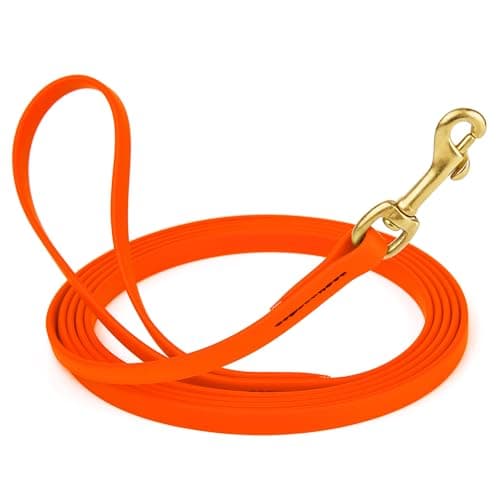
The Mendota British-style braided snap leash is the best illustration of doing this properly: solid-braid rope with spliced terminations rather than stitched ones, and a solid brass snap, made in Wisconsin. Rope leads fail at the splice, and Mendota’s does not - which is why gundog people keep buying them. It can also be re-spliced and the snap replaced, so the leash is genuinely repairable.
Material, briefly, because it interacts with length
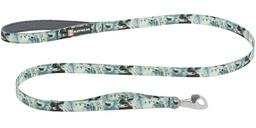
The Ruffwear Front Range is the everyday answer at five feet: Tubelok webbing visibly better than supermarket leads, a padded handle and an accessory loop. Ruffwear publishes a guarantee against defects in materials and craftsmanship, with approved US claims issued as a gift card for the full replacement value - and an honest, explicit exclusion: damage from chewing, misuse, cleaning, disassembly, alterations, normal wear and tear, abuse or fire is not covered. Fair, and worth knowing. The padded handle also absorbs water, which matters more on a long walk than it sounds.
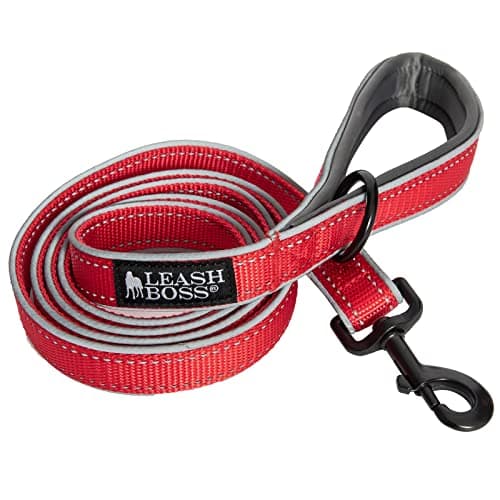
For a dog that pulls, length is the wrong variable to adjust - a shorter leash does not stop pulling, it just shortens the lever. What helps is a handle you can hold without being injured, which is what the Leashboss double-thick webbing and neoprene-padded handle are for. The actual fix is training, and we say so on best leash for a dog that pulls.
Two practical notes
First, a leash length is a system with the collar: a well-fitted collar and a four-foot leash give you more control than a loose collar on any length of leash. Second, inspect the clasp and the stitching at the handle every few months, because both are repairable right up until the moment they fail at the worst time.
For the materials argument - webbing, rope, biothane or leather - start with best durable dog leashes, which ranks the field on what each material actually survives.
Handling a long line without hurting yourself
The one genuine risk with a long line is rope burn, and it comes from the same mistake every time: letting the line run through a closed hand when the dog accelerates. Thirty feet of webbing moving fast through a grip will take skin off.
Three habits remove it. Never loop the line around your hand or wrist - hold the handle and let the slack lie on the ground. Keep the line loose rather than taut, so there is no stored energy to release. And wear a glove for the first few sessions with a strong dog, which is not an admission of anything: handlers who use long lines professionally do it as standard. A long line is a training tool, and like any tool it has a correct way to be held.