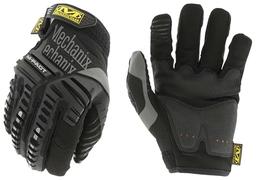
For most mechanical work, buy the Mechanix M-Pact - and buy a heavier leather glove alongside it rather than instead of it. The M-Pact is thin enough to feel a bolt through, has TPR knuckle guards that genuinely save fingers in an engine bay, and costs little enough that the palm wearing through in a few months of heavy use is an acceptable outcome. What it will not do is protect you from an edge, which is what the leather glove is for.
There is no warranty here, so judge the material
This site normally ranks on published warranty terms. In this category that produces one line: we found no published warranty terms for any of these five gloves. A work glove is a consumable and every maker treats it as one.
So the ranking is on the two things that are actually knowable - what the palm is made of, and what the glove protects against - plus the only honest version of value in a consumable category, which is cost per month of real use.
The two jobs a mechanic’s glove does
- Feel and impact. Working inside an engine bay means handling fasteners you cannot see while your knuckles are near things that do not move. A thin synthetic palm with TPR armour on the back is the right tool, and the palm is the consumable.
- Abrasion and heat. Pulling an exhaust, handling suspension components, moving sharp sheet metal. Leather - goatskin for the weight, cowhide for the price - and thickness over dexterity.
Nobody sells one glove that is good at both, and a glove sold as doing both is usually bad at each. Buying two pairs is cheaper than replacing a thin glove monthly because you used it for heavy work.
Mechanix M-Pact - thin, armoured, disposable
Synthetic leather palm, TrekDry back, TPR knuckle protection, touchscreen-capable fingertips. It is thin enough that you can find a bolt head by feel, which is the single most important property for work in a tight bay.
The palm wears through in months of heavy use - that is the design, not a defect, and at this price it is a fair trade. It is not cut-rated, which matters: TPR on the knuckles protects against impact, not against an edge. Buy two pairs and rotate them so one is always dry.
Hestra Cow Drivers - when you need to feel everything
Unlined cowhide, cut close, from a Swedish maker that has done nothing but gloves since 1936. It moulds to the hand over a few weeks and then stays flexible in a way no synthetic glove does.
It offers no impact protection and no cut protection at all, and unlined means cold. This is a glove for handling things rather than for being protected from them - carrying parts, bleeding brakes, anything where a thick glove is the problem. Honest about what it is, which is why it is here.
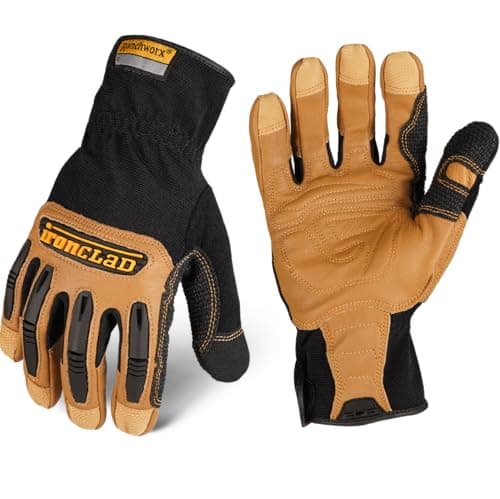
Ironclad Ranchworx - the one that lasts
Goatskin palm with reinforced stitching at the palm and finger seams, and a proper neoprene cuff. Goatskin is more abrasion-resistant than cowhide for a given thickness, and the reinforcement is at the seams, which is where cheap leather gloves actually fail.
It costs several times a basic leather glove and lasts proportionally longer, which is the whole argument of this website applied to a consumable. Too bulky for fine work - do not try to make it your only glove.
Youngstown General Utility - the only real cut protection
Kevlar-lined, which is the only thing in this group that will meaningfully slow a blade or a sharp edge. If your hands are routinely near cut sheet metal, broken glass or a blade, the price difference stops being a price difference.
It is bulky and warm, and expensive for a work glove. It is also the one glove on this page whose absence you would genuinely regret once.
Wells Lamont HydraHyde - buy them by the three-pack
Real cowhide, water-resistant treatment, slip-on cuff, at a price below most synthetic gloves. These are the gloves to keep a stack of in the van and stop thinking about.
The seams fail before the leather does, there is no cut rating, and no published warranty terms we could find. None of that is a criticism at this price - it is just what you are buying.
How to get more months out of any of them
Three habits, all free. Rotate two pairs so neither goes back on damp, because wet leather and wet synthetic palms both abrade far faster. Keep a cheap pair for the filthy jobs so the good gloves are not the ones soaked in diesel. And re-stitch a failed seam rather than binning the glove - a leather glove with a sound palm and a burst seam is a ten-minute repair with a stitching awl, which is the same logic as repairing gear instead of replacing it.
For the wider glove field - yard work, cold weather, general site use - our best work gloves roundup covers leather, impact and cut protection across all the categories rather than just mechanical work.
Sizing, which decides whether you wear them at all
The best glove you own is the one you do not take off to do the fiddly bit, and that is almost entirely a sizing question. A glove that is loose at the fingertips removes your ability to feel a fastener, so you take it off, and then it is not protecting anything.
Measure around the widest part of your palm excluding the thumb, and buy to that rather than to a glove you owned ten years ago - sizing is not consistent between makers, and synthetic gloves fit much closer than leather ones of the same nominal size. Leather gloves stretch and mould over a few weeks, so buy them snug; synthetic gloves do not stretch at all, so buy them correct. A thin impact glove should feel close enough that you can pick a nut off a bench with it on. If you cannot, it is a size too big.