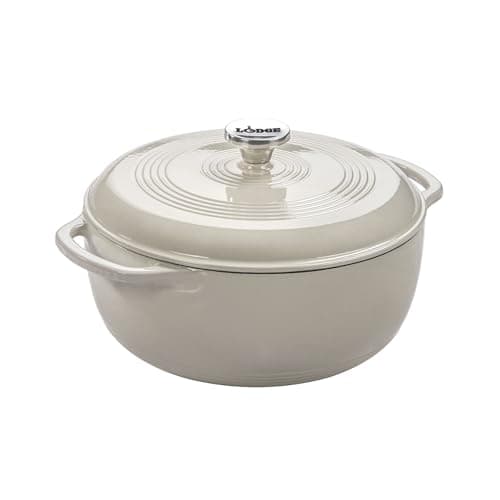
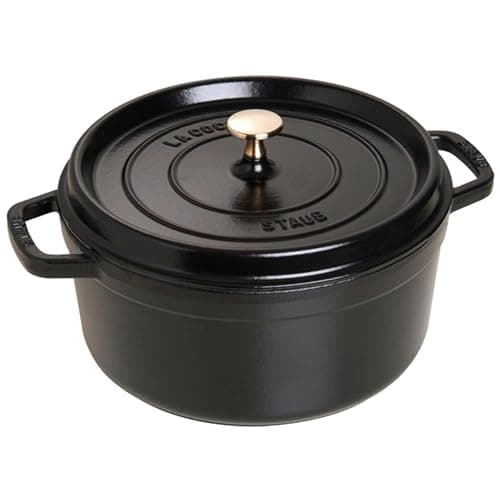
Le Creuset is worth it if you are buying a pot to cook in for thirty years and you want the best enamel on the market - and it is not worth it if the thing you were buying was the warranty. The limited lifetime warranty covers defects in material and workmanship, which is the same class of promise Lodge and Tramontina publish at a fraction of the price. What the money actually buys is the enamel, the finish and the fit, and those are real.
The thing underneath is the same metal
Every pot on this page is cast iron with a fired porcelain enamel coating. The cast iron is what gives you the slow, even, stubborn heat that makes a braise work, and cast iron is cast iron - a French foundry does not change its specific heat capacity.
So the differences are all in the coating and the construction: how thick the enamel is, how smooth, how well it is applied at the rim where chips start, how well the lid seats, and how heavy the whole thing is to lift out of an oven. Those are the variables worth paying for, and Le Creuset genuinely wins most of them.
What the warranty actually says
Le Creuset publishes a limited lifetime warranty on its cast iron, covering defects in material and workmanship. Staub’s cast iron carries a lifetime warranty against defects, published by its parent company Zwilling. Lodge covers enamel under its Made Right limited lifetime warranty. Tramontina warrants its cookware free from defects in material and workmanship for the lifetime of the original purchaser.
Read those four sentences again and notice that they are the same sentence. All four are lifetime defect warranties. None of them is a lifetime chip warranty, because a chip is impact damage and no manufacturer covers impact damage on a glass coating.
This is the single most important thing to understand before spending premium money: the warranty is not the differentiator here. If you buy Le Creuset expecting the warranty to replace a pot you dropped, you have bought the wrong thing for the wrong reason.
Enamel cannot be repaired, and that is the real risk
Chipped enamel is permanent. It is a fired glass layer bonded to iron, and there is no patching compound, no re-firing service and no cobbler equivalent. On a site whose entire thesis is repairability, this is the honest black mark against the whole category - enamelled cast iron is the least repairable thing we recommend.
What reduces the risk is boring and effective: no metal utensils against the rim, no cold water into a hot pot, no stacking anything inside it, and lift rather than drag it across a grate. A chipped exterior is cosmetic. A chipped interior means the pot comes off acidic cooking duty, which for most households is most of what the pot was for.
Where Le Creuset earns the premium
- Rim finish. The rim is where chips begin, and Le Creuset’s is better-finished than anything cheaper. This is the detail that most directly affects how long the pot survives real use.
- Light interior enamel. The sand-coloured interior lets you see fond building and a sauce reducing. Cooks underrate this until they use a black interior.
- Lid fit and knob. The stainless knob is oven-safe to any temperature you will use, and the lid seats closely enough to matter in a long braise.
- Resale and parts. It is the one brand in the category with a functioning secondhand market, which is its own kind of durability.
Where it does not
Against Staub, the differences are preferences rather than quality: the matte black interior is better for browning and worse for watching, and the self-basting lid spikes are a genuine design feature if you braise more than you bake bread. Staub is the better pot for braising; Le Creuset is the better pot for seeing what is happening.
Against Lodge, the gap is finish rather than function, and the price gap is very large. For a household that will use the pot hard, in a kitchen with children and a dishwasher and a crowded hob, the Lodge is the more rational purchase and the lifetime defect warranty is the same class of promise.
Against Tramontina, you are choosing whether the finish matters to you at all. Tramontina’s enamel is thinner and the finish less refined, and the warranty wording - lifetime of the original purchaser, defects in material and workmanship - is as strong as any here.
The sizes worth owning
For most households, a round 5.5-quart is the whole answer: large enough for a shoulder of pork or a loaf of sourdough, small enough to lift with one hand when it is empty and two when it is not. Go bigger only if you routinely cook for six or more - an oversized enamelled pot is heavy, awkward and worse at small batches, and weight is the most common reason an expensive pot ends up at the back of a cupboard.
The verdict
Worth it if you want the best-finished enamelled pot available and you will cook in it for decades; not worth it if you believed the warranty was better than the cheaper ones, because it is not. If the chip risk is what you are weighing, buy the Lodge or the Tramontina and spend the difference on ingredients. Our Lodge versus Le Creuset comparison puts the two head to head, and cookware with lifetime warranties sets out which brands publish what.