The short version
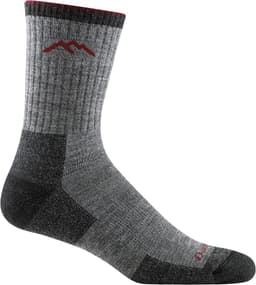
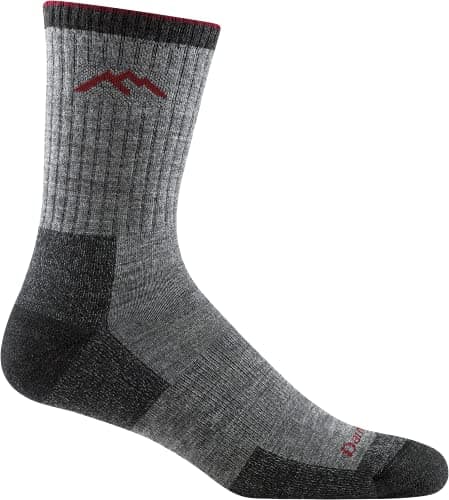
Buy Darn Tough if you intend to own the socks for a decade and you are the kind of person who will fill in a warranty form. The Unconditional Lifetime Guarantee covers wearing a hole in the sock - including threadbare spots from ordinary wear and tear and inadvertent damage - with no receipt required, and the company states there is no fine print. Nothing else in this category comes close.
Buy People Socks if you want the highest merino content per dollar available, you are buying several pairs at once, and you accept that a hole is your problem. 71 percent merino, made in the USA, sold in four-packs, and no warranty we could find published anywhere.
The two are not really competing on the same axis, which is why this comparison gets asked so often and answered so badly.
The warranty, which is the whole argument
Darn Tough’s guarantee is the most generous document in the entire sock category and one of the best on this site. It covers the failure mode socks actually have. A sock does not develop a manufacturing defect three years in; it wears through at the heel. Darn Tough replaces that. Essentially every other sock warranty in existence excludes it.
The process matters and it is worth knowing before you expect something else: you complete the claim form, Darn Tough issues a credit on your account, and you then order a replacement pair with free shipping. It is a credit rather than a counter swap - a small friction, but a real one, and it is the reason a lot of people never collect.
People Socks publishes nothing we could find. On this site that renders as “None published”, and it is not a slur - plenty of good products have no warranty. It just means the whole value of the sock has to come out of the wool and the price, because nothing is coming out of the paperwork.
For the full ladder of what sock warranties actually say, we compared five of them on the lifetime-warranty sock page.
Wool content: where People Socks genuinely wins
71 percent merino is a higher wool content than most premium socks carry, and it is noticeably higher than the blend in a Darn Tough Hiker. That buys you three real things: more warmth for the thickness, better odor resistance, and a softer hand against the foot.
It also costs you durability, and this is the part that gets reported as a contradiction when it is actually just how wool works. Merino fibers are fine, soft and poor at resisting abrasion. The nylon in a sock blend is the structural component - it is what stops the heel and the toe going first. A sock with more wool and less nylon is warmer, softer and shorter lived under identical use.
So the sock with more wool per dollar is also the sock more likely to need replacing, and it is the one with no replacement promise. That is the trade in one sentence.
Both are made in the USA
This is the part that makes the comparison interesting rather than lopsided. Darn Tough knits in Northfield, Vermont, on its own machines - the guarantee is possible because the company controls the knit. People Socks is also made in the USA, which is unusual at its price and is the reason it comes up in every “cheaper Darn Tough” thread.
If domestic manufacturing is part of why you are buying, you do not have to pay the premium to get it. Wigwam is a third option on the same ground: knit in Sheboygan, Wisconsin, priced between the two, with a guarantee that covers defects in materials and workmanship and requires proof of purchase and a return form. That is the ordinary industry standard - it only looks mean because Darn Tough has moved the goalposts.
Our made-in-USA clothing roundup covers the rest of the field on this point.
The arithmetic, honestly
Take the usual numbers at their shape rather than their exact value: a single pair of premium guaranteed socks costs roughly what a four-pack of the cheaper ones does. Live prices for both are in the table above, because this site never prints a number it cannot refresh.
Year one, the four-pack wins outright - four pairs for the price of one, and nothing has worn out yet.
Year three to four is the crossover, and it depends entirely on one behavior. If you file the claim when a Darn Tough wears through, your replacement cost from here on is zero and the premium sock pulls ahead permanently. If you do not file, you are simply rebuying a more expensive sock than you needed, and the four-pack was the better purchase all along.
That is why the honest recommendation here is behavioral rather than technical. The guarantee is worth real money and it is only worth anything if you use it.
Fit and sizing
People Socks runs large. That is the most consistent complaint about them and it is worth sizing down if you are between sizes, because a loose merino sock bunches at the arch and a bunched sock blisters.
Darn Tough’s fit is dense and snug with a seamless toe, and it holds that shape through years of washing - part of why the guarantee is affordable for the company to offer. Some feet find it too tight across the instep; if that is you, the comparison you actually want is Darn Tough against Smartwool, where fit is the whole difference.
What the knit tells you
Two socks with similar fiber labels can wear out years apart, and the difference is in the knit rather than the blend.
Look for three things. A seamless toe, because a seam across the toe box is a ridge that abrades from both sides and it is where cheap socks split. Density - hold the sock up to a light and a dense knit barely glows; a loose one is translucent, and a translucent heel is a hole in six months. And a ribbed leg that actually grips, because a sock that slides down takes the heel pad out of position and wears the sock through in the wrong place.
Darn Tough wins all three, and that is the real reason it can afford to guarantee the sock forever. The guarantee is not generosity; it is a statement about the knit.
People Socks is a decent, honest knit with more wool in it. It is not in the same class on density, and nobody involved claims it is.
The other alternatives people suggest
Three names come up alongside People Socks in the same conversations, and they are worth placing.
Wigwam is the genuine middle: American-knit merino, priced between the two, with a defects-only guarantee that needs proof of purchase. If the Darn Tough price is the only objection and you still want some paperwork, this is the compromise.
Smartwool is a fit upgrade for a lot of feet and a warranty downgrade - two years against unconditional lifetime. It is not a budget alternative; it costs about the same.
Costco and supermarket merino blends are cheaper than People Socks and usually have far less wool, often in the 30 to 40 percent range. They are fine socks. They are not in this comparison because the premise of the question is that you want real merino content for less money, and People Socks is the answer to that question.
Which one we would buy
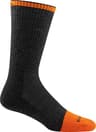
For boots worn most days, Darn Tough, and the Steely if those boots have a steel cap - the reinforced toe box is there because a steel toe destroys the front of an ordinary sock in weeks. Same unconditional guarantee, aimed at the failure that work boots actually cause.
For a drawer you are restocking from empty, or for socks that live in a gym bag, a bug-out bag or a boat, People Socks. Four pairs of real American merino for the price of one guaranteed pair is a good deal on any day you are not planning to make a warranty claim.
And whichever you buy, the care routine is the same and it matters more than the brand: no fabric softener, ever. It coats the fibers and kills exactly the wicking and odor resistance you paid for. The full routine is on our merino washing guide, and it is the cheapest way to make either sock last longer.