Forge & Forever

Boots & Leather

How to Break In Boots Without Wrecking Them

Breaking in a boot means letting the leather take the shape of your foot. Every fast method people recommend works by damaging the leather instead.

By Mike M.Published How we judge durability

How this page is funded. Forge & Forever earns a commission when you buy through the links here, at no extra cost to you. It does not change which products we pick or what we say about them - and we say plainly when something is not worth owning. Full disclosure.

Our top pick

Best non-darkening conditioner

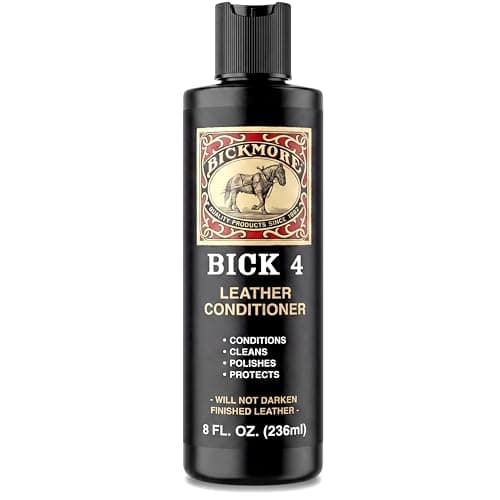
Bickmore Bick 4 Leather Conditioner

Bickmore Bick 4 Leather Conditioner

8.4/10 durability score

The safe default.

Read the full write-up


The short answer

Quick picks

Every pick here is one we recommend without reservation. Ranked on published warranty terms, whether the thing can be repaired, and what it is made of. Select a row to jump to the full write-up. How the durability score is calculated.

#ProductScoreBest forWarrantyPrice
1
Bickmore Bick 4 Leather Conditioner

Bickmore Bick 4 Leather Conditioner

The safe default. Bick 4 conditions without darkening, which matters enormously on tan and natural leathers where an oil-based product is a one-way decision.

8.4ExcellentBest non-darkening conditionerNone published
2
Red Wing All Natural Boot Oil

Red Wing All Natural Boot Oil

Made for the leathers Red Wing actually uses. If you own Amber Harness or Oro Legacy boots, this is the product the tannery's own finish was designed around.

8.4ExcellentBest for Red Wing leathersNone published
3
Venetian Shoe Cream

Venetian Shoe Cream

What cobblers actually keep on the bench. A light, neutral cream that conditions without changing color or finish - the right product for a dress boot you do not want to turn into a work boot.

8.4ExcellentBest for dress leatherNone published
4
Obenaufs Heavy Duty LP Leather Preservative

Obenaufs Heavy Duty LP Leather Preservative

The one to use when the boot's job is to get wet. Beeswax and propolis in a paste that genuinely resists water - at the cost of darkening the leather permanently and softening it more than some people want.

8.4ExcellentBest for wet workNone published

Break a boot in by wearing it for an hour a day indoors for the first week, lacing it with a heel-lock, and conditioning only the two places it has to bend. That is the whole method. It takes days on a soft boot and about a month on a stiff one, and it works because it lets the leather deform where your foot needs it rather than everywhere at once. Every faster technique - soaking, freezing, heat, a hairdryer - works by damaging the fibre structure that was going to give you fifteen years.

What break-in actually is

Full-grain leather is a dense mat of collagen fibres. Warmth and moisture - from your own foot, mostly - let those fibres slide a little and re-set. Repeat that a few dozen times and the vamp creases where your foot flexes, the heel counter cups your heel, and the footbed takes an impression. The boot has not stretched; it has learned a shape.

Two things follow. First, the process is local: the parts that bend soften and the parts that do not should stay stiff, because a shank and a heel counter are doing structural work. Second, it is cumulative and not reversible - which is why a method that softens the whole upper in one go cannot be undone when you discover it has taken the support out of the boot.

The four shortcuts that cost you a boot

  • Soaking them. Water swells the fibres, then takes the oils with it on the way out. The leather dries stiffer and more brittle than it went in and cracks at the vamp crease a year or two early.
  • Freezing a bag of water inside them. This is a stretching method masquerading as a break-in method, and it stretches everything equally - including the heel pocket you wanted tight.
  • Heat. A hairdryer or a radiator drives moisture out of the leather fast, which is the same damage as the soak without the brief payoff. Never dry wet boots next to a heat source either, for the same reason.
  • Drowning them in conditioner. Oil-heavy products soften leather, and a new boot does not need softening everywhere. Over-oiled uppers go slack and stop supporting the foot, and on an unlined boot they can go spongy permanently.

Which conditioner, and when

The picks above are the four worth owning, and they are not interchangeable. During break-in you want the least aggressive product that does the job, applied thinly, to the flex points only.

Bick 4 is the safe default: it conditions without darkening, which matters enormously on tan and natural leathers where an oil-based product is a one-way decision. For Red Wing’s own oil-tanned hides - Amber Harness, Oro Legacy, Copper Rough & Tough - Red Wing All Natural Boot Oil is what the tannery finish was designed around, with the predictable modest darkening that comes with it. Venetian Shoe Cream is the cobbler’s-bench answer for a dress boot you do not want turning into a work boot: neutral, non-darkening, no real water resistance.

Obenauf’s Heavy Duty LP is the one to use when the boot’s job is to get wet - and the one to keep away from a boot in break-in. It darkens leather permanently, it softens more than most people want, and softening a new boot is the opposite of what you are trying to achieve. Save it for the second year, when the boot has its shape and you want it waterproof. Our leather conditioner roundup goes through all of them properly, and how to waterproof boots covers the wax side.

Boot by boot, roughly how long

Break-in time is a function of how much leather is between your foot and the ground, which is also a rough proxy for how long the boot lasts.

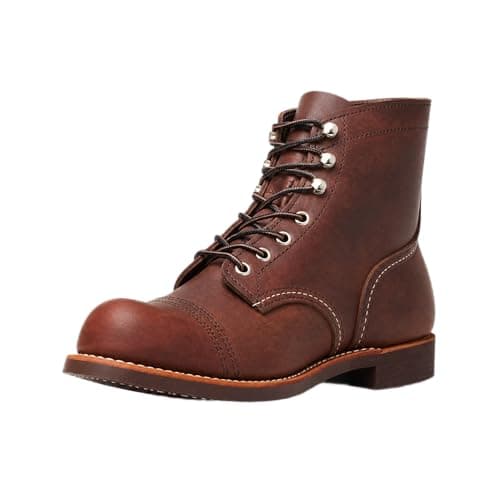
  • Double leather toe on a flat sole - a Red Wing Iron Ranger - about a month, and the first week is genuinely unpleasant. Our Iron Ranger review covers this in detail.
  • Single leather toe - a Blacksmith, a Thursday Captain - under a week.
  • Wedge-soled moc toes - comfortable almost immediately underfoot, with the vamp crease still taking a couple of weeks to settle.
  • Unlined thin-leather boots - near-instant, because there is not much leather to soften. That is the trade, not a feature.

When it is not break-in, it is the wrong boot

Three symptoms are not break-in and will not improve: pressure across the ball of the foot that does not move when you re-lace, your toes touching the end when you stand up, and pain on the top of the foot from the instep. The first two are a sizing or width problem and the third is usually a lacing or tongue-padding problem. Send the boot back rather than spending six weeks proving it was too small.

Everything else - stiffness, a creaking welt, heel lift in week one, a hot spot on one specific knuckle - is normal, and the hour-a-day method deals with all of it.

The socks are not a detail

Break-in happens inside a sock, and the sock changes the fit of the boot by a measurable amount. Two practical consequences. First, break the boot in wearing the socks you intend to wear in it - breaking a boot in with thin socks and then switching to midweight wool in October gives you a boot that is suddenly tight across the instep. Second, a merino blend moves the moisture that is doing the softening away from your skin, which is the difference between a hot spot that settles and one that becomes a blister on day three.

If the boot is genuinely half a size large rather than wrong, a thicker sock is a legitimate fix and a far better one than an insole stacked on top of the footbed. Our best boot socks for work boots page covers which blends survive being worn daily in a welted boot, and which guarantees are worth anything when they wear through.
In full

Every pick, written up

Warranty terms below are quoted from the brand’s own published documents. “Not published” means we looked and the brand does not say.

#1Best non-darkening conditioner

Bickmore Bick 4 Leather Conditioner

8.4Durability score ExcellentDurability score

The safe default. Bick 4 conditions without darkening, which matters enormously on tan and natural leathers where an oil-based product is a one-way decision.

What it gets right

  • Does not darken leather, so it is safe on light and natural finishes
  • Cleans and conditions in one pass
  • Cheap enough to use on schedule rather than in emergencies

Good to know

  • No meaningful water resistance - it is a conditioner, not a waterproofer
  • Needs reapplying more often than a wax
  • Will not rescue leather that is already cracked
WarrantyNone published

Consumable - no product warranty applies.

RepairabilityReplace on failure

Not published

MaterialsEmulsion conditioner, non-darkening
Made inNot published
#2Best for Red Wing leathers

Red Wing All Natural Boot Oil

8.4Durability score ExcellentDurability score

Made for the leathers Red Wing actually uses. If you own Amber Harness or Oro Legacy boots, this is the product the tannery's own finish was designed around.

What it gets right

  • Formulated for Red Wing's own oil-tanned leathers
  • Soaks in without leaving a greasy surface
  • Modest, predictable darkening

Good to know

  • Darkens lighter leathers noticeably
  • No real water resistance on its own
  • More expensive than generic neatsfoot oil
WarrantyNone published

Consumable - no product warranty applies.

RepairabilityReplace on failure

Not published

MaterialsNatural oil blend
Made inNot published
#3Best for dress leather

Venetian Shoe Cream

8.4Durability score ExcellentDurability score

What cobblers actually keep on the bench. A light, neutral cream that conditions without changing color or finish - the right product for a dress boot you do not want to turn into a work boot.

What it gets right

  • Neutral and non-darkening
  • Leaves a soft sheen rather than a wax shine
  • A 3oz jar lasts a very long time

Good to know

  • Essentially no water resistance
  • Not enough for heavy work leather
  • Small container looks expensive per ounce
WarrantyNone published

Consumable - no product warranty applies.

RepairabilityReplace on failure

Not published

MaterialsNeutral cream conditioner
Made inNot published
#4Best for wet work

Obenaufs Heavy Duty LP Leather Preservative

8.4Durability score ExcellentDurability score

The one to use when the boot's job is to get wet. Beeswax and propolis in a paste that genuinely resists water - at the cost of darkening the leather permanently and softening it more than some people want.

What it gets right

  • Real, lasting water resistance from a beeswax base
  • A single tin lasts years
  • Revives dried-out leather that lighter conditioners cannot reach

Good to know

  • Darkens leather permanently - test on the tongue first
  • Softens stiff boots, which is wrong for a boot you want supportive
  • Messy to apply
WarrantyNone published

Consumable - no product warranty applies.

RepairabilityReplace on failure

Not published

MaterialsBeeswax, propolis and natural oil paste
Made inNot published

FAQ

Questions people actually ask

How long does it take to break in leather boots?

A soft single-leather-toe boot like the Red Wing Blacksmith is comfortable inside a week of daily wear. A double-leather-toe boot on a flat Vibram sole - an Iron Ranger - is a genuine month. Thin-leather budget boots feel broken in on day two because there is less leather to soften, which is also why they last less time.

Should I soak my boots in water to break them in?

No. Wet leather stretches and dries hard and brittle, and the natural oils leave with the water. It feels like it worked for about a fortnight, and it has cost you years at the back end. The one exception is a maker who publishes a wet-fitting method for their own boot, and nobody in our registry does.

Does a boot stretcher work?

A two-way stretcher with spot plugs works well for a specific pressure point and does almost nothing for general tightness. A cobbler with a proper last and a stretching iron does the same job better in ten minutes. Either way you are changing the boot in one place rather than softening it everywhere.

Why do my new boots rub my heel?

Because the heel counter is still stiff and your heel is lifting out of the pocket. Lace it with a heel-lock through the top two eyelets, wear a thicker sock for the first week, and put a strip of tape on the spot that is rubbing rather than waiting for it to blister. The counter softens; your skin does not.

Sources

Where these terms come from

Every warranty, repair-path and country-of-manufacture claim above was read from the following published pages. Where a brand publishes nothing, this page says “not published” rather than guessing.

In one line

Our recommendation

If you read nothing else on this page: this is the one we would buy, and the one we would buy instead if it did not fit. Both are scored on the same published warranty terms, repair paths and materials as everything else here.

Buy this one

Bickmore Bick 4 Leather Conditioner

Best non-darkening conditioner

8.4/10 durability score

Or, the runner-up

Red Wing All Natural Boot Oil

Best for Red Wing leathers

8.4/10 durability score

Read next

Related on Forge & Forever

See everything in Boots & Leather

Brands: want your product tested? For Brands.