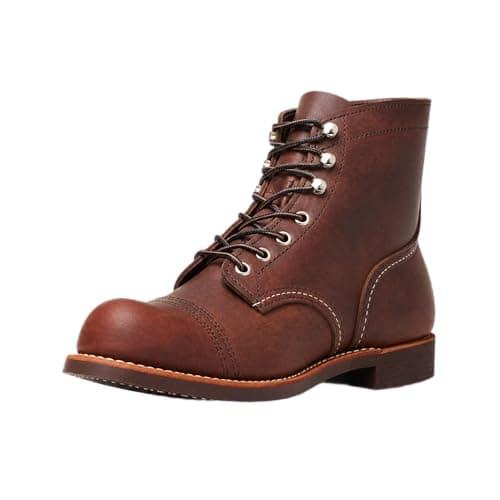
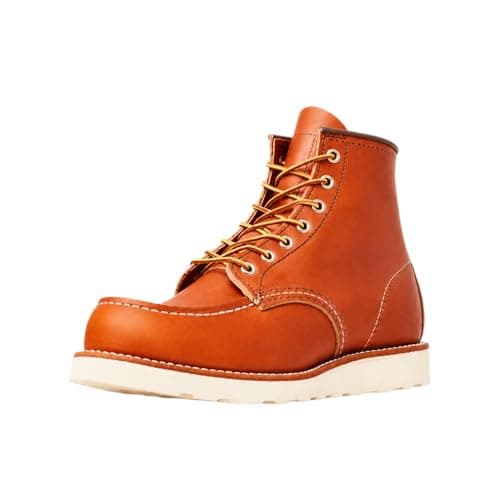
If you want one pair of moc toe boots and you want them in a decade, buy the Red Wing Heritage Classic Moc 875. It is Goodyear welted, made in Minnesota, and the crepe wedge that makes it the single most comfortable boot here on day one can be swapped for a harder-wearing sole the first time it goes to a cobbler. That reversibility is the whole argument for a welted boot, and it is the reason the 875 wins a category where almost every competitor is cemented.
The moc toe is a seam, not a promise
A moc toe is the raised seam stitched across the top of the vamp, lifted straight from moccasin construction. It gives a rounder, higher toe box that fits wide feet well, and it is the single most recognisable silhouette in American workwear. It is also purely a styling and fit decision. It tells you nothing about the welt, the midsole, the sole compound or whether a cobbler can do anything for the boot when the tread goes.
That matters because the moc toe look is now sold at every price point, and most of what is sold is cemented - the sole is glued to the upper, so when it wears through the boot is finished. Every boot on this page is either welted or has a published factory rebuild path. That is the filter, and it removed more candidates than any other criterion.
Red Wing 875 - the default, with one honest caveat
Oro Legacy full-grain, leather midsole, Goodyear welt, and the Traction Tred crepe wedge. The crepe is why people buy it: on concrete it is unusually kind, and the boot is comfortable long before the leather has given in anywhere.
The caveat is that crepe is the least durable sole Red Wing sells. It wears quickly, it picks up gravel, and on wet smooth floors it is poor. Because the boot is welted, none of that is permanent - the standard move is to run the crepe until it is done and have a cobbler fit a harder sole. The warranty is an ordinary twelve months against defects in workmanship and materials with the original receipt; it is the resole path, not the warranty, that makes this a buy-once boot.
Thorogood American Heritage - the value answer
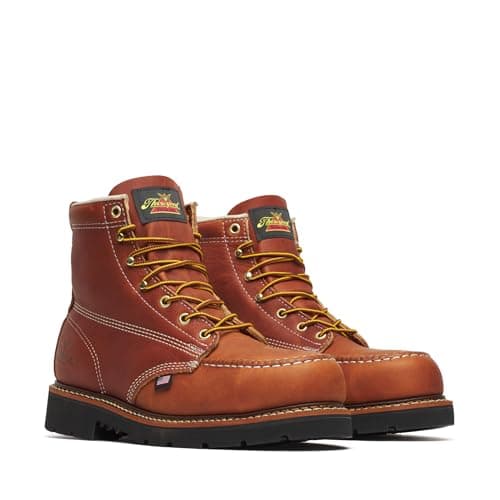
Union-made in Wisconsin, Goodyear storm welted, with a steel safety toe, at a price well under the Red Wings. On paper that is the best construction-per-dollar in the hub, and in practice the MAXwear wedge is genuinely comfortable on flat, hard floors.
Two things to price in. The steel toe adds real weight, which you notice by hour nine rather than hour one. And Thorogood publishes no warranty terms we could find - which on this site is a recorded finding, not an omission. What it does have is the storm welt, so any cobbler can resole it, and that is worth more over fifteen years than most warranty documents.
Danner Bull Run - the one you forget you are wearing
Oil-tanned full-grain, stitchdown construction, a non-slip wedge, and noticeably less boot than the Mountain Light. If your day is spent on a workshop floor rather than a mountain, that is the right trade, and the weight difference is the single biggest comfort variable on this page.
It is the only boot here with no waterproof membrane in the base model and the only one whose repair path is the factory rather than the high street: Danner publishes a Recrafting program and does the work through certified partners. That is a slower, more expensive route than walking into a cobbler, but it is a published route, which is more than most brands offer.
Chippewa Super DNA - when the job actually destroys boots
Nine inches tall, waterproof, insulated, steel toed, Goodyear welted, on an aggressive Vibram lug with a defined heel. This is the boot for outdoor trades - the one category where a wedge sole is a liability and a heel breast is a safety feature.
It is also very heavy and complete overkill for anything else. Bought for the wrong job it is a worse boot than the cheapest thing on this list, because the weight you are carrying buys you protection you are not using.
Wedge or lug: the decision that actually matters
Two of these boots wear a wedge and two wear a lug, and getting that wrong will ruin a boot you otherwise chose correctly.
- Wedge (Red Wing 875, Thorogood): a flat, soft, full-contact sole. Superb on concrete and flat shop floors, poor on ladder rungs, loose ground and mud - there is no heel edge to bite with.
- Lug (Chippewa, and the Danner’s shallower non-slip wedge): grip on uneven ground, a defined heel for ladders, and a harder compound that lasts longer per millimetre.
Because three of these are welted, the sole is a decision you get to revisit. Buy for the leather, the fit and the welt - those are permanent - and treat the sole as the part you replace when your job changes.
What fails first, and what to do about it
On a welted moc toe the usual order is: sole, then heel, then the moc stitching across the vamp, then - much later - the welt itself. All four are repairable. What is not repairable is leather that has been allowed to dry out and crack along the vamp crease, which is exactly where the moc seam sits.
So the maintenance that matters is unglamorous: clean the vamp, condition it before it looks like it needs it, and do not dry wet boots next to a heater. Our leather conditioner roundup covers which product suits which hide, and how to resole boots covers what the first resole actually costs and when to book it.
Who should buy which
Buy the Red Wing 875 if this is your one pair and comfort on hard floors is the priority. Buy the Thorogood if you want the same construction logic with a safety toe for meaningfully less money. Buy the Danner Bull Run if weight is what has made you give up on heritage boots before. Buy the Chippewa Super DNA only if you work outside in the wet, in which case nothing else here is enough boot.