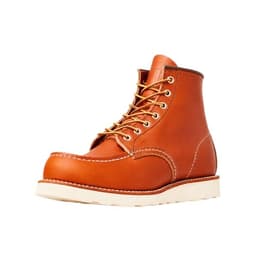
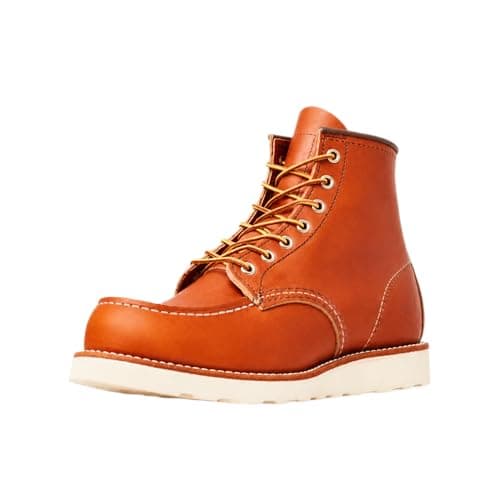
If plantar fasciitis is what has you reading a boot page, buy the Red Wing Heritage Classic Moc 875. The crepe wedge is the softest full-contact sole in this group on a hard floor, the leather midsole packs down to the shape of your foot rather than against it, and because the boot is Goodyear welted the whole cushioning stack can be rebuilt by a cobbler when it goes flat. That last point is the one nobody writing about this category mentions, and it is the difference between one pair of boots and four.
We are a buying-guide publisher, not a clinic. Nothing on this page is medical advice, and if your heel has been hurting for months the useful next step is a podiatrist rather than a checkout. What this page can tell you is which of these boots has a cushioning system you are allowed to replace.
What actually matters, in order
Boot marketing for sore feet is mostly adjectives. Strip those out and three structural facts are left, and they rank in this order.
- Sole compliance on your actual floor. Concrete returns every bit of energy you put into it. A soft, flat, full-contact sole - a wedge - absorbs some of that; a thin hard lug does not. This is the biggest variable and also the easiest to get wrong, because the more rugged-looking boot is usually the harsher one.
- A footbed you can lift out. Most people with plantar fasciitis end up in an orthotic or at least a better insole, and a boot with a glued-in footbed either will not take one or will take one at the cost of the fit. Check the specific pair you are buying: footbed construction varies by SKU inside the same model line, so we will not print a claim here that the brand does not publish for the boot you end up with.
- A midsole you are allowed to replace. Cushioning is a consumable. Leather and foam midsoles both compress, usually somewhere inside the first two years of full-time wear, and when they do the boot stops helping. On a welted boot that is a cobbler visit. On a cemented boot it is a bin.
Red Wing 875 - the softest sole you can resole
Oro Legacy full-grain over a leather midsole and a Traction Tred crepe wedge, Goodyear welted, made in Minnesota. On a shop floor the crepe is noticeably kinder than any lug sole here, and the leather midsole takes an impression of your foot over the first month and then supports it.
The honest caveat is that crepe is the least durable sole Red Wing sells: it wears quickly, it collects gravel, and on a wet smooth floor it is poor. Because the boot is welted, none of that is permanent - the normal move is to run the crepe out and have a cobbler fit a harder sole, or the same sole again with a cushioning layer added. The warranty is an ordinary twelve months against defects with the original receipt; it is the resole path, not the warranty, that makes this the right buy.
Thorogood American Heritage - the same logic for less
Union-made in Wisconsin, Goodyear storm welted, with a steel safety toe and the MAXwear wedge. On flat hard floors the wedge does the same job as the Red Wing crepe and the price is well under it, which makes this the best construction-per-dollar on the page.
Two things to price in. The steel toe adds weight, and weight is cumulative over a shift - you notice it at hour nine, not hour one. And Thorogood publishes no warranty terms we could find, which on this site is a recorded finding rather than an omission. What it does have is the storm welt, so any cobbler can take the sole and midsole off and put new ones on.
KEEN Utility Detroit XT - comfortable now, finished sooner
This is the honest counter-example, and it is on the page deliberately. It is among the most comfortable safety boots here on day one, it is genuinely waterproof, and the wide toe box fits feet that other brands do not.
It is also cemented. The sole is glued to the upper, so there is no resole path and no way to rebuild the midsole when it compresses - which, as its registry entry says plainly, happens long before the upper wears out. If what you need is relief this week and you accept buying again in two or three years, this is a rational purchase. It is not a buy-it-for-life one, and we are not going to pretend otherwise because the category rewards it.
Danner Bull Run - when weight is the problem
Oil-tanned full-grain, stitchdown construction, a non-slip wedge, and noticeably less boot than anything else here. If heavy boots are what made your feet worse rather than better, the lightest compliant-soled option on the page is the one to try first.
Its repair path is the factory rather than the high street: Danner publishes a Recrafting program and runs the work through certified partners. That is slower and more expensive than walking into a cobbler, but it is a published route, which is more than most brands manage.
The insole decision, honestly
A boot cannot fix plantar fasciitis and neither can an insole, but the pair of them can stop a working day from making it worse. Two practical points are worth more than any product on this page: buy the boot that takes your orthotic without crowding your toes, and replace the footbed on a schedule rather than when it hurts, because by the time a packed-down footbed is noticeable it has been doing nothing for months.
If you are on concrete all day specifically, the sole and midsole argument goes further on our boots for standing all day on concrete page, and how to resole boots covers what a rebuild actually costs and when to book it.
Who should buy which
Buy the Red Wing 875 if this is your one pair and you work on hard flat floors. Buy the Thorogood if you want the same sole logic with a safety toe for meaningfully less. Buy the KEEN only with your eyes open about its three-year life. Buy the Danner Bull Run if the weight of heritage boots is what defeated you last time.